
 en
en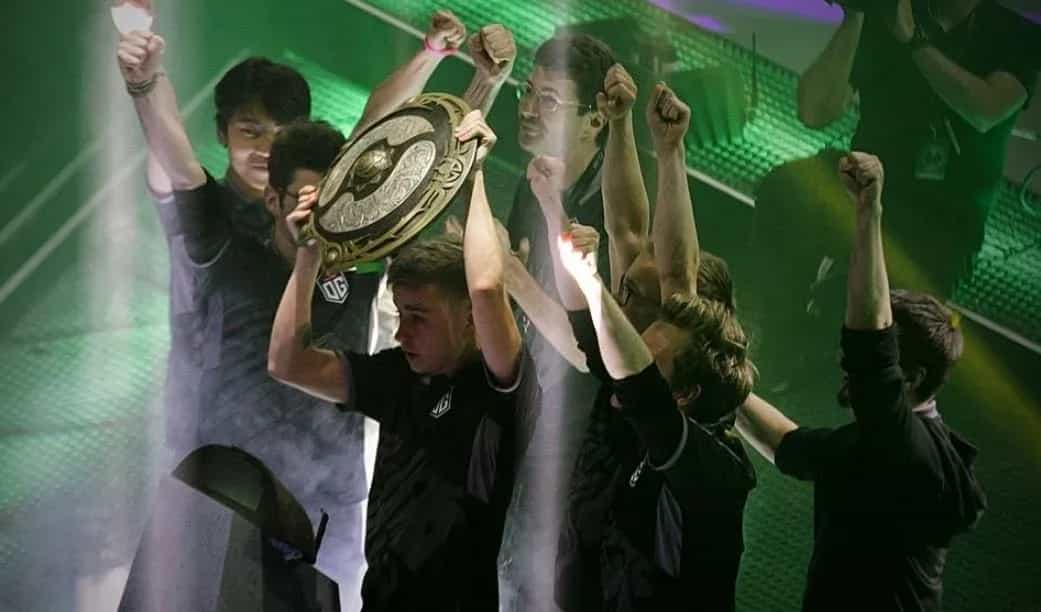
The 15 Biggest Underdog Wins in Esports History, Ranked

At TI8, the world of esports came to a standstill when OG, a team that had trouble fielding a full team ahead of the tournament, took centre stage against all odds to lift the Aegis of Champions. This was one of the greatest underdog runs in esports’ brief history.
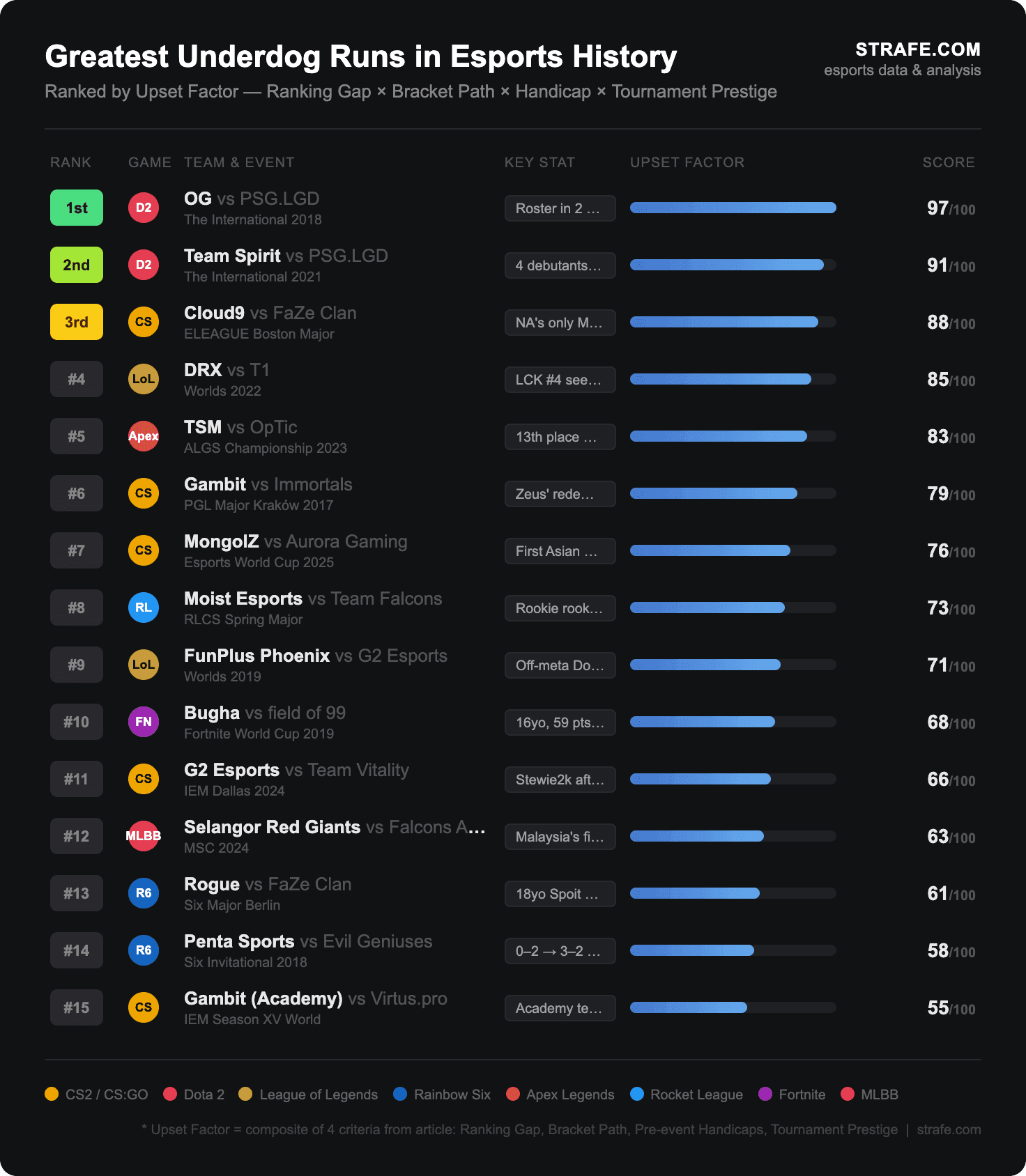
These underdog runs make for an amazing storyline and a cornerstone of esports. We will look at 15 such runs to victory that redefined esports in their own right. We will first break down how we have ranked these runs, then the top 15 runs, followed by a few honorable mentions, and we will break down the recipe for an underdog run.
How We Ranked the Runs
To rank these runs, we have taken into consideration the following four factors:
- Ranking Gap: This is the gap between the expected result and the achieved result for the roster. Naturally, teams overcoming regional ceilings are considered higher.
- Bracket Path: The harder the path to victory, the higher the odds against a run, the higher is the satisfaction for the viewers and the players.
- Pre-event Handicaps: Most rosters are constructed with winning trophies in mind. That said, any team that overcomes a roster debacle or issues within the team guarantees its place on the list.
- Tournament Prestige: A bigger tournament means higher prestige, and with it rises the pressure to perform. The entries we chose in the following list include some of the biggest stages in Esports.
Now that we have established the factors that we have considered while making the list, let’s first take a look at our 15 main cards.
#1. OG vs PSG.LGD[3–2] — TI8 Grand Final
To kick us off with the underdog runs, we bring back OG’s run at the Dota 2 The International 2018. To contextually understand the complete story of what makes OG’s run so special, we go back to the establishment of OG, the esports organization.
Originally known as (Monkey) Business in 2015, OG was formed by n0tail and Fly, Dota 2’s greatest bromance, in the same year. Their breakthrough came at the Frankfurt Major, where they won over Team Secret.
In 2016, the team added JerAx, s4, and ana. This squad together won three more Majors, before ana took a break from competitive DOTA in August of 2017. Resolut1on replaced ana on the roster and was later replaced by coach 7ckingmad(Ceb).
Come May 28th, two months before the TI8, disaster struck. Evil Geniuses, OG’s biggest rivals at the time, announced the additions of s4 and Fly. This news sent a shockwave across the Dota 2 community, but the one most surprised by this was n0tail. For him, his brother, his closest friend, had left to join their rivals.
With just two months before the biggest tournament of the year, OG scrambled to field a roster. Many expected OG to disband as it’d be futile to search for the replacement of Fly and s4 this close to the TI8. Even if they were replaced, it would be futile to compete with limited practice.
But what followed completely changed Dota 2 esports history. The team brought back ana, added a pub-stomping Solo Middle Topson, while n0tail switched to hard-support, and Ceb played Offlane. On paper, this roster wasn’t close to the old OG roster; many discounted them before seeing them play.
But at TI8, OG quickly evolved into one of the most synchronized teams at the tournament. They qualified for the main event via the Open Qualifiers. Despite a terrible start to the Group stage, they quickly recovered, finishing in the top 4 to qualify for the Upper Bracket of TI8 Main Event. In R1, they took down VGJ.Storm and faced their rivals, Evil Geniuses. N0tail faced his best friend and took him down to secure the Upper Bracket finals, and following it with a win over the Chinese PSG.LGD to secure Grand Finals.
PSG.LGD decimated EG in the Lower Bracket finals to secure a rematch against OG, and thus began the Grand Finals Marathon.
The teams exchanged the first four games 2-2. For OG and n0tail, it was clear that their Chinese counterparts won’t go down easily, so they made one final gamble; they denied LGD the comfort and tempo they relied on throughout the event.
The slowed-down game ensured ana’s decision-making shone through; he took over the game. Finally, the ancient fell, and the entire arena erupted.
A makeshift roster lifted the Aegis and created esports history. To this day, the run remains arguably the greatest underdog victory in esports history.
#2. Team Spirit vs PSG.LGD [3–2] — TI10 Grand Final
Unlike our previous Dota 2 entry, Team Spirit’s run is less about a crisis and is more about the young, talented CIS roster evolving through the challenges of the tournament and eventually fully realising their potential to lift the trophy.
In December 2019, Team Spirit signed the roster of Yellow Submarine, a group of four CIS rookies led by Miposhka. The team later brought in Miroslaw, another notable rookie, to replace so bad to play the International 2021: Eastern European Qualifier.
The young team qualified for TI10 with four debutants taking on the biggest names in Dota 2 esports for the largest prize pool esports has ever seen at stake. Naturally, they were far removed from the winner’s conversation, and many did not consider them a threat going into the Group Stage.
The opening day jitters on the big stage meant they started the first day going 0-2 down in their group. Fortunately, with no expectation and a poor start to the tournament, Team Spirit regrouped to convert the 0-2 start into a 5-3 record. They improved throughout the Group stage and secured a top-4 finish in Group B. This secured the Upper Bracket of the International 2021 Main Event.
Their main event journey started with facing Invictus Gaming, the winners of Group A. Despite their best efforts, Team Spirit could not take on one of the tournament favorites and fell into the Lower bracket.
In the lower bracket, with elimination on the line, Team Spirit took down Fnatic, OG, and Virtus.Pro, Invictus Gaming, and Team Secret to secure the Grand Finals. While the run in itself was impressive, the most surprising was how the roster levelled up with each game. In front of a packed arena, on the biggest stages of their lives, Yatoro, Collapse, and Team Spirit evolved into genuine superstars.
Now on the Grand Finals stage, Team Spirit faced their biggest challenge yet—PSG.LGD. The Chinese squad only dropped a total of 2 games throughout their TI10 run, and entering the Grand Finals are the heavy favorites to win it all.
Team Spirit, however, had other plans. They pushed the favorites to five games. In the final game, Collapse locked in Magnus, a champion who helped them secure multiple games and controlled the tempo. This helped the youngsters slowly suffocate the favorites and control the map. Team Spirit slowly amassed advantages, and when the Aegis fell, the group of CIS youngsters claimed the lion's share of the biggest prize pool in esports’ history.
From debutants to Dota 2’s biggest Champions, Team Spirit were the biggest underdogs to win TI.
#3. Cloud9 vs FaZe Clan[2–1] — ELEAGUE Major Boston Grand Final
Despite being the second-best region for as long as CS esports had existed, NA consistently failed to show up at the Major stage. Team Liquid’s second-place finish at the ESL One: Cologne 2016 was the region’s best showing.
Until Cloud9, one of the biggest NA organizations, decided to create an explosive roster: To their pre-existing core of Stewie2k, Autimatic, and Skadoodle, they added the key pieces of the Optic Gaming—tarik and RUSH. The roster was young and explosive, yet had ample experience to take on their European counterparts.
Unfortunately, the experiment did not fare well. Heading into the 2018 Boston Major, the team was already on the verge of imploding. While their journey got off to a decent start as they cleared the Challengers stage without breaking a sweat, unfortunately, the 0-2 start to the next Legends stage was the death knell for the roster.
With their backs against the wall, and the roster tapped into a never-before-seen state, it started with taking down Virtus.Pro, Astralis, and Vega Squadron to qualify for the Playoffs.
The performance, however, wasn’t enough to convince the pundits, especially since they were taking on the French Superteam G2 Esports in the quarterfinals. Against all odds, Cloud9 swept the Frenchmen, then upset the Brazilian SK Gaming to face off against FaZe Clan.
For context, FaZe Clan was the biggest superteam CS esports had seen up to that point. Not to mention, they were tearing through the competition and were heavy favorites to win every event and the 2018 Boston Major.
Cloud9, propelled by the momentum of the solid upsets, put up a strong front, only losing Mirage 14-16. They equalised the series with a dominant Overpass. But FaZe trampled them on Inferno, reaching 14 before Cloud9 could secure double-digits.
Silence engulfed the Boston crowd, and just when it seemed all hope was lost, C9 clawed back. During the last round of regulation, Karrigan’s perfect call caught Stewie2k alone on the B Inferno.
If C9 loses the round, it is over. But, with time on his side, young stew hit 3 crucial AWP shots to force OT, and C9 converted, using the momentum to secure the Grand Finals and bring home NA’s first and only Major Championship.
Cloud9’s Boston trophy run was arguably the most successful Major run by an NA team and one of the biggest Underdog runs in CS esports to date.
#4. DRX vs T1[3–2] — Worlds 2022 Grand Final
In the world of League of Legends esports, South Korea reigns as the pinnacle of competition. Every year, the teams they send to the competition are some of the strongest in the World and always have a solid chance to lift the Summoner’s Cup.
That said, there still exists a pecking order amongst the Korean teams that enter the tournament, and DRX entered the tournament as the #4 seed from Korea, which barely made it through.
With it being the “Last Dance” of Deft, the team’s Botlaner, the team was motivated to win the tournament, irrespective of what the community thought. Not to mention, Deft’s story was one for the books; Faker’s lesser-known schoolmate, who debuted with the GOAT but did not find the same success.
The last dance narrative pumped DRX enough to help them push through the Worlds’ Play-in and Group stages to qualify for the Playoffs.
For DRX, however, the Quarterfinals started on a grim note as EDward Gaming dominated game 1. In Game 2, while EDG were fighting the Baron, Deft was a single auto-attack away from equalising the series, but EDG managed to base in time and save their Nexus to go 2-0 up in the series.
This was the turning point, with nothing to lose, Deft and co. came back, reverse-swept EDG, and followed it with a 3-1 win over Chovy-Ruler Gen.G to face T1 in the Grand Finals.
This is the same T1 dubbed as the greatest LoL roster of all time by many. The same roster that cleaned the regular season. This is the same Faker who shared school with Deft but became the undisputed GOAT, while the latter struggled to find his international success. Two different paths, yet they both arrived at the same destination—Worlds 2022 Grand Finals.
Many expected T1 to sweep DRX, but deft has other plans. T1 won game 1, DRX answered back to equalise, T1 won game 3, DRX equalised, and to the Silver Scrapes we go.
The tension was high throughout Game 5. With a four-man advantage, DRX were trying to slay the Baron, but Gumayusi stealing Baron saved the game. T1 sieged on the DRX base, but Kingen’s Aatrox and Zeka defended the base, punishing the overextended T1 and using the advantage to win the Worlds trophy.
While it was Faker who dominated all these years, in 2022, it was Deft’s date with destiny.
From LCK's #4 seed and PlayIns to the Champions of the Summoner's Rift, the run DRX made would go down as the greatest stand by an underdog in League of Legends history.
#5. FunPlus Phoenix vs G2 Esports[3–0] — Worlds 2019 Grand Final
Unlike the first League of Legends entry on our list, FunPlus Phoenix’s underdog tag does not come from the pecking order, as they were the top LPL seed coming into the tournament. It was the team’s peculiar play style and the opponents they took down at Worlds 2019 Grand Finals that earned them the classification of an underdog run.
First, let’s decode what this “peculiar style” was. For starters, the midlaner of the team, Doinb, was infamous for picking off-meta champions in the midlane. His playstyle also matched his unique picks, and he had the skills to back his unique playstyle.
FPX surrounded their unique midlaner with talented players. GimGoon in the top lane, Lwx and Crisp as the botlane duo, and lastly, Tian in the Jungle. This team, seemingly a mismatched band of misfits, complemented each other well. Tian’s jungle invades paired doinb’s roam heavy style allowed them to dominate the regional split.
Despite their regional dominance, the international community wasn’t really convinced with doinb and FPX’s ability to convert their regional dominance into International success. The doubts did not touch the LPL first seed, however, as they continued dominating in Worlds 2019, breezing through the Group Stage, the Quarterfinals, and the Semifinals to reach the Grand Finals stage.
Their opponents were LEC’s strongest, G2 Esports. The European powerhouse was on the Golden Road and had already won the two domestic splits and the MSI, entering the Worlds 2019 as heavy favorites. The claim to the Summoner’s Cup was further solidified when they took down the Korean Powerhouse, SKT T1, and Faker in the Semifinals.
What followed was a Grand Finals no one expected. Despite the pundits heavily favoring G2 esports, on the Rift, FPX and Tian annihilated the European superteam. They swept the series to win the Worlds 2019 title. Tian was named the MVP, and doinb became China’s sweetheart.
Their run to lift the cup remains one of the most entertaining runs in League of Legends to date.
#6. Gambit Esports vs Immortals[2–1] — PGL Major Kraków Grand Final
After failing to find success at the Major, NAVI wanted to make a change and bring in fresh talent to rejuvenate the roster. It was clear as day that the greatest Ukrainian organization wanted to bring Ukraine’s greatest prodigy–s1mple back to his home soil.
Naturally, the one being benched to make space was Zeus, the 28-year-old IGL who was way past his prime. So in August of 2016, NAVI benched Zeus, concluding a 7-year-long relationship with the player.
With Zeus’ age and the narrative that surrounded the NAVI of being a coach’s team through and through meant, not a lot of rosters would take a shot with him. Especially with the region consistently producing talented players.
It seemed all but over for Zeus, and many expected him to announce his retirement, but then Gambit came knocking. The CIS squad, featuring AdreN, mou, Dosia, and HObbit, was Zeus’ shot at redemption. With limited practice, they attended the Atlanta Major and reached the Quarterfinals.
The Quarterfinals finish meant a direct invitation to the 2017 PGL Kraków Major. And on the Polish soil, one of CIS’s most prominent personalities redeemed himself. Gambit, led by Zeus, dominated the Group Stage and qualified for the Playoffs as the top seed. Despite the strong results, many had them exiting early as they were on the same side of the bracket as SK Gaming, Astralis, and Fnatic.
In the Playoffs, they swept back-to-back Major Champions, Fnatic, in the Quarterfinals, and defeated the defending Major Champions, Astralis, in the Semifinals to enter the Grand Finals as the favorites to win the Major.
Their opponents, Immortals, were on an underdog run of their own and gave Gambit and Zeus a hard time during the Grand Finals series. But when push came to shove, Zeus’ experience came through, helping Gambit lift their first and only Major trophy.
The Major win silenced Zeus’ doubters, who found his way back to NAVI and retired in 2019.
#7. TSM wins the ALGS Championship 2023 from 13th place
ImperialHal was long considered one of North America’s greatest Apex Legends players even before he entered the 2023 edition of the ALGS Championship. But what occurred at the event simply elevated ImperialHal to another level.
Heading into the event, as NA’s first seed, TSM was expected to perform well. Their group stage performance put them in the Winner’s bracket, where they comfortably qualified for the Finals.
The Finals, however, didn’t go as planned. In the first five games, TSM had only garnered 22 points and were sitting in 13th place, heading into game 6. Not to mention, the scoreboard leader, Optic Gaming, had secured “Match point eligible” in game 3, meaning they just need to win a game and they’d become a champion.
In a system that rewards consistency and proper placement, there was no hope for TSM to even get a respectable finish; winning was so far removed from the conversation that it had to be a miracle.
To win the tournament from this point, TSM had to gather a total of 28 more points in two games to ensure they had Match Point Eligibility (50 total points) in Game 8. Meaning they can’t place outside of the top 3, or they lose valuable placement points. They also have to follow it up with winning Game 8, or the efforts are all gone.
And just like that, TSM and ImperialHal pulled off a miracle. They won Game 6 with 6 kills, securing 18 points, and Game 7 with 7 kills and 19 points to secure the 50-point Match point eligibility.
With everything at stake and 8 teams vying for the title, the final match started. As the dust on the final match settled, TSM secured the victory, going from 13th place to winning the tournament in 3 games.
The sheer mental fortitude to do it and the mathematical probability behind the run make it one of the greatest runs in Battle Royale esports history.
#8. Moist Esports vs Team Falcons — RLCS Spring Split Major Grand Final
Rocket League esports has historically been brutal for rookie rosters. The LAN pressure alone has destroyed countless mechanically talented upcoming teams before they could establish themselves internationally.
Enter, Moist Esports, founded by the streamer Moist Cr1TiKaL, which entered RLCS in 2022 after acquiring Team Queso, a ragtag team of young upcomers who had relatively no experience playing on the big stage.
Under the new banner, however, the team displayed dominant regional performance, even winning the RLCS 2021-22 EU Regional Event 16 to qualify for the Spring Split Major. While their regional performance was impressive, they still entered the tournament as rookies who had yet to prove themselves on the LAN stage.
At the event, they won their opening bout but lost to Version1, dropping into the Lower bracket. In the lower bracket, the team began one of the most exhausting runs in Rocket League history. They battled through Pioneers, Team Liquid, Spacestation Gaming, Karmine Corp, and Version1.
Despite the constant threat of elimination, the group of youngsters persevered through the challenges, constantly adapting through the tournament and growing confident as they reached the Grand Finals to face their biggest challenge yet—Team Falcons.
Unlike our protagonists, Team Falcons was an established roster and heavy favorites to win the tournament. They had yet to drop a series and were heavy favorites going into the Grand Finals match-up. Not to mention, the Bracket Reset advantage that required Moist Esports to win two Bo7 series back to back to take down their opponents.
Naturally, the Grand Finals pushed Moist Esports teams to the limit. The first best-of-seven series itself went all the way to Game 7 overtime. If Moist lost the OT, the tournament was over. Instead, the roster held its nerve, secured the overtime win, and forced the bracket reset. And once the reset began, the Falcons completely ran out of answers.
Moist swept the second series and completed one of the greatest rookie runs Rocket League esports had ever seen.
Joyo's ability to deliver clutch goals when the team needed him the most earned him the Spring Major MVP, while his teammate Vatira was named the Spring Major Defensive MVP.
#9. Bugha—16-year-old Fortnite World Cup solo champion
After Fortnite took over the world in 2019, sponsors rushed to fund its inaugural World Cup with a record-breaking $15 Million prize pool. The scoring system awarded 1 point per elimination and up to 10 points for placement.
But despite the scale of the event, very few casual viewers knew who Bugha actually was before the tournament. The 16-year-old entered the World Cup as a talented NA player with strong online performances, but there was little reason to expect complete domination against the best Fortnite players on Earth.
Moreover, the inherent randomness of Battle Royale, paired with the points system, ensured the standings remained close. But what Bugha did at the Fortnite World Cup was unprecedented.
Across six matches, he consistently controlled fights, secured eliminations, and maintained incredible positioning throughout the lobby. By the end of the finals, Bugha finished with 59 points. Second place had 33.
And once the final game ended, Bugha secured the largest solo prize esports had ever seen at the time. More importantly, the victory became one of the defining cultural moments in Fortnite history.
#10. The MongolZ win the EWC 2025 Grand Final
Unlike North America, Asia was never really a Major Counter-Strike region following the dawn of Counter-Strike: Global Offensive. While there were a few rosters to come out of the region here and there, they never truly achieved global recognition and became a mainstay tier 1 team.
All of this changed when a group of Mongolian youngsters grinded their way through the competition to knock on the door of tier 1 Counter-Strike. This was the MongolZ roster, led by coach MaRaa and formed from the ashes of the iHC roster featuring: bLitz, techno4k, and the youngster trio of mzinho, 910, and Senzu.
This squad grinded through the competition to reach both the Majors of 2024. But what really put them on the map was their Quarterfinals finish at Shanghai. In 2025, they consistently placed top-4 and challenged Team Vitality, MOUZ, and Team Spirit, the top 3 teams of the first half of 2025.
This culminated in a 2025 Austin Major run, where they took down G2 esports, FaZe Clan, and paiN Gaming to qualify for the Major Grand Finals. They won the opening map against Team Vitality, going 1-0. Unfortunately, the favorites came through and won the Major. The run, however, set the record for the highest placement achieved by an Asian team at a CS Major. MongolZ followed the Major by an early exit from Cologne and a 2nd place finish at BLAST Bounty into EWC.
At the Esports World Cup, they took down GamerLegion and 3DMAX to secure the Semifinals against Team Vitality. The Major Grand Finals rematch started the same way, MongolZ winning Mirage and Vitality winning Dust 2. This time, however, MongolZ forced Nuke as the decider and the back of a strong CT side, took down Team Vitality to secure the Grand Finals against Aurora Gaming.
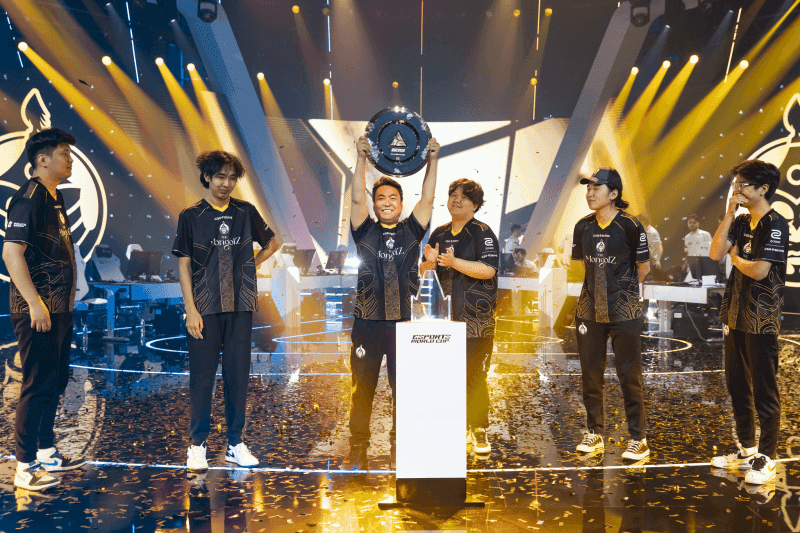
Unlike their Semifinals, MongolZ swept Aurora Gaming; they dominated their rivals to win their first S-tier trophy. With the trophy lift, they also etched their name into CS history as the first Asian team to win a big tournament.
#11. Selangor Red Giants vs Falcons AP Bren [4–3] — MSC 2024 Grand Final
Producing 5/6 of the World Champions, the Philippines reigns as the best nation when it comes to MLBB esports. The second closest competitor to the domination of the Philippines is Indonesia, which won the inaugural World Championship.
The other regions, despite producing talented players, have failed to achieve International success, including Malaysia. Despite cultivating talented players, Malaysia failed to score an international trophy against their SEA counterparts. At the MLBB Mid Season Cup 2024, fans of the game were expecting either of the Ph representatives to take home another MLBB trophy.
But the Malaysian Selangor Red Giants had different plans. They dominated their group, qualified for the Playoffs, took down FireFlux Esports and NIP Flash to face Falcons AP.Bren, the M5 World Champions. Many expected a clean sweep, but Selangor Red Giants refused to collapse. Every time the series tilted away from them, the roster clawed its way back through aggressive skirmishing and increasingly confident objective control.
Eventually, the finals reached Game 7. And from the opening minutes, the Malaysian side completely took over. Sekys secured first blood at minute four, the momentum snowballed instantly, and Selangor Red Giants closed the deciding game 21-10 in just 17 minutes.
Malaysia had finally secured its first major international MLBB title. This victory was not just a win for the underdog but a tiny win for an underrepresented region.
#12. G2 Esports vs Team Vitality [2–1] — IEM Dallas 2024 Grand Final
After a scheduling conflict made it impossible for HooXi, G2 Esports’ IGL, to attend the IEM Dallas 2024, the organisation had to scramble to find a suitable replacement. With limited time before the event starts, and the event hosted in the USA, importing a player from Europe on such short notice wasn’t an option. In such troubling times, G2 Esports turned towards NA Legend Stewie2k.
The only problem being Stewie hadn’t played professional Counter-Strike in two years. That means no active protocols, no preparation, not to mention the EU-NA gap; all in all, the IEM Dallas expedition of G2 Esports looked dead before it even started.
It was the lack of expectation after the series of events that probably helped NiKo and m0NESY find an extra gear in the competition. After losing to Vitality in the Group Stage and dropping to the lower bracket, G2 Esports, playing with Stewie, took down MOUZ, Team Liquid, FaZe Clan, and 9z team to secure the Grand Finals of the event.
Team Vitality was easily the favorite entering the Grand Finals. NiKo’s calling and fragging helped them clinch Inferno after a 19-16 finish. Team Vitality answered back with an OT victory on Anubis of their own. The decider was dead even after the first half, but as soon as G2 Esports switched to CT, m0NESY took over, shut down Team Vitality to win the IEM Dallas 2024 with Stewie2k. This title run went down as one of the strangest and yet one of the most satisfying title runs in recent CS esports history.
#13. Rogue vs FaZe Clan [3–2] — Six Major Berlin Grand Final
Heading into the Rainbow Six Major Berlin, FaZe Clan looked like the clear favorites to win the event. The Brazilian side had already won the Sweden Major earlier and looked significantly more experienced than most of the competition attending Berlin.
In comparison, Rogue still looked unproven internationally despite having solid players across the roster. Not to mention, they were fielding Spoit, an 18-year-old rookie still adapting to Tier 1 LAN pressure. Naturally, very few expected Rogue to survive a playoff bracket featuring some of the best teams in the world, let alone defeat FaZe Clan in a Grand Final.
Unfortunately for everyone else, Rogue slowly started building momentum throughout the event. After falling behind against XSET, Rogue clawed their way back into the series to complete the reverse sweep. The victory itself completely shifted the atmosphere surrounding the roster. Instead of looking nervous on stage, the team suddenly looked increasingly confident with every map they played.
They followed the XSET victory with a clean sweep over G2 Esports to secure the Grand Finals. More importantly, players like Spoit and LeonGids looked completely comfortable despite the pressure steadily increasing throughout the playoffs.
The Grand Finals themselves pushed both teams to the absolute limit. Neither side could maintain momentum for long, and eventually the series reached the deciding fifth map on Clubhouse. The map itself became complete chaos once overtime began. Kanto found a crucial double kill to put Rogue within touching distance of the trophy, but FaZe answered back immediately to keep themselves alive.
Just when it looked like the pressure could overwhelm Rogue, Kanto stepped up once again to close out Clubhouse 8-7 and secure one of the biggest underdog runs Rainbow Six Siege esports had seen.
#14. Penta Sports vs Evil Geniuses, 3–2 reverse sweep — Six Invitational 2018
By the time the Six Invitational 2018 Grand Finals began, Evil Geniuses looked destined to defend their world championship. The North American side entered the finals carrying massive momentum throughout the tournament and quickly established control of the series itself. After securing the opening two maps, EG looked significantly sharper, more composed, and just one map away from lifting another world title.
In comparison, Penta Sports looked overwhelmed by the pressure of the finals. At 0-2 down, the series genuinely felt over, especially against a defending champion roster as experienced as Evil Geniuses.
But instead of collapsing completely, Penta slowly began adjusting to the pace of the series. The European side tightened their setups, slowed the game down, and gradually denied Evil Geniuses the aggressive momentum they relied on earlier in the finals.
Once Penta secured the third map, the pressure itself started shifting. Suddenly, EG looked hesitant, while Penta started playing with significantly more confidence. The momentum swing became even more obvious during the fourth map as the European side forced the Grand Finals into a deciding fifth map despite starting the series 0-2.
Everything eventually came down to Coastline. The deciding map pushed both teams into overtime, with neither side willing to give away the championship. And during the final moments of the series, Pengu delivered one of the most iconic clutches in Rainbow Six Siege history.
Facing a 1v2 situation in overtime, the Danish star secured the clutch—his 15th kill of the map—and completed the reverse sweep for Penta Sports. The comeback instantly became one of the greatest Grand Finals recoveries the game had ever seen.
#15. Gambit Esports vs Virtus.pro [3–1] — IEM Season XV Grand Finals
At the start of 2020 and CS:GO’s online era, Gambit let go of their senior roster and promoted their academy team to the main roster. Throughout 2020, the young roster grinded through the A-tier and B-tier events to eventually find themselves on the invite list of the big S-tier events.
The roster’s first S-tier expedition at DreamHack left much to be desired, but the IEM XV World Championship gave them another chance to prove themselves. Starting in the Play-In stage, Gambit Esports made quick work of Team oNe and mousesports to qualify for the Group stage of the competition.
Placed into Group A, they lost their opening fixture to Evil Geniuses and had to make a lower bracket if they had to continue in the tournament. Despite the lack of experience on the roster, they displayed resilience, defeating mousesports, Heroic, and G2 Esports to qualify for the Playoffs.
By the time Gambit reached the Grand Finals, they had convincingly taken down NAVI and Team Spirit, two of the biggest names in CIS at the time. The roster no longer looked like a dangerous upset team.
They looked like one of the strongest teams attending the event. Nafany’s aggressive calling style consistently created space for stars like Ax1Le and sh1ro to take over games, while Hobbit’s experience helped stabilize the younger core throughout high-pressure moments.
The Grand Final itself only reinforced how dominant Gambit had become during the event. Their complete 16-4 demolition of Virtus.pro on Train instantly shifted the momentum of the series. While VP managed to fight back later, Gambit eventually closed the finals on Overpass 16-12 to complete the run from play-ins to the trophy.
The style of CS and the way the young core grinded through the competition inspired many other CIS teams to rise and become a foothold for the current CIS teams like FUT Esports, B8, and BetBoom that consistently threaten tier 1 Counter-Strike.
Honorable Mentions
In this section, we will mention some of the most impactful esports runs that did not necessarily yield a trophy, yet left a deep impact on the esports scene.
- FNATIC wins Inaugural Worlds 2011 (Riot Season 1 Championship): Featuring the legends like xPeke and Shushei, FNATIC's trophy run at the Riot Season 1 Championship makes them the only successful Western team to win a League of Legends World Championship.
- T1 wins Worlds 2023: After deft and DRX won the Worlds 2022, T1 regrouped for the 2023 season and dominated the region. The joy was short-lived as Faker had to sit out a major chunk due to a wrist injury. But the GOAT came back recuperated and helped his team win the Worlds 2023, and followed it with a three-peat. This is an impactful run, but Faker and the legendary ZOFGK roster cannot be considered underdogs.
- Shanghai Dragons 2021: After starting the OWL journey with the infamous 0-40 season, the Shanghai Dragons underwent multiple transformations to redeem themselves by sweeping Atlanta Reign to win the 2021 OWL Championship
- FlyQuest put up a strong fight against Gen.G: Very few people gave FlyQuest a realistic chance against Gen.G entering the Worlds 2024 quarterfinals. The NA first seed still pushed the reigning MSI champions to a deciding fifth game, producing one of the closest North America had come to a modern Worlds semifinal appearance.
- Albus NoX Luna became the first Wildcard team to qualify for Worlds Knockout Stage: Wildcard teams that historically existed at Worlds simply to fill regional representation slots. Albus NoX Luna completely disrupted that narrative in 2016 by defeating G2 Esports in groups and becoming the first wildcard roster to qualify for the knockout stage of Worlds.
- ENCE reach the Grand Finals of IEM Katowice Major 2019: With names like NAVI, MIBR, Team Liquid, FaZe Clan in the mix, no one expected an unassuming Finnish roster to make their way to the Grand Finals of the IEM Katowice 2019 Major.
- Ad Finem's power of friendship reaches Boston Major 2016 Grand Finals: Ad Finem’s Boston Major run felt almost impossible, considering the roster entered the event without a major organisation backing them. Five Greek friends suddenly became one of the biggest stories in Dota 2 after fighting through the bracket before eventually losing the Grand Finals to OG.
-
ZETA DIVISION's historic VCT Reykjavik 2022 run: Before Reykjavik 2022, Japanese VALORANT teams struggled heavily at international events. ZETA DIVISION completely changed that perception after an improbable lower bracket run pushed them all the way to a top-three finish, creating one of the biggest regional breakthrough moments in VALORANT history.
Let's take a look at what really makes these underdogs run possible.
Patterns Across the Underdog Runs
One of the most prominent patterns that clearly arises in these underdog runs is: Whenever a team is faced with a situation where they have nothing to lose, they tend to produce better results.
This effect can be replicated in multiple ways; the first is when the teams enter the tournament with a patchwork roster, an emergency sub, a broken team, or a team on the verge of imploding, e.g., OG@TI8, Cloud9@2018 Boston Major, G2 Esports @IEM Dallas 2024. In each case, the roster took on more stable, established teams and powered through to win the trophy. Part of the reason is that their gameplay is free from the fear of losing, since they have lower expectations. This allows the player to take risks they won’t usually take and make it work.
Another way the same effect plays out is when the tournament has one or more heavy favorites. E.g., T1 @World 2022, PSG LGD @TI10, Falcons @RLCS, or Filipino teams @MCS2024. Here, the teams already understand that they have very little to lose because the winner of the tournament is already decided. This narrative of a favorite allowed teams like DRX, Team Spirit, Moist Esports, and Selangor Red Giants to play with an open mind, resulting in real-time improvement and silverware.
This effect can be extended to a whole region, where teams from upcoming regions naturally play with less pressure to win, producing miracle runs.
Another effect that plays a part is the “Lower Bracket Effect,” which is essentially the simplification of what a team needs to do once it falls into the lower bracket. This helped multiple rosters on our list, but the best example is TSM’s ALGS win, where they simply had to win the final three games, or they’d lose, simplifying the problem statement and thus improving their focus.
While it is easy to dismiss these runs as the favorites and the team’s expected to win, i.e., “the favorite” choking, it is lazy reasoning. Every team on the list consistently improved over the span of the tournament, accumulating momentum and using the improved, fearless version to take down a much better opponent on paper.
While it is widely observed, it is hard to quantify how momentum, pressure, and expectation affect the outcome of a game. Hence, it is hard to really predict when an underdog team will go on a run.
The best way to keep updated on the underdog runs is to track the upcoming tournaments, brackets, and fixtures across CS2, League of Legends, VALORANT, Dota 2, and more through Strafe's tournament, matches, and live game pages. Check out our news section for the latest updates on the favorite game and its adjoining esports.
Featured Image Credit: Valve