
Esports Betting
/
World Cup 2026: Best Betting Sites & Odds
/
World Cup 2026 Winner Odds
World Cup 2026 Winner Odds: Favorites & Predictions
Last Updated on 24/08/2026
More than a billion football fans will be asking the same question over the next stretch of months: who will win the World Cup 2026? Spain and France are at the top of the outright market.
This is the first 48-team FIFA World Cup, it will run from 11 June to 19 July 2026, and it will be staged across Canada, Mexico, and the United States. Stay with us as we break down who will potentially win the World Cup 2026, examine the World Cup 2026 winner odds, and reveal the top 10 teams.
Top Betting Sites for World Cup 2026 Winner Betting


Favorite

4.9/5
- Covers major sports
- Live game stats
- Simple site navigation
Up To $1500 in Bonus Bets Paid Back if your First Bet Does Not Win
USA Players Eligible
Visit BetMGM
Banking Options









Withdrawal
0 – 3 Days
Apps
License

Award
GGA - Digital Operator of the Year (2023)
Gambling problem? Call 1-800-GAMBLER or 1-800-MY-RESET (Available in the US) 877-8-HOPENY or text HOPENY (467369) (NY) 1-800-327-5050 (MA), 1-800-BETS-OFF (IA), 1-800-981-0023 (PR). 21+ only. Please Gamble Responsibly. See BetMGM.com for Terms. First Bet Offer for new customers only (if applicable). Subject to eligibility requirements. Bonus bets are non-withdrawable. In partnership with Kansas Crossing Casino and Hotel. Promotional offers not available in Mississippi, Massachusetts, New York, Ontario, or Puerto Rico.
Show less

Hot Offer
4.8/5
- 21 sports to choose from.
- No specific betting limits listed.
- Ability to bet in-play on most sports.
Visit DraftKings
Banking Options


Withdrawal
0 – 5 Days
Apps
License
Award
EGR - Operator of the year (2023)
To be eligible for DraftKings Sportsbook and the Promotion, you must be physically located in AR, AZ, CO, CT, DC, IA, IL, IN, KS, KY, LA (select parishes), MA, MD, ME, MI, MO, NC, NJ, NH, NY, OH, OR, PA, PR (residents only), TN, VA, VT, WY, WV, CA-ONT or CA-AB (each an “Eligible Jurisdiction” or, collectively, the “Eligible Jurisdictions”). Must be 21+ years of age or older (18+ if in DC/NH/PR/WY/CA-AB) (19+ in CA-ONT). GAMBLING PROBLEM? CALL 1-800-GAMBLER or 1-800-MY-RESET, (800) 327-5050 or visit gamblinghelplinema.org (MA) Please Gamble Responsibly. 888-789-7777/visit ccpg.org (CT), or visit www.mdgamblinghelp.org (MD), 1-800-981-0023 (PR). 21+ and present in most states. (18+ DC/NH/PR/WY). Void in CAN. Eligibility restrictions apply. On behalf of Boot Hill Casino (KS). Pass-thru of per wager tax may apply in IL. 1 per new DraftKings customer. $5+ first-time bet req. Max. $200 issued as non-withdrawable Bonus Bets. Stake removed from payout. Reward issued as $50 in Bonus Bets every 7 days via click-to-claim for 21 days. Bonus Bets and click-to-claims expire 7 days (168hrs) after issuance. Terms: Promos | DraftKings Sportsbook . Ends 9/20/26 at 11:59 PM ET. Sponsored by DK.
Show less

Hot Offer
4.8/5
- Multiple sports markets
- Amazing joining offer
- Promo codes for specific bets
New Users – Get $350 in Bonus Bets when you wager $5 for 7 days
USA Players Eligible
Visit FanDuel
Banking Options


Withdrawal
1 – 10 Days
Apps
License
Award
Global Gaming Awards (2022)
Gambling Problem? Call 1-800-GAMBLER or 1-800-MY-RESET. Call 1-888-789-7777 or visit ccpg.org/chat (CT). Hope is here. GamblingHelpLineMA.org or call (800) 327-5050 for 24/7 support (MA). Visit www.mdgamblinghelp.org (MD). Call 1-877-8HOPE-NY or text HOPENY (467369) (NY). 21+ (18+ D.C., KY, WY) and present in select states (for KS, in affiliation with Kansas Star Casino). First online real money wager only. Min $5 wager required for 7 consecutive days.$5 first deposit required. Bonus issued as nonwithdrawable bonus bets which expire 7 days after receipt. Restrictions apply. See terms at sportsbook.fanduel.com. Call 1-877-770-7867 (LA). ™/© 2026 MLB
Show less

4.
4.7/5
- Site not yet launched
- High hopes for a big launch offer
- Welcome offer looks good
Fanatics Promo Code
Get Up to $1,000 Matched in FanCash
USA Players Eligible
Visit Fanatics
Banking Options


Apps
License
Must be 21+. GAMBLING PROBLEM? CALL 1-800-GAMBLER OR CALL 1-800-MY-RESET, www.mdgamblinghelp.org (MD), (800)-327-5050 or gamblinghelplinema.org (MA), Call (877)8-HOPENY or text HOPENY (467369) (NY), (888) 789-7777 or ccpg.org (CT), morethanagame.nc.gov (NC), 1800gambler.net (WV)
Show More

5.
4.5/5
- Genuinely one of the leading brands globally
- Countless markets to bet on - all with great odds
- Claim their fantastic bonus bets promo today
Visit Bet365
Banking Options
Find out more on Bet365.
Withdrawal
0 – 5 Days
Apps
License
Award
EGR - Operator of the year (2017)
Whatever the moment. It's Never Ordinary at bet365. That's why if you sign up now you will receive $150 in Bonus Bets Win or Lose when you bet $5! Minimum $10 deposit required. Minimum odds -500 or greater. Bonus Bets wager excluded from returns. New customers only. T&CS, time limits and exclusions apply.GAMBLING PROBLEM? CALL 1-800-MY-RESET. 21+ (AZ/CO/IL/IN/KS/KY/LA/MD/NC/NJ/OH/PA/TN/VA) or 1-800-BETS OFF (IA). 21+ (18+ KY). Must be present in AZ/CO/IA/IL/IN/KS/KY/LA (select parishes)/MD/NC/NJ/OH/PA/TN/VA.
Show More

6.
- Regular enhanced odds markets
- Excellent for live betting on popular sports leagues
- Sports markets are easy to navigate via the mobile app
Best Alternative
Visit BetMGM
Banking Options



Withdrawal
3 – 5 Days
Apps
License
Show More

7.
- $10 bonus for opening a new account.
- Double your next 20 winnings after a $1 first bet offer.
- 10 sports available to bet on including soccer, football, baseball and basketball.
Bet $1 and get double the winnings up to $25 for your next 10 bets
USA Players Eligible
Best Alternative
Visit BetMGM
Banking Options


Withdrawal
0 – 5 Days
Apps
License
21+ New users only. Must register using eligible promo code. First bet after registration must qualify. Max. Bonus Bet: $1,000. Bonus Bet expires 14 days after receipt. Void where prohibited. See Caesars.com/promos for full terms. Gambling Problem? 1-800-GAMBLER (1-800-426-2537)
Show More
Table of Contents
Pros and cons of World Cup 2026
If you haven’t bet on the World Cup in the previous editions, why should you put money on your favorites on this year’s World Cup? Here are the benefits and drawbacks of the 2026 World Cup:
- First 48-team World Cup
- Elite field still led by proven title contenders
- Hosts spread across North America
- Mixed recent tournament finishes
Our top providers with the odds for the favorite
| Provider | Bonus | Spain to Win |
|---|---|---|
| Stake | 200% up to $2000 with the code STRAFESPOVIP | 19/4 |
| BC.GAME | 120% up to $500 + 5 Free Spins | 9/2 |
| Boomerang bet | 125 % up to €400 | 4/1 |
| Bet Panda | 100% Deposit Bonus Up To 1 BTC | 9/2 |
| 1Red | First deposit bonus Freebet bonus 50% up to €700 + Hunting bonus 200% up to €5,000 | 9/2 |
| Whale.io | Up to 22% cashback | 9/2 |
| Vave | 100% up to 1₿ | 9/2 |
| Shuffle | 200% deposit bonus up to $1000 | 91/20 |
| BiggerZ | 50% up to 500 USDT OnlyWin Freebet | 9/2 |
| JB.com | 470% + 400 FS across first 4 deposits | 9/2 |
| Bet365 | up to 100€ Bet Credits | 9/2 |
| Casabet | 125% up to 300€ | 9/2 |
Over 33% of Leaders Lost - Protect Your Bet with Our Early Payout!
The World Cup Quarter-Finals are finally here, and the action is heating up. We are giving you the ultimate insurance policy: if your team scores the first goal, you win. Over a third of knockout matches have seen the opening team lose, but with Stake, a first goal is all it takes to guarantee your payout.
- Matches: Every Quarter-Final, Semi-Final, and Final game
- Bet Type: First pre-match 1x2 single bet per household
- Caps: Max stake of $100 USD; max reward of $250 USD
| Features to look for | Why it matters for World Cup 2026 betting |
|---|---|
| Outright winners odds | Lets you bet on the tournament winner before or during the competition. |
| Match betting markets | Covers options like 1X2, totals, handicaps, both teams to score and team props. |
| Group betting options | Useful since World Cup 2026 will feature 12 groups of four teams. |
| Player markets | Helps you bet on goalscorers, assists, shots, cards and award markets. |
| Live betting | Gives you more in-play options in the 104-match tournament. |
| Early cash out feature | Allows you to settle selected bets before the final whistle. |
| Mobile experience | Makes it easier for you to bet across multiple matches in different time zones. |
| Local payment options | Helps to make your deposits and withdrawals easier based on your location. |
| Responsible gambling tools | Gives you access to limits, time-outs and other control features. |
World Cup 2026 winner odds: The top 10 teams in the title race
A handful of teams are realistic champions, and the rest are chasing from a distance. Below is the current top 10, followed by the reasons each side is being taken seriously in the race to lift the trophy in July 2026.
| Rank | Team | Winner odds |
| 1 | Spain | 19/4 |
| 2 | France | 11/2 |
| 3 | England | 8/1 |
| 4 | Brazil | 9/1 |
| 5 | Argentina | 9/1 |
| 6 | Portugal | 12/1 |
| 7 | Germany | 16/1 |
| 8 | Netherlands | 25/1 |
| 9 | Norway | 38/1 |
| 10 | Belgium | 40/1 |
1️⃣ Why Spain are the early favourites
Spain entered the 2026 World Cup as reigning European champions and one of the most stable teams in the field. FIFA noted in December that this is the third time this century Spain has gone into a World Cup as champions of Europe. Spain also spent part of this cycle at the top of the FIFA men’s ranking before dropping to second in the 1 April 2026 update.
The attacking numbers around this squad are also strong. FIFA’s Spain coverage highlighted that Mikel Oyarzabal had produced 11 goals and six assists in his last ten Spain appearances by the end of March 2026. Spain were also described by FIFA in December as unbeaten in 31 competitive matches, which separates them from most of the field.
Spain are near the front for clear reasons: major silverware already secured in this cycle, a top-two world ranking, a long unbeaten competitive run, and a forward line still producing goals.
2️⃣ Why France are in the top tier
France went back to No. 1 in the FIFA/Coca-Cola Men’s World Ranking on 1 April 2026. FIFA said the move came after two wins in their most recent friendlies, which lifted them above Spain and Argentina. That ranking update alone puts France at the centre of any serious World Cup winner discussion.
The squad profile is just as important. FIFA’s March 2026 squad coverage listed Kylian Mbappe, Ousmane Dembele, Desire Doue, Hugo Ekitike, Michael Olise, and Rayan Cherki among the attacking names selected by Didier Deschamps for the Brazil and Colombia fixtures. Alongside the title race, the World Cup 2026 Golden Boot battle is already drawing attention. FIFA also noted in January that France are set for an eighth consecutive World Cup and a 17th World Cup campaign overall.
France are in the top tier because the official indicators are all there at once: first in the world ranking, strong recent results, deep attacking options, and a national side that has been present deep into major tournaments for years. Meanwhile, World Cup 2026 betting promotions are expected to roll out months before kickoff.
3️⃣ Why England remain one of the leading contenders
England have already secured their place at the 2026 World Cup, which will be their 17th appearance and eighth in succession, according to FIFA. The defensive numbers are one of England’s strongest factual selling points. FIFA reported on 1 January 2026 that Thomas Tuchel’s England had faced just six shots on target during World Cup qualifying, fewer than any other nation.
At the other end of the pitch, England still have Harry Kane, and FIFA’s March profile on him underlined his central role in the squad’s 2026 ambitions. England are in the top bracket because they combine tournament experience, elite-level defensive numbers from qualifying, and one of the most established goalscorers in international football.
4️⃣ Why Brazil remain close to the front
Brazil’s status starts with history, but the current-cycle case is more specific. On 31 March 2026, Brazil beat Croatia 3-1 in a pre-World Cup friendly, with Danilo, Igor Thiago, and Gabriel Martinelli scoring. That gave Brazil a notable late-cycle result against serious opposition.
FIFA’s Brazil coverage in late March focused on Carlo Ancelotti and the shaping of the squad ahead of the tournament, which gives Brazil one of the most high-profile coaching narratives of any contender. FIFA also highlighted Brazil’s historical weight in a separate March feature calling them the all-time World Cup victory leaders.
Brazil are among the favourites because they still combine recent high-level results, world-class squad depth, and unmatched historical pedigree in the competition. Their squad also gives them a serious edge in the race for the World Cup 2026 Golden Ball.
5️⃣ Why Argentina are still one of the main teams to beat
Argentina are the defending world champions, and they were also the first CONMEBOL team to qualify for the 2026 tournament. FIFA confirmed they booked their place on 25 March 2025 when Bolivia drew 0-0 with Uruguay.
They also remain near the very top of the world ranking. FIFA’s 1 April 2026 update placed Argentina third, behind France and Spain, which means the holders are still in the elite band statistically as well as historically. Argentina are in the top 10 because the hard facts line up; reigning champions, early qualification, and still top three in the world ranking less than three months before the tournament.
6️⃣ Why Portugal remain firmly in the top ten conversation
Portugal qualified for the World Cup on 16 November 2025, with FIFA saying Roberto Martinez’s side are heading to the finals for the ninth time and a seventh straight edition.
Portugal also rose to fifth in the 1 April 2026 FIFA ranking update, overtaking Brazil after taking a win and a draw from their recent friendlies. FIFA’s qualification coverage also recorded that Portugal finished top of Group F in UEFA qualifying.
Portugal are in this top group because they qualified cleanly, kept moving upward in the ranking, and have carried stability through this cycle under the same coach. That same defensive consistency keeps Portugal in the World Cup 2026 Golden Glove picture, particularly if their back line and goalkeeper carry this form into the knockout rounds.
7️⃣ Why Germany remain a credible World Cup 2026 contender
Germany remains one of the teams the market and the wider football world still place in the contender bracket. They are already set in Group E for the finals, and the squad remains deep enough for Julian Nagelsmann to call in new talent even this late in the cycle, including Lennart Karl and Jonas Urbig in March 2026.
There is, however, a major personnel issue. FIFA reported that Serge Gnabry will miss the FIFA World Cup 2026 after suffering a thigh injury, ruling him out of both the remainder of Bayern Munich’s Bundesliga season and the tournament itself.
Germany are still in the top 10 because of their pedigree, squad depth, and status as one of Europe’s established tournament nations. But the Gnabry injury is one of the reasons they sit behind the very shortest-priced teams rather than alongside them.
8️⃣ Why the Netherlands are viewed as a real threat
The Netherlands qualified by topping Group G, sealing their place with a 4-0 win over Lithuania in Amsterdam on 17 November 2025. That gave them a path to the finals and avoided the uncertainty of the play-offs.
FIFA’s qualifying coverage also highlighted one of the standout attacking performances of the cycle when the Dutch put eight goals past Malta to preserve their 100 per cent record at that stage of qualifying. The Netherlands are in the top 10 because they qualified strongly, topped their section, and showed they can score heavily when they impose themselves.
9️⃣ Why Norway have forced their way into the top 10
Norway are the clearest outsider in this group, but the facts behind their rise are strong. FIFA says Norway are back at the World Cup after 28 years away, ending one of the longest absences among Europe’s stronger football nations.
The central figure is Erling Haaland. He scored 16 goals in eight qualifying matches, a total that matched Robert Lewandowski’s record for a European World Cup qualifying campaign. FIFA also recorded one extraordinary night in September 2025 when Haaland scored five goals in a Norway rout.
Norway are in the top 10 because they bring the most productive striker in qualifying, a first World Cup appearance in nearly three decades, and results strong enough to re-enter the main international conversation.
🔟 Why Belgium still round out the top 10
Belgium remain in the list because they still have proven high-level talent and were seeded among the leading sides in the draw structure. One of the clearest official markers is Kevin De Bruyne’s standing. FIFA’s March 2026 profile noted that De Bruyne had already made 115 appearances for Belgium, making him the sixth most-capped player in the country’s men’s history.
Belgium’s qualifying campaign also produced reminders of both their quality and their inconsistency. FIFA’s October 2025 round-up said Belgium were held on a night when Germany and France both won, which helps explain why Belgium are still respected but not placed as high as the strongest favourites.
Belgium are in the top 10 because the squad still contains elite-level experience and enough quality to remain relevant. They sit at the back of the leading group because the official results and recent cycle have been less convincing than those of the teams above them.
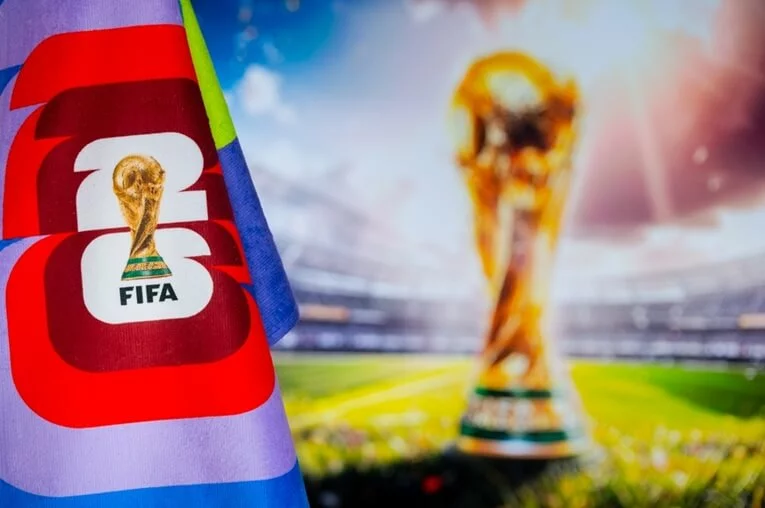
Spain is considered the clear favorite for the 2026 World Cup, but there can always be surprises (Image: Shutterstock/kovop)
Final verdict: Who will win the World Cup 2026?
This will be the first 48-team World Cup, with 104 matches and a month-plus schedule from 11 June to 19 July 2026 across North America. The race is set up exactly how football wanted it: no clear runaway, no easy call, and too many elite teams with real claims. Spain came in as the world’s top-ranked side. Argentina still carries the weight of being defending champions. England and Brazil remain right in the front line. France, Portugal, Germany, and the Netherlands are close enough to change the entire picture with one statement performance.
That is the real story heading into June. The field is loaded, the margins are thin, and one big night can reorder everything. A fast start, one injury, one Mbappe moment, one Kane finish, and the whole race shifts again. That is why the question is still hanging. Who will win the World Cup 2026? Right now, there is no answer. Only contenders, pressure, and a title fight that is ready to explode.
Join and claim these sports bonuses

1.
4.9/5
Up To $1500 in Bonus Bets Paid Back if your First Bet Does Not Win
USA Players Eligible
Min. Deposit: $5
Visit BetMGM
Gambling problem? Call 1-800-GAMBLER or 1-800-MY-RESET (Available in the US) 877-8-HOPENY or text HOPENY (467369) (NY) 1-800-327-5050 (MA), 1-800-BETS-OFF (IA), 1-800-981-0023 (PR). 21+ only. Please Gamble Responsibly. See BetMGM.com for Terms. First Bet Offer for new customers only (if applicable). Subject to eligibility requirements. Bonus bets are non-withdrawable. In partnership with Kansas Crossing Casino and Hotel. Promotional offers not available in Mississippi, Massachusetts, New York, Ontario, or Puerto Rico.

2.
4.8/5
New DraftKings Customer: SPEND $5, GET $200 IN BONUSES
USA Players Eligible
Terms (WR): New DraftKings Customer Offer: SPEND $5, GET $200 IN BONUSES ($50 in Bonus Bets every 7 days for 21 days)*, Min. Deposit: 5
Visit DraftKings
To be eligible for DraftKings Sportsbook and the Promotion, you must be physically located in AR, AZ, CO, CT, DC, IA, IL, IN, KS, KY, LA (select parishes), MA, MD, ME, MI, MO, NC, NJ, NH, NY, OH, OR, PA, PR (residents only), TN, VA, VT, WY, WV, CA-ONT or CA-AB (each an “Eligible Jurisdiction” or, collectively, the “Eligible Jurisdictions”). Must be 21+ years of age or older (18+ if in DC/NH/PR/WY/CA-AB) (19+ in CA-ONT). GAMBLING PROBLEM? CALL 1-800-GAMBLER or 1-800-MY-RESET, (800) 327-5050 or visit gamblinghelplinema.org (MA) Please Gamble Responsibly. 888-789-7777/visit ccpg.org (CT), or visit www.mdgamblinghelp.org (MD), 1-800-981-0023 (PR). 21+ and present in most states. (18+ DC/NH/PR/WY). Void in CAN. Eligibility restrictions apply. On behalf of Boot Hill Casino (KS). Pass-thru of per wager tax may apply in IL. 1 per new DraftKings customer. $5+ first-time bet req. Max. $200 issued as non-withdrawable Bonus Bets. Stake removed from payout. Reward issued as $50 in Bonus Bets every 7 days via click-to-claim for 21 days. Bonus Bets and click-to-claims expire 7 days (168hrs) after issuance. Terms: Promos | DraftKings Sportsbook . Ends 9/20/26 at 11:59 PM ET. Sponsored by DK.

3.
4.8/5
New Users – Get $350 in Bonus Bets when you wager $5 for 7 days
USA Players Eligible
Terms (WR): New Users – Get $350 in Bonus Bets when you wager $5 for 7 days ($50 Bonus Bets per day)
Visit FanDuel
Gambling Problem? Call 1-800-GAMBLER or 1-800-MY-RESET. Call 1-888-789-7777 or visit ccpg.org/chat (CT). Hope is here. GamblingHelpLineMA.org or call (800) 327-5050 for 24/7 support (MA). Visit www.mdgamblinghelp.org (MD). Call 1-877-8HOPE-NY or text HOPENY (467369) (NY). 21+ (18+ D.C., KY, WY) and present in select states (for KS, in affiliation with Kansas Star Casino). First online real money wager only. Min $5 wager required for 7 consecutive days.$5 first deposit required. Bonus issued as nonwithdrawable bonus bets which expire 7 days after receipt. Restrictions apply. See terms at sportsbook.fanduel.com. Call 1-877-770-7867 (LA). ™/© 2026 MLB

4.
4.7/5
Visit Fanatics
Must be 21+. GAMBLING PROBLEM? CALL 1-800-GAMBLER OR CALL 1-800-MY-RESET, www.mdgamblinghelp.org (MD), (800)-327-5050 or gamblinghelplinema.org (MA), Call (877)8-HOPENY or text HOPENY (467369) (NY), (888) 789-7777 or ccpg.org (CT), morethanagame.nc.gov (NC), 1800gambler.net (WV)

5.
4.5/5
Visit Bet365
Whatever the moment. It's Never Ordinary at bet365. That's why if you sign up now you will receive $150 in Bonus Bets Win or Lose when you bet $5! Minimum $10 deposit required. Minimum odds -500 or greater. Bonus Bets wager excluded from returns. New customers only. T&CS, time limits and exclusions apply.GAMBLING PROBLEM? CALL 1-800-MY-RESET. 21+ (AZ/CO/IL/IN/KS/KY/LA/MD/NC/NJ/OH/PA/TN/VA) or 1-800-BETS OFF (IA). 21+ (18+ KY). Must be present in AZ/CO/IA/IL/IN/KS/KY/LA (select parishes)/MD/NC/NJ/OH/PA/TN/VA.
FAQs on World Cup 2026
⚽ Who are the favourites to win the World Cup 2026?
The leading favourites are Spain, France, England, Brazil, and Argentina, with Portugal, Germany, the Netherlands, Norway, and Belgium also in the top 10 based on current form, rankings, qualification records, and overall tournament strength.
🏆 Who will win the World Cup 2026?
There is no confirmed winner yet. Spain are ranked No. 1 in the world, Argentina are the defending champions, and France, England, and Brazil are all firmly in the front group heading into the tournament.
📊 What are the current World Cup 2026 winner odds?
The current World Cup 2026 winner odds place Spain, France, England, Brazil, and Argentina at the front of the market, followed by Portugal, Germany, the Netherlands, Norway, and Belgium in the top 10.
🌍 How many teams will play in the 2026 World Cup?
The 2026 FIFA World Cup will feature 48 teams, making it the biggest edition of the tournament to date.
📅 When does the 2026 World Cup start?
The 2026 FIFA World Cup is scheduled to run from 11 June to 19 July 2026 across Canada, Mexico, and the United States.





BETTING SITES BY SPORTS:
BEST BETTING SITES:

4.9/5
Gambling problem? Call 1-800-GAMBLER or 1-800-MY-RESET (Available in the US) 877-8-HOPENY or text HOPENY (467369) (NY) 1-800-327-5050 (MA), 1-800-BETS-OFF (IA), 1-800-981-0023 (PR). 21+ only. Please Gamble Responsibly. See BetMGM.com for Terms. First Bet Offer for new customers only (if applicable). Subject to eligibility requirements. Bonus bets are non-withdrawable. In partnership with Kansas Crossing Casino and Hotel. Promotional offers not available in Mississippi, Massachusetts, New York, Ontario, or Puerto Rico.

4.8/5
To be eligible for DraftKings Sportsbook and the Promotion, you must be physically located in AR, AZ, CO, CT, DC, IA, IL, IN, KS, KY, LA (select parishes), MA, MD, ME, MI, MO, NC, NJ, NH, NY, OH, OR, PA, PR (residents only), TN, VA, VT, WY, WV, CA-ONT or CA-AB (each an “Eligible Jurisdiction” or, collectively, the “Eligible Jurisdictions”). Must be 21+ years of age or older (18+ if in DC/NH/PR/WY/CA-AB) (19+ in CA-ONT). GAMBLING PROBLEM? CALL 1-800-GAMBLER or 1-800-MY-RESET, (800) 327-5050 or visit gamblinghelplinema.org (MA) Please Gamble Responsibly. 888-789-7777/visit ccpg.org (CT), or visit www.mdgamblinghelp.org (MD), 1-800-981-0023 (PR). 21+ and present in most states. (18+ DC/NH/PR/WY). Void in CAN. Eligibility restrictions apply. On behalf of Boot Hill Casino (KS). Pass-thru of per wager tax may apply in IL. 1 per new DraftKings customer. $5+ first-time bet req. Max. $200 issued as non-withdrawable Bonus Bets. Stake removed from payout. Reward issued as $50 in Bonus Bets every 7 days via click-to-claim for 21 days. Bonus Bets and click-to-claims expire 7 days (168hrs) after issuance. Terms: Promos | DraftKings Sportsbook . Ends 9/20/26 at 11:59 PM ET. Sponsored by DK.

4.8/5
Gambling Problem? Call 1-800-GAMBLER or 1-800-MY-RESET. Call 1-888-789-7777 or visit ccpg.org/chat (CT). Hope is here. GamblingHelpLineMA.org or call (800) 327-5050 for 24/7 support (MA). Visit www.mdgamblinghelp.org (MD). Call 1-877-8HOPE-NY or text HOPENY (467369) (NY). 21+ (18+ D.C., KY, WY) and present in select states (for KS, in affiliation with Kansas Star Casino). First online real money wager only. Min $5 wager required for 7 consecutive days.$5 first deposit required. Bonus issued as nonwithdrawable bonus bets which expire 7 days after receipt. Restrictions apply. See terms at sportsbook.fanduel.com. Call 1-877-770-7867 (LA). ™/© 2026 MLB

4.7/5
Must be 21+. GAMBLING PROBLEM? CALL 1-800-GAMBLER OR CALL 1-800-MY-RESET, www.mdgamblinghelp.org (MD), (800)-327-5050 or gamblinghelplinema.org (MA), Call (877)8-HOPENY or text HOPENY (467369) (NY), (888) 789-7777 or ccpg.org (CT), morethanagame.nc.gov (NC), 1800gambler.net (WV)

4.5/5
Whatever the moment. It's Never Ordinary at bet365. That's why if you sign up now you will receive $150 in Bonus Bets Win or Lose when you bet $5! Minimum $10 deposit required. Minimum odds -500 or greater. Bonus Bets wager excluded from returns. New customers only. T&CS, time limits and exclusions apply.GAMBLING PROBLEM? CALL 1-800-MY-RESET. 21+ (AZ/CO/IL/IN/KS/KY/LA/MD/NC/NJ/OH/PA/TN/VA) or 1-800-BETS OFF (IA). 21+ (18+ KY). Must be present in AZ/CO/IA/IL/IN/KS/KY/LA (select parishes)/MD/NC/NJ/OH/PA/TN/VA.
BEST ONLINE CASINOS:
SOCIAL CASINOS:
- Best Online Social Casinos
- Top 10 Social Casino Apps
- New Social Casinos USA
- Real Money Social Casino
- Best Social Betting Apps
- Social Casino Real Money App
- Real Money Social Casino Games
- Sweepstakes Casino Online
- Top Sweepstakes Casino App
- Sweepstakes Slots Machines (Top 5)
- New Sweepstakes Casinos
- Sweepstakes Gambling Explained
- Sweepstakes Casino No Deposit
- Sweepstakes Casino Promo Codes
- Instant Win Sweepstakes Casinos
STAKE.US SPECIAL:
- Best Slots on Stake.us 2026
- Best Stake.us Scratch Cards
- Is Stake.us Legal in the US?
- Stake.us Bonus Drops 2026
- Stake.us Crash Guide 2026
- Stake.us Daily Reload 2026
- Stake.us Dice Guide 2026
- Stake.us Free Spins 2026
- Stake.us Hilo Game 2026
- Stake.us Plinko Guide 2026
- Stake.us Promo Code September & Exclusive Social Casino Sign Up Bonus
- Stake.us Referral Code for 2026
- Stake.us Sweepstakes 2026
- Stake.us VIP Levels and How To Achieve Them in 2026
- Stake.us Weekly Bonus 2026
- What States is Stake.us Legal in 2022?
MORE ON ESPORTS
🥇 COMPETITIVE ESPORTS
🔥 NEWS & HOT TOPICS
Our Team