
 en
en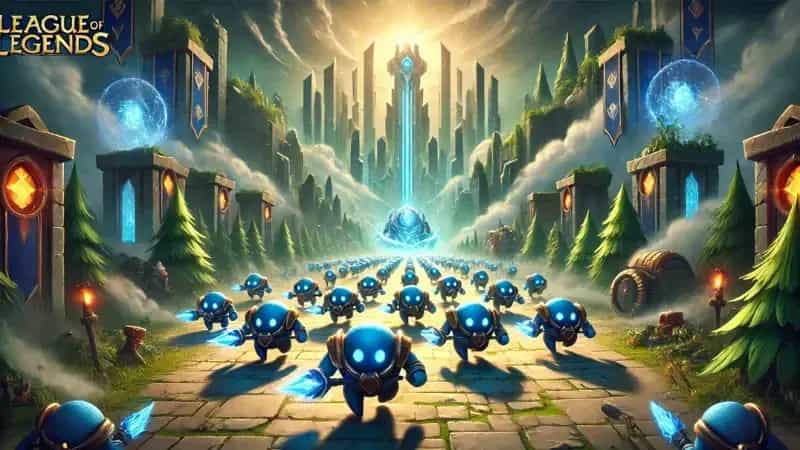
LoL Minions Guide: Spawn Times, XP, Gold and Wave Stats

6 Aug, 2026, 07:15
|Last updated: 6 Aug, 2026, 07:15
Minions in League of Legends play an essential role in shaping the game’s pace and strategic elements. Spawned by each team’s Nexus, minions advance through the lanes toward the enemy base, attacking enemy units and structures along the way.
While often overlooked, understanding minions, their behaviors, and how they impact gameplay is crucial for players looking to maximize their lane control and gold income.
*Last updated: 06/08/2026
Read More: League of Legends Beginner's Guide
Spawning Locations and Routes
Minions spawn periodically from each Nexus and follow designated paths toward the enemy base. The primary battleground for these units is Summoner's Rift, although they appear in other game modes as well, like Howling Abyss. Summoner's Rift features three lanes: top, middle, and bottom. Each lane has specific points where minions spawn, starting their journey to the opposing base.
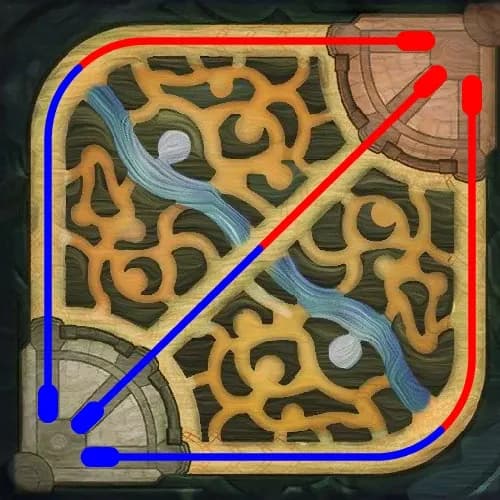
The spawning routes are distinct for each map, with Summoner's Rift lanes being the most commonly contested. In general, minions begin their march immediately after spawning and will follow a linear path, engaging any enemy they encounter along the way.
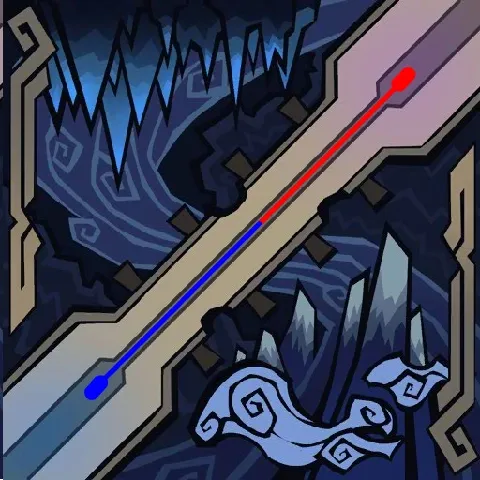
Summoner's Rift Minion Waves
In Summoner’s Rift, minion waves begin spawning at 1:05 and continue to spawn every 30 seconds throughout the game. Each wave includes a mix of different minion types, with the exact composition evolving as the game progresses:
When do Minions Spawn in League of Legends?
The first minion wave spawns at 1:05, with new waves spawning every 30 seconds for the rest of the game.
| Key Timings | Timing |
|---|---|
| 1st Wave | 1:05 |
| Wave Interval | Every 30 seconds |
| First Wave Collision | 1:30 (Mid Lane) 1:40 (Side Lanes) |
| Cannon Minion Spawns | Minutes 0-15: Every 3rd Wave Minutes 15-25: Every 2nd Wave Minute 25+: Every Wave |
| Super Minions | Begins spawning in that lane when an enemy inhibitor has been destroyed. |
Types of Minions in a Wave
Melee Minions
These minions spawn in groups of three per wave, dealing moderate damage but primarily acting as front-line tanks.
Caster Minions
Three caster minions spawn in each wave, dealing damage from a distance but with lower health.
Siege Minions
Also known as cannon minions, these minions appear every third wave for the first 15 minutes, every second wave from 15 to 25 minutes, and with each wave after 25 minutes.
Siege minions deal higher damage to structures and have higher health, making them valuable for pushing lanes.
Super Minions
These powerful minions spawn only when the enemy's inhibitor in a specific lane is destroyed. If all three inhibitors are down, two super minions spawn in each lane, providing overwhelming pressure.
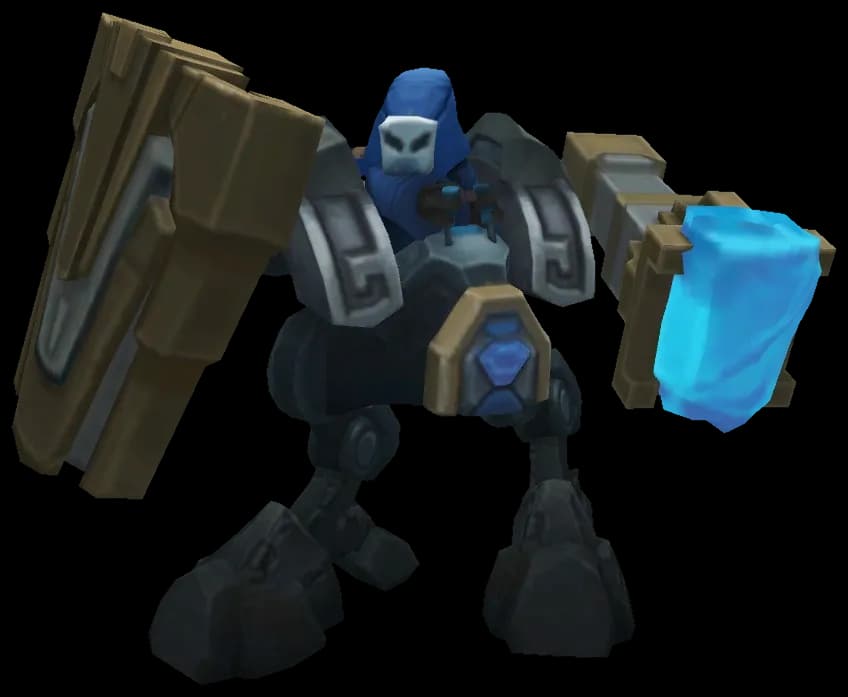
Each minion type has a specific role in a wave. For example, siege minions are crucial in pushing towers due to their high health, while caster minions support from behind.
Minion Stats: XP, Gold, and Health by Type
Each minion type gives different gold, XP, and has different health. These values also scale as the game progresses.
| Minion Type | Health | Attack Damage | XP on Kill | Gold on Kill |
|---|---|---|---|---|
| Melee | 477 | 12 |
61.75 (solo) 80.6 (shared) | 21 |
| Caster | 296 | 24 |
30.4 (solo) 39.68 (shared) | 14 |
| Siege (Cannon) | 912 | 41 | 95 (solo) 124 (shared) | 60 |
| Super | 1600 | 230 | 95 (solo) 124 (shared) | 60 |
| Game Time | 0 - 15 min | 15 -25 min | 25+ min |
|---|---|---|---|
| Melee HP | 477 - 739.8 | 739.8 - 955.8 | 955.8 - 1300 |
| Melee Gold | 20 - 21.25 | 21.25 - 22 | Upperlimit unconfirmed |
| Caster HP | 296 - 361.25 | 361.25 - 410.75 | 410.75 - 485 |
| Caster Gold | 17 - 18.25 | 18.25 - 19 | Upperlimit unconfirmed |
| Siege HP | 912 - 1595 | 1595 - 2117 | 2117 - 10850 |
| Siege Gold | 45 - 48.5 | 48.5 - 50.6 | Upperlimit unconfirmed |
*Gold scaling only occurs on Howling Abyss
| Game Time | Melee per Wave | Caster per Wave | Siege Frequency |
|---|---|---|---|
| 0-15 min | 3 | 3 | Every 3 waves |
| 15-25 min | 3 | 3 | Every 2 waves |
| 25+ min | 3 | 3 | Every wave |
Minion Behavior and Targeting Mechanics
Minions are controlled by artificial intelligence and follow basic attack behaviors. As they march down their lanes, they seek out targets based on specific rules, often referred to as priority and acquisition range.
Minion Target Priority
When encountering multiple potential targets, minions choose based on the following priority:
1) Enemy champions attacking an allied champion
2) Enemy minions attacking an allied champion
3) Enemy minions attacking an allied minion
4) Enemy turrets attacking an allied minion
5) Closest enemy champion or minion
This priority system ensures that minions often protect allied champions engaged in combat. For instance, if an enemy champion is attacking an allied champion, the minions in the area will focus on the enemy champion, providing valuable protection.
Read More: CC Statuses in League of Legends
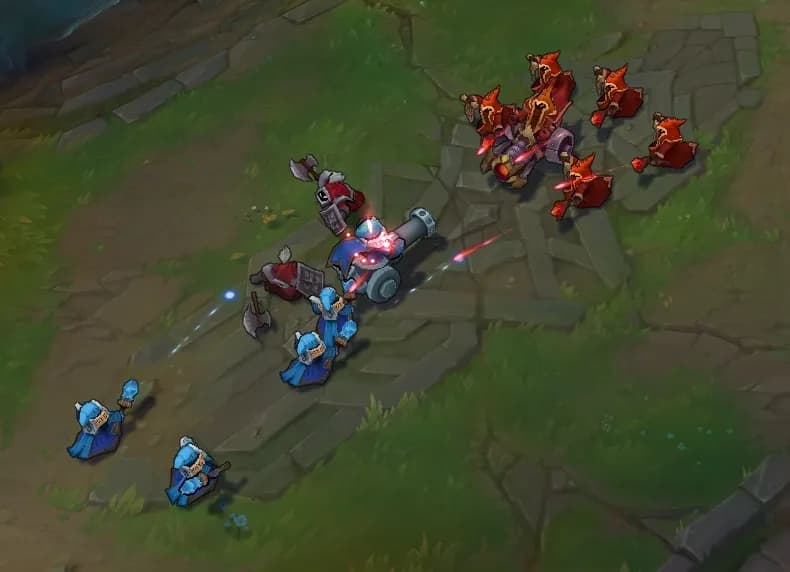
Acquisition Range
Minions generally acquire targets within 500 units, though this range extends to 1,000 units for allied champions under attack by enemy champions. This extended acquisition range encourages minions to respond to threats against allied champions, allowing them to assist from further away if needed.
Timing and Re-evaluation of Targets
Minions reassess their target after each attack windup, meaning they will continue to pursue an enemy champion who recently attacked an ally, even if the champion disengages. This slight delay in re-evaluation can be strategically leveraged by players to manipulate minion targeting and positioning.
Buffs and Power Scaling
Minions gain strength as the game progresses, with their stats scaling every 90 seconds. This scaling includes increases in health, attack damage, and other factors depending on the game’s state. Additionally, minions receive buffs under certain conditions, such as when an enemy inhibitor is destroyed.
Minion Pushing Buffs
On Summoner’s Rift, the team with a higher average champion level gains a “minion pushing” buff. This buff increases minion damage against enemy minions and reduces damage received, making it easier to push lanes when ahead in level.
Calculating this buff considers team level advantage and turret advantage, with a maximum possible boost of 60% bonus damage and 10 damage reduction.
Minions receive this buff after 3:30, allowing early-game champions with strong wave-clear abilities to exert dominance over minion waves when they have a lead.
Neutral Buffs
One of the most notable neutral buffs for minions is the Hand of Baron buff, provided when a team secures the Baron Nashor objective. This buff grants allied minions in nearby lanes a boost in power, making them significantly harder to clear and providing extra pushing strength for sieging towers.
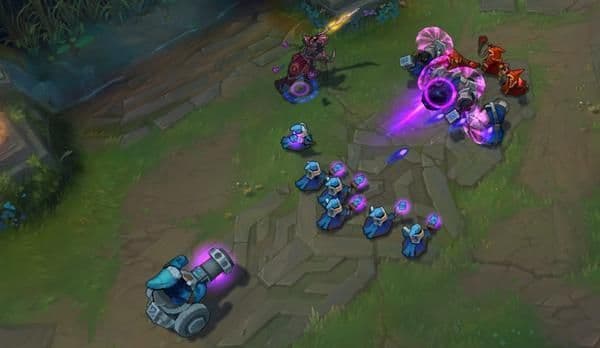
Minion Interactions and Game Mechanics
Various in-game elements interact uniquely with minions, altering their damage, behaviors, or granting additional effects. These interactions often define how players approach minion waves and the strategies used to secure lane dominance.
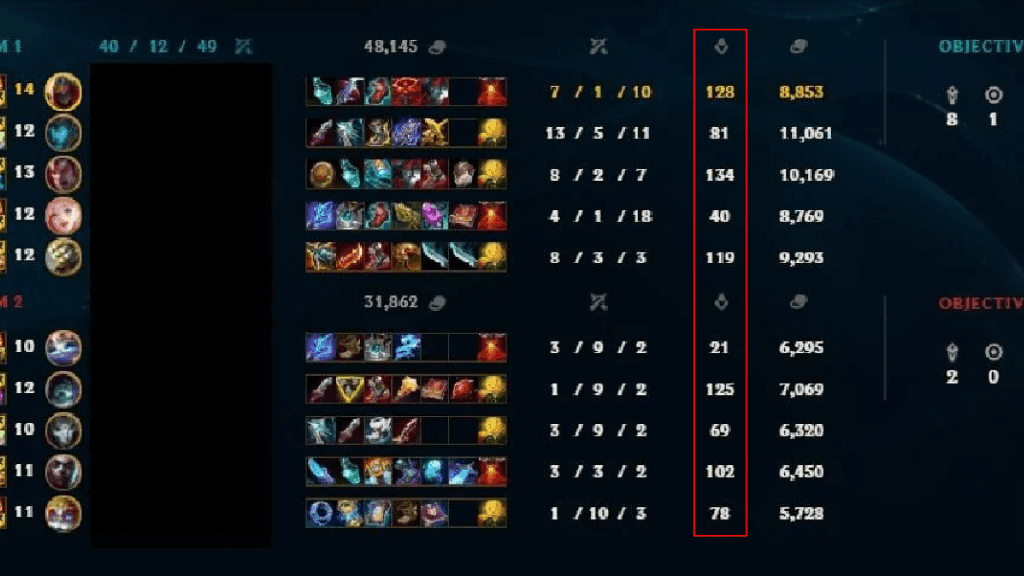
Creep Score (CS)
Creep Score, or CS, measures the number of minions a player has successfully “last hit.” Each minion kill counts as 1 CS, and accumulating a high CS score is critical for gaining a gold advantage. Timing these last hits is essential to earn gold efficiently, as missed CS opportunities can lead to falling behind an opponent in items and power.
Wave Gold Value and Strategy
Minion waves contribute substantial gold income, particularly in the early game. The gold value per wave increases over time, reaching up to 195 gold at the 25-minute mark. Maintaining high CS, especially on siege minions, becomes even more rewarding as they appear more frequently.
Lane Pushing and Freezing
Minion waves can push or freeze depending on a player’s actions:
- Pushing: Players push a lane by killing enemy minions faster than the enemy wave can respond, forcing the wave closer to the enemy’s tower.
- Freezing: Players avoid killing minions too quickly, allowing the wave to remain closer to their own tower, where they are safer from ganks.
- Wave Management: By selectively pushing or freezing waves, players can control the flow of minions in their lane, creating advantageous positions and controlling resources.
Game Terminology Related to Minions
- Farming: Consistently last-hitting minions to gain gold and experience.
- Lane Momentum: The forward pressure a minion wave generates as it moves down the lane.
- Winions: Minions that become strong enough to destroy turrets, inhibitors, or the Nexus on their own.
- Split Pushing: Pushing multiple objectives simultaneously, often involving minion waves to pressure towers across the map.
Minion Variants and Visual Differences
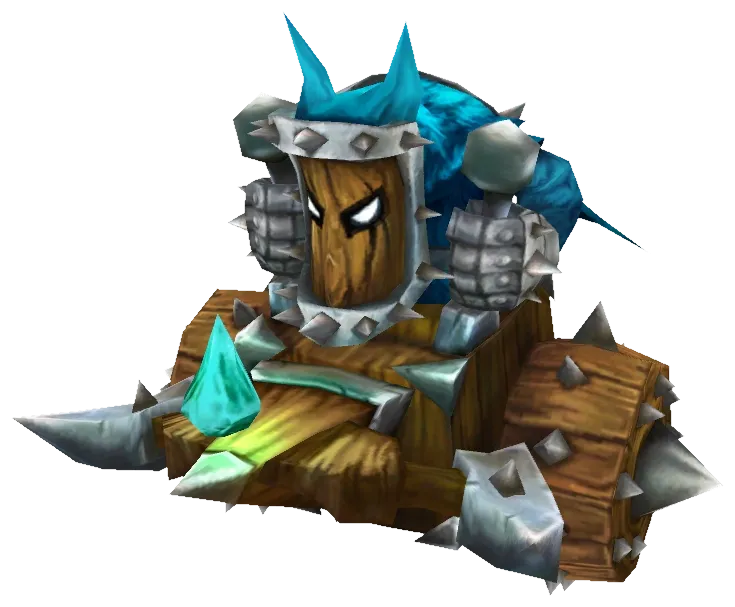
On Summoner’s Rift, minions are categorized by their factions: Order (blue team) and Chaos (red team). Each faction has its own design and visual style. Blue minions (Order) appear blue, while red minions (Chaos) appear red, making it easy for players to distinguish between ally and enemy minions. Although purely visual, these distinctions help players quickly identify targets during gameplay.
Minions also receive visual changes as they evolve over game patches. In early stages, for instance, the old Siege Minion resembled a mobile ballista, whereas modern Siege Minions resemble sturdy, tank-like units.
Trivia and Fun Facts
Interestingly, if a game plays out without any interference from champions, the minions on one side will eventually push through to the enemy Nexus and win the game. This “automatic victory” is a rare scenario but demonstrates the power of minion waves. Additionally, minions follow players through the jungle when they pick up aggro, allowing for unique interactions that players can leverage for strategic advantage.
Minions in League of Legends are a deceptively simple part of the game but contribute significantly to its depth. Understanding their mechanics and leveraging wave control allows players to gain an edge in both gold and map pressure, making them an indispensable part of every game.
Follow Strafe Esports for the latest League of Legends news, and our X account for the latest content and coverage. Also, stay tuned to Strafe's YouTube channel for exclusive interviews, press conferences, and more.
Featured Image Credit: AI Generated // Strafe Esports