
 en
en
Counter-Strike 2 Genesis Uplink Terminal Update: Breakdown of the New Skin Purchase System and Genesis Collection
The gaming community received quite the shock in September 2025 when Valve rolled out one of Counter-Strike 2's most controversial updates yet. The Genesis Uplink Terminal update introduced a completely revolutionary approach to skin acquisition that has sparked intense debates about monetization, fairness, and the future of CS2's economy.
The Genesis Collection: A New Era of Skin Distribution
The update brought 17 brand-new community-created weapon skins to CS2, but accessing them requires navigating Valve's experimental Arms Dealer Terminal system. Unlike traditional cases that rely on random drops and keys, the Genesis Collection operates through a unique mechanism that promises more control while potentially costing significantly more.
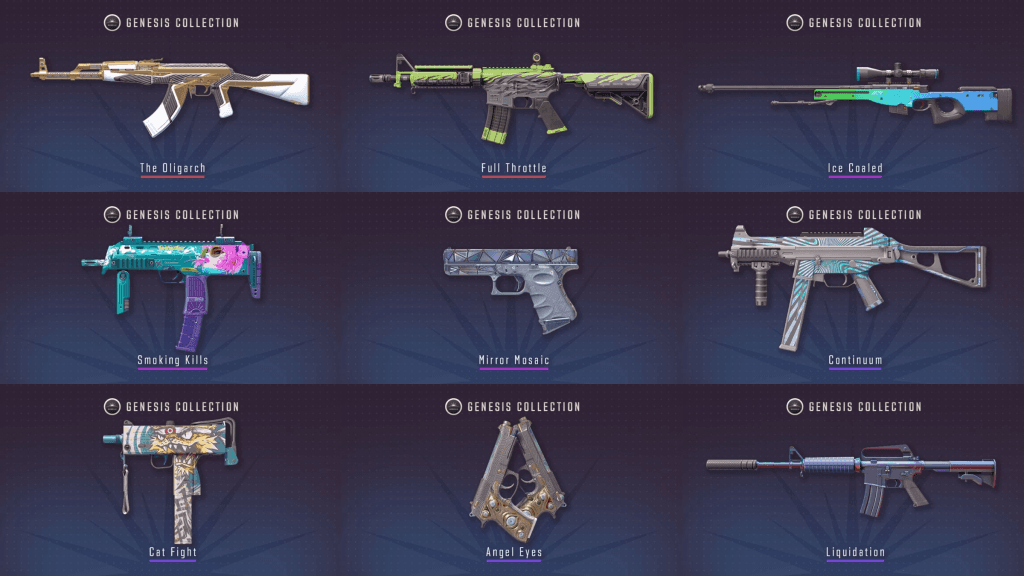
The collection includes standout pieces like the AK-47 | The Oligarch and M4A4 | Full Throttle, both classified as Covert (red) rarity skins. Other notable additions include the AWP | Ice Coaled, MP7 | Smoking Kills, and Glock-18 | Mirror Mosaic, spanning various rarity tiers.
How the Genesis Uplink Terminal Works
The Genesis Uplink Terminal operates as a weekly drop reward that completely reimagines how players acquire skins. Here's the step-by-step breakdown:
- Getting the Terminal: Players with Prime status who earn 5,000 XP weekly can receive a Genesis Uplink Terminal through their Weekly Care Package. The terminal can also be purchased on the Steam Community Market for around $8.
- Unsealing Process: Opening the terminal is completely free, unlike traditional cases that require purchased keys. Once unsealed, players enter negotiations with an in-game "Arms Dealer" character.
- The Offer System: The Arms Dealer presents up to five sequential skin offers from the Genesis Collection. Each offer displays the specific skin, its wear condition (float value), and the asking price. Players can accept any offer by paying the quoted price from their Steam wallet, or decline to see the next option.
- The Catch: If players decline all five offers, the terminal becomes worthless and disappears. Additionally, once unsealed, terminals expire after three days, adding time pressure to the decision-making process.
The $1,500 Controversy that Shook the Community
The Genesis Uplink Terminal system quickly became the center of fierce controversy when players discovered some skins were priced at astronomical levels. Screenshots circulated showing a StatTrak Factory New M4A4 | Full Throttle priced at $1,587, with other high-tier skins regularly exceeding $1,000.
Community reaction was swift and harsh. Players criticized Valve for creating what many perceived as predatory pricing. The controversy intensified because these direct-purchase prices often far exceeded market values for similar skins from other collections.
One community member aptly summarized the frustration:
"Possibly the worst monetization strategy I've ever seen in a video game. The whole reason cases were so enticing to open was because of the chance your three dollars could net you a much more expensive item. Now your rolls are free, with still crap odds, but you have to pay hundreds to keep the rare roll?"
Dynamic Pricing: The Algorithm Behind the Madness
Valve eventually clarified that Genesis Terminal pricing operates on a dynamic, global demand system. Prices automatically adjust based on worldwide purchasing patterns: if many players buy a particular skin, its price increases like an auction. Conversely, ignored skins see their prices drop to stimulate demand.
This algorithmic pricing explains the wild inconsistencies players observed, where identical skins could have dramatically different prices, or lower-quality items sometimes cost more than higher-quality variants. The system considers factors like rarity, float value (wear condition), and StatTrak availability, but the demand algorithm can override traditional pricing logic.
Skirting Gambling Regulations: A Strategic Move?
Industry analysts suggest the Genesis Uplink Terminal represents Valve's attempt to navigate increasingly strict anti-lootbox legislation. Traditional cases have faced bans or restrictions in countries like Belgium, the Netherlands, and France due to gambling concerns.
The terminal system cleverly shifts the gambling element from the purchase moment to the selection moment. Players receive the terminal for free and see exactly what they're buying before spending money, potentially bypassing regulatory definitions of gambling. Notably, Valve announced that players in previously restricted regions can now access Genesis Terminals.
Additional Update Features Beyond Skins
The Genesis update wasn't solely about controversial monetization. Valve included several quality-of-life improvements that largely flew under the radar:
- Spectator Loadout Inspection: Dead players can now press 'F' to inspect teammates' complete loadouts while spectating, finally giving deceased players something productive to do during rounds.
- Enhanced Grenade Audio: All grenades received new, higher-fidelity sounds for drawing, inspecting, pin-pulling, and throwing, creating a more immersive audio experience.
- JavaScript Map Scripting: Valve introduced cs_script, a JavaScript-based system allowing community map creators to develop more complex custom game modes without Counter-Strike's traditional limitations.
- Subtick Shooting Consistency: The update promised improvements to subtick shooting consistency, though this change ironically sparked its own controversy.
The Subtick Shooting Controversy: A Patch Within a Patch
Alongside the Genesis Collection drama, Valve's "various improvements to subtick shooting consistency" created additional turbulence. Professional players, including NiKo and XANTARES, complained that the update dramatically altered weapon spray patterns, particularly affecting the AK-47's recoil behavior.
The community backlash was so intense that Valve issued a rollback just two days later, on September 19, 2025. The rapid reversal highlighted the delicate balance between technological improvements and preserving the familiar gunplay that professionals rely on.
Community Reactions: Divided and Passionate
The Genesis Uplink Terminal has split the CS2 community into distinct camps. Supporters appreciate the increased control and transparency – players know exactly what they're buying and can make informed decisions. The system eliminates the frustration of opening dozens of cases without getting desired items.
Critics argue that the system is fundamentally exploitative, combining the worst aspects of gambling (limited-time offers, FOMO tactics) with direct high-price purchases. Many feel that asking players to pay over $1,000 for virtual weapon skins, especially after already receiving them through random weekly drops, crosses ethical boundaries.
The controversy has extended beyond CS2's immediate community, with gaming industry observers viewing the Genesis Terminal as a potential template for future monetization schemes across multiple games.
The Future of CS2 Monetization
Many industry watchers believe the Genesis Uplink Terminal represents a testing ground for broader changes to CS2's monetization approach. If successful, similar systems might eventually replace traditional cases entirely, fundamentally altering how players acquire cosmetic items.
The system's reception will likely influence other game developers considering similar direct-purchase models disguised as player choice systems. Valve's willingness to experiment with controversial monetization, combined with their track record of iterating based on community feedback, suggests further evolution is likely.
The Genesis Uplink Terminal update stands as one of CS2's most divisive additions, successfully generating intense community engagement while raising serious questions about fair monetization practices. Whether the system represents innovation or exploitation may ultimately depend on how Valve responds to ongoing community feedback and whether pricing becomes more reasonable over time.
As Counter-Strike 2 continues evolving, the Genesis Collection controversy serves as a reminder of the delicate balance between developer revenue needs and player satisfaction. The coming months will reveal whether this experimental approach to skin distribution becomes the new standard or remains a cautionary tale about pushing monetization boundaries too far.
Don't forget to check out Strafe Esports for all the latest Counter-Strike 2 news and our X account for the latest content and coverage of your favorite esports.
Also, don't forget to subscribe to our channel on YouTube for exclusive interviews, press conferences, and more.
Featured Image Credit: Valve