
 en
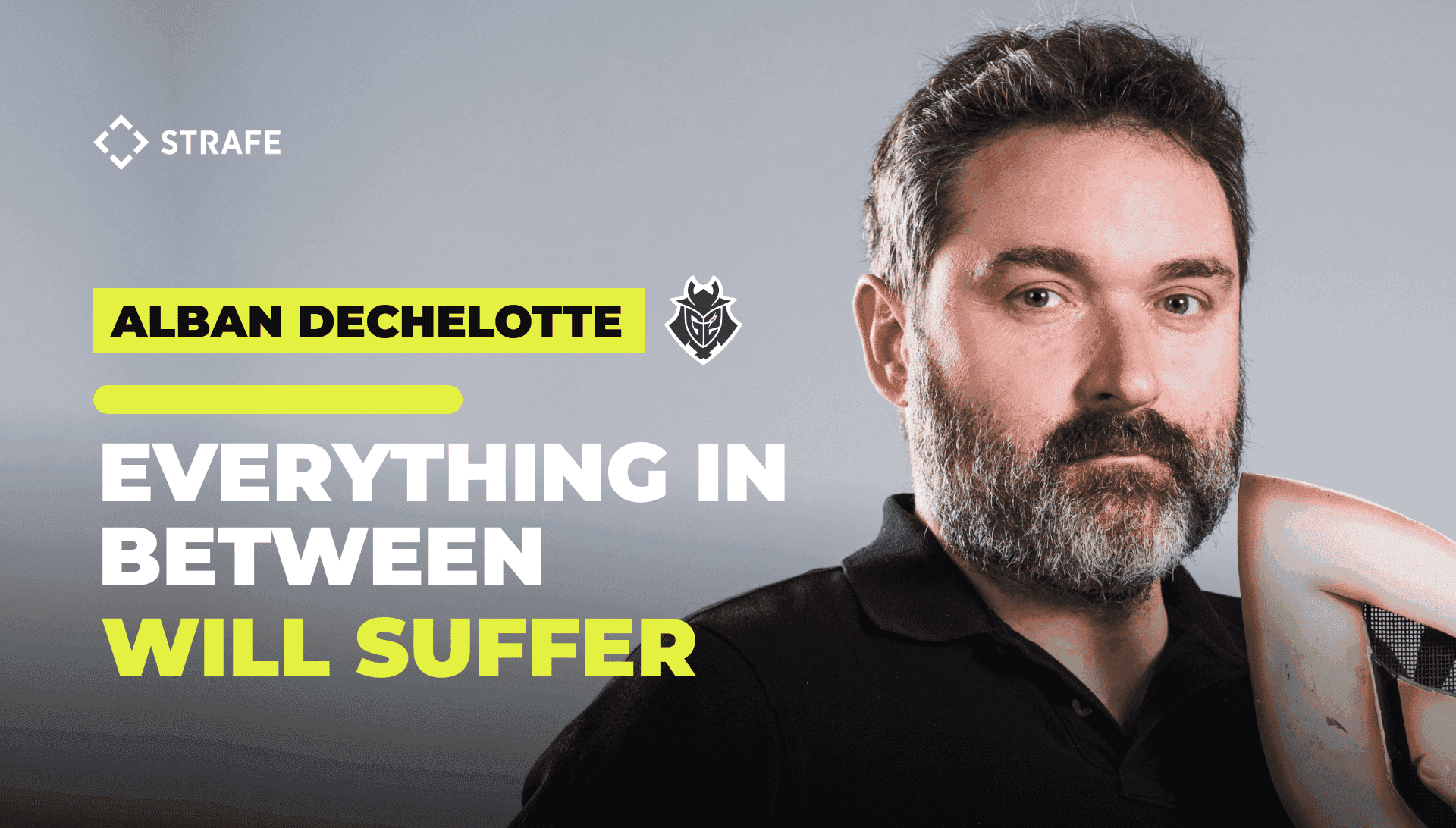
G2 CEO Alban Dechelotte: Esports Consolidation Is Happening "Faster Than I Even Predicted"

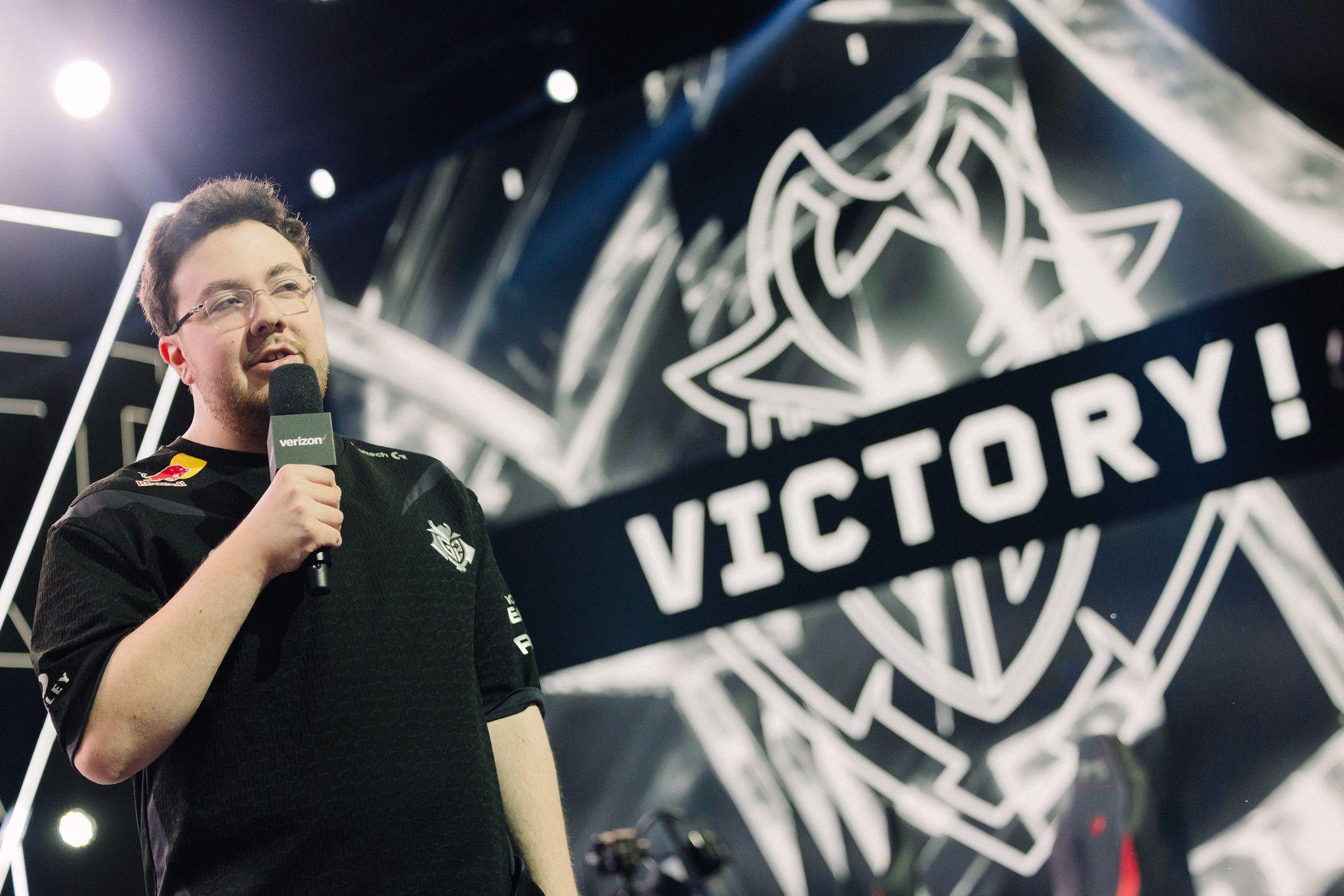
In January, G2 Esports CEO Alban Dechelotte told Strafe that G2 is the Real Madrid of esports. He also made a bold prediction. The scene had already shrunk from 300 teams to around 100, and within five to ten years, he expected just 5 to 10 teams to lead the way globally.
Ten months on, the industry looks very different. Riot Games has cut its VALORANT partner leagues from 12 teams to just 8 per region, Valve has overhauled Counter-Strike's sticker system, and, as Dechelotte puts it, "there's a lot of teams right now dropping." The consolidation he previously hinted at is arriving "faster than I even predicted."
Strafe caught up with Dechelotte to talk about where that leaves the esports industry, the tough decisions that keep G2 sustainable, what the Esports World Cup really means for the organization's books, and his two big predictions for the next decade of esports.
Full video interview is available at the end of the article.
Some questions and answers have been slightly edited for clarity and or brevity. The order of questions and answers has also been changed for a more cohesive read.
Consolidation Is Coming Faster Than Expected
Have this year's big publisher decisions moved the industry closer to Dechelotte's vision, or would it take something else entirely? In his view, the trend was already happening. The decisions just sped it up.
"I think it's definitely a factor of acceleration. I think the trend is happening. Like, there's a lot of teams right now dropping, as the reality is that the publishers or sponsors focusing on the bigger teams that have a bigger fandom, that are able to deliver more value, is a rational decision."
Riot and Valve: "Moments of Inflection"
Two moves in 2026 stand out for Dechelotte. For 2027, Riot cut its VCT partner leagues from 12 teams to 8 per region. Ahead of the IEM Cologne Major, Valve ended Counter-Strike sticker capsules, replacing them with a new shop and revenue-share model.
"For sure, moments like the decision from Riot to concentrate the league, moments like Valve [deciding] not to support the economic value of the stickers, are moments of inflection that accelerate this phenomenon of consolidation. And for sure, these two events happening in the same year have a dramatic impact on this consolidation happening faster than I even predicted."
Five, Ten, or Twenty Teams?
Dechelotte won't commit to an exact number. What he is sure of is that the most successful leagues in traditional sports don't run with hundreds of teams.
"I don't know if it's five, ten, twenty," he said. "If I look at Formula 1, if I look at the Premier League, if I look at the NFL, it's certainly not 100. And so the question is, like, which teams and how fast?"
It's a comparison he also made in January, when he pointed to Formula 1 and the NBA as properties that "became successful when the numbers of teams became smaller."
"Everything in Between Will Suffer"
When we admitted that his January prediction had come as a bit of a shock, Dechelotte was quick to clarify his statement.
"I'm not saying that there [will be] only five to ten teams globally. What I'm saying is I think five to ten teams will dominate globally, and then there will be room for five to ten teams per local region to complement this."
The teams at risk, he says, are the ones caught in the middle. "Everything in between the local small shop and the big orgs will suffer."
The Problem With Being Mid-Sized
G2's CEO used a French organization as a prime example. Competing at the top level costs the same wherever a team is based, but a team with a local fanbase can only attract local money.
"If you are a French team that wants to compete in an international competitive environment, the resources you need to build a roster that is competitive are international," he said. "But if you have only fans from one country, then you mostly get sponsors from one country. And that doesn't give you enough resources to compete in terms of salaries and structure at the global level."
Two Ways to Survive
That leaves two sustainable paths: go global, or go deep in one game and hope things work out.
"If you want to compete at the global level, you have to have global resources," Dechelotte said. "If you can't have global resources, you need to focus, and mostly focus on probably one game, around the content creators that are very engaged in that game. And that's also good, and that's also a profitable model."
"Everything in between, where you have, like, five to six rosters trying to compete internationally only with local sponsors, is, from my point of view, not sustainable."
The Cost of Staying Sustainable
If the middle is where teams struggle, G2's plan is to stay out of it, and that starts with a strict rule for every roster it fields.
"For every roster, not just VALORANT, we try to build a system where the direct costs of having the roster are compensated by the direct revenue. Direct revenue could be what the publisher, the tournament organizers, or specific sponsors from the ecosystem are providing us."
Everything else goes into the organization itself. "Every additional revenue, could be sponsorship, could be consumer products, could be any additional revenue we generate, is helping us build the G2 organization," Dechelotte explained. "The marketing, the admin, the commercial, the new innovation, the new ventures are not paid by esports. They are paid by the revenue we generate outside of esports."
It sounds simple on paper. In practice, he admits, "it forces us to make some tough decisions."
Walking Away From a Winning Rocket League Roster
The first example he gave was Rocket League, the game that introduced G2 to the American market.
"We had built an amazing connection to the community of Rocket League in the US, which is the major market for this game," he said. "But when we saw the economics of the new Epic Games model — and I think it's getting better now, we're starting to be back on board, but we still don't believe it's sustainable for us — we had to stop Rocket League."
"And we had a winning roster. We were super happy with the fan engagement. But if the economics for each roster are not adding up, we are not continuing."
Letting Go of a Young Prodigy Superstar
The same logic applied to Counter-Strike, where G2 parted ways with m0NESY in 2025.
"We had this similar conversation with, like, a player like m0NESY in Counter-Strike," Dechelotte said. "We're not in a position to renew successfully a player like him. So we took a tough decision to let go of one of the best players in the game."
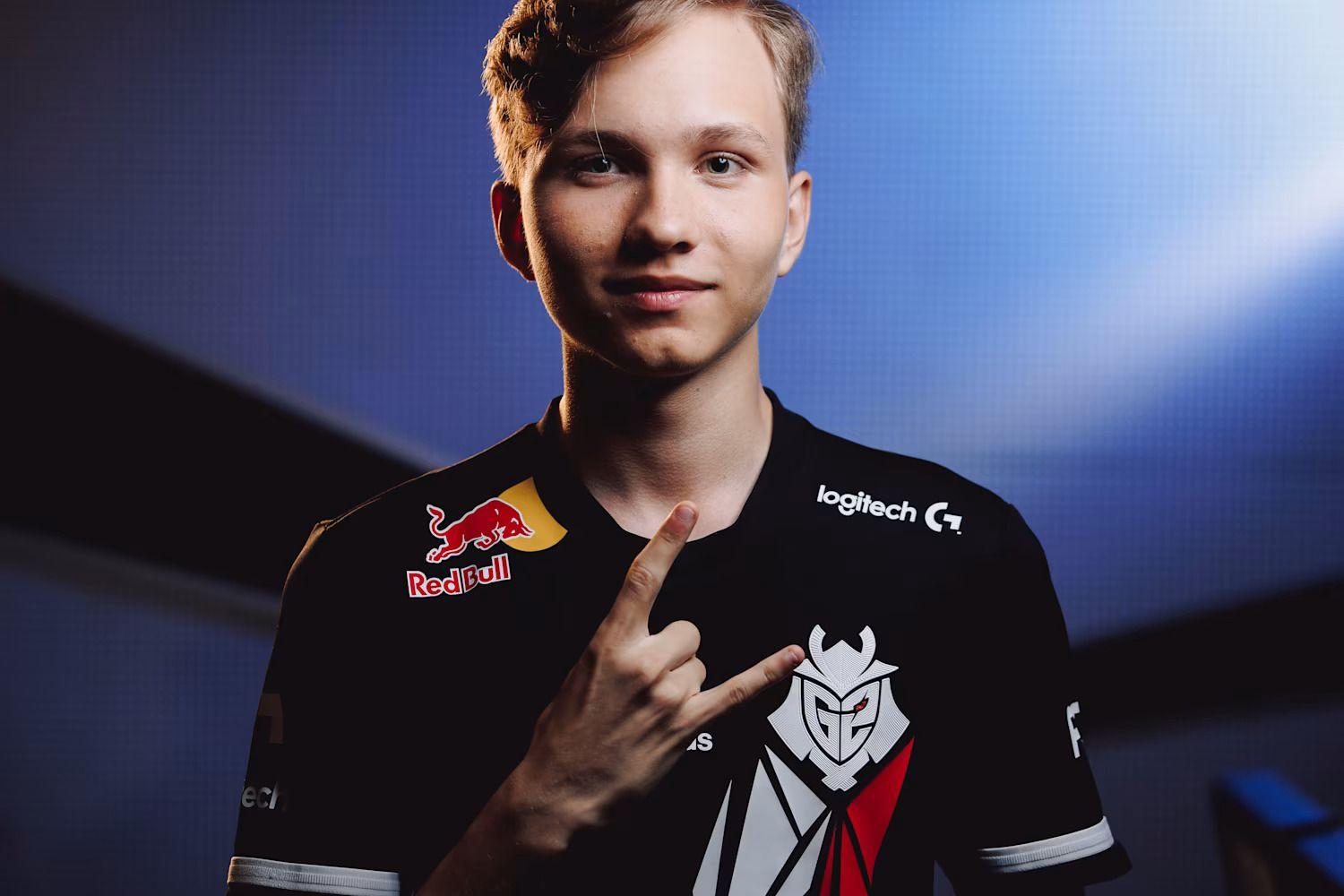
Painful as it was, that discipline is the reason G2 is still standing.
"And that's the kind of decision that makes us successful as an organization, makes us sustainable in the long term, makes us not join a long list of teams that are no more."
The Esports World Cup: "A Massive Help for Everyone"
Nowhere is G2's restraint more visible than at the Esports World Cup. The 2025 Club Championship drew 200 clubs into a race for a $27 million pot. Team Falcons won it for the second year running, scoring points in 22 of the event's 25 tournaments.
G2 took a very different approach.
"It's painful, because you have to make this call while seeing other teams not making this call, like in the Esports World Cup race," Dechelotte said. "We had like six rosters last year when others had 23."
"Is it painful to see that G2 is not at the top of the World Cup of esports? Yes, of course. We see ourselves as a leading organization, but we're not ready to invest in 23 rosters to prove that."
A Lifeline During the Esports Winter
The Saudi-backed EWC remains one of the most polarizing topics in the industry, but there's no denying the scale of the money it has brought in. So, how dependent on it has esports become?
Dechelotte doesn't downplay the impact, particularly given when it arrived.
"In a climate of esports winter, where for one or two years the sponsorships were a bit drier than before, that was a massive help for everyone."
For G2 specifically, though, the EWC is a long way from being a lifeline, more of an additional aid to fuel the organization.
"I would say, if I look at the revenue of G2 overall and the revenue we get from the Esports World Cup, less than 10%. So the balance is not, like, life-threatening or life-changing, as they say sometimes."
Part of that comes down to how G2 approaches the event: "But also because we approach it as a partnership," Dechelotte said.
The Roblox Generation and the Power of Co-Streamers
To finish, we asked Dechelotte for a hot take on the future of esports, beyond consolidation. "Well, I think I would give you two, okay?" he said.
The first is about who esports fans will be, and how they'll find the scene.
How Today's Fans Found Esports
"When we started esports ten, fifteen years ago, it was really on the back of, like, PC gamers," Dechelotte said. He described the journey most of G2's current fans took.
"Oh, I play FIFA and Call of Duty on console. When I get my PC, I start to play these games like Counter-Strike and League of Legends. And then I don't have time because I'm in college, I start watching esports, because that's my way to compensate for my lack of time, you know. Like, that was the cycle, and that's why our fans are Gen Z."
Gamers From Six Years Old
The next generation is taking a very different route, and getting there much sooner.
"Players start at six or eight years old playing Roblox and Minecraft… They went into Fortnite when they were ten or twelve, and then suddenly they start going into esports," he said. "And so I'm excited to see what this new demographic, this new generation will take, and how they're going to consume esports."
Dechelotte believes the first sign of that shift is already here.
"The first expression of that new generation is, like, the power of co-streamers. They don't care about the official broadcasts. They want to see it through the eyes of their favorite streamers, you know."
Esports Clubs Are Coming for Traditional Sports
Dechelotte's second prediction flips one of esports' oldest storylines on its head. "The second take for me is about the convergence of esports and sports," he said.
The Culture Shock of the Past
For years, the traffic mostly went one way, with football clubs and other traditional sports organizations moving into esports.
"I think in the past, it was all about traditional sports organizations going into esports as an extension of their business, you know. And it didn't always go super well," Dechelotte said. "Like, the culture shock was sometimes a bit visible, you know."
Ideas borrowed from traditional sports didn't always translate either. Dechelotte said that "trying to do franchising, trying to do all these things that come from the world of sports didn't always work super well for our community, for esports, or for the disciplines of esports."
Winning Where Nobody Expects Them To
Now it's the esports organizations making the move. G2 FC won the Kings League in Germany in its first year, while FURIA's Kings League side won the first-ever Kings League Brazil title in May 2025.
"But now I see FURIA and G2 and other teams blurring the line between esports and sports, and winning on the field where people don't expect them to win, you know. And I look forward to seeing how our communities, our clubs, will revolutionize sports in a way that they don't expect."
When Fans Get to Choose
For Dechelotte, the biggest difference between the two worlds is how fans pick a team in the first place.
"Traditionally, the way you discover sports is through your city or your parents," he said. "You know, it's like a legacy thing from your dad or your mom that gives you a connection to a club or to a sport."
"But what's going to happen when the fans are choosing?"
G2's fans, he argues, made that choice for reasons a hometown club can't offer, and they'll follow the brand wherever it goes next.
"The fans are connected to G2 for many reasons. Because of our tone of voice, because of our legacy, because of our personalities," Dechelotte said. "And so we're going to bring them to new disciplines, and I look forward to [seeing what] these kinds of fans will do for us."
For the full interview, check out the YouTube video below.
Read more: G2 CEO Alban Dechelotte on VALORANT Champions Tour (VCT) 2027 partnerships.
Follow Strafe Esports for all the latest gaming news, and our X account for the latest content and coverage. Also, stay tuned to Strafe YouTube for exclusive interviews, press conferences, and more. Download our app on the App Store or Google Play.
Featured image credit: G2 Esports, edited by Strafe staff