
 en
en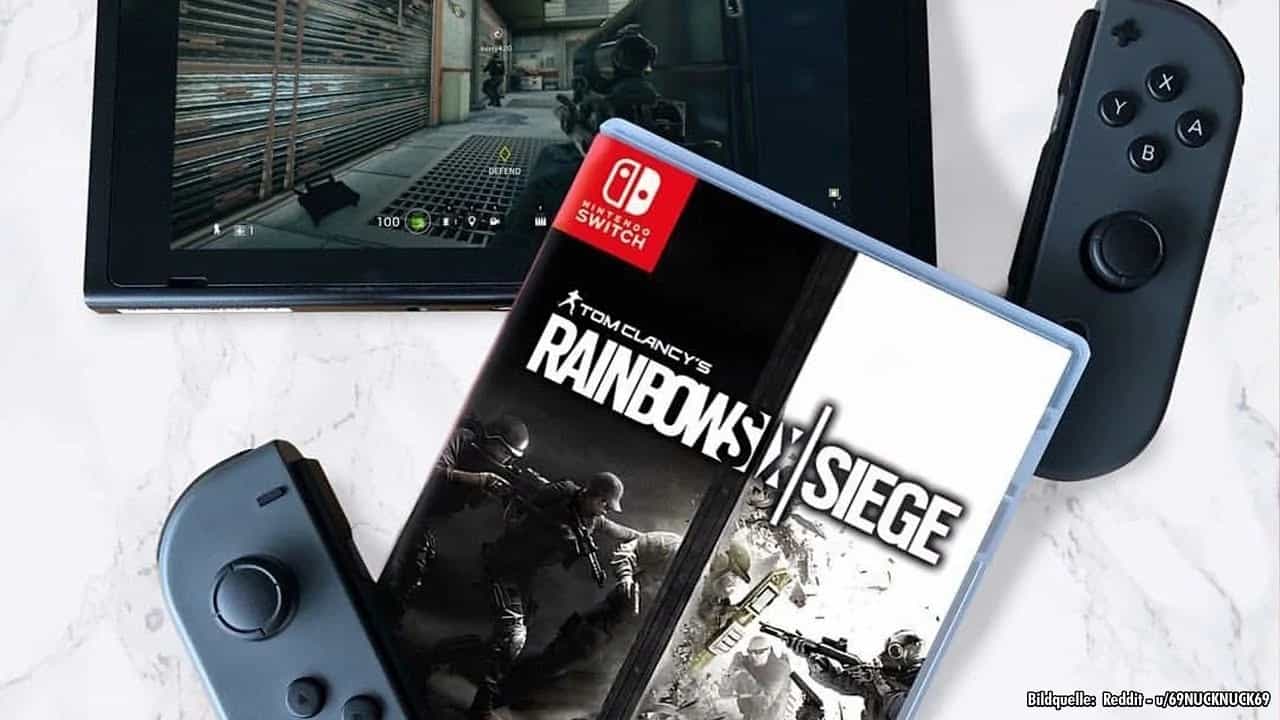
Nintendo Switch and Rainbow Six: Friends or Foes?
Rainbow Six Siege on Nintendo Switch has become one of the most popular tactical shooters in esports and gaming today, known for its strategic depth, destructible environments, and fast-paced competitive gameplay.
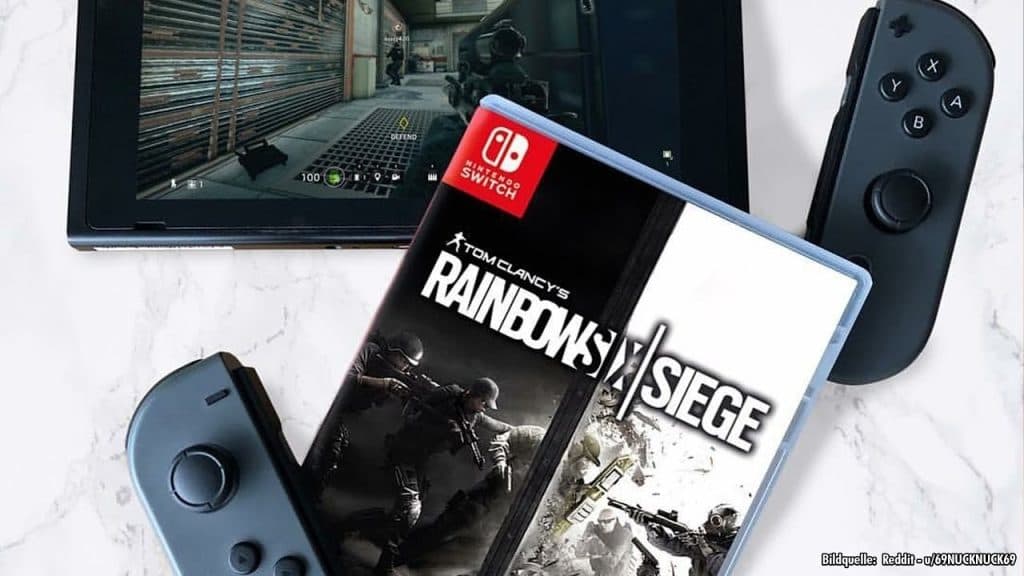
As the Nintendo Switch remains a beloved portable gaming platform, many fans have wondered if this tactical shooter could ever be brought to the Switch. Ubisoft’s official stance has been clear for years: "It’s not possible", but what does this really mean from a technical perspective?
This article dives into the hardware limits, game requirements, and development challenges that shape why Rainbow Six Siege cannot run natively on the Nintendo Switch, and whether any future developments like the upcoming Switch 2 might change this reality.
Ubisoft’s “Not Possible” Explanation
Ubisoft's Rainbow Six Siege brand director Alexandre Remy stated in 2018 that a native port of Siege to the original Nintendo Switch was technically impossible. The key reasons he highlighted are the CPU-intensive nature of the game and the critical 60 frames per second (fps) performance target necessary for competitive play. Siege relies heavily on its fast-paced, twitch gameplay where milliseconds matter, and any compromise in frame rate or responsiveness severely impacts player experience, making 30fps ports commercially or competitively unviable.
Additionally, R6 Siege’s signature feature—the procedural destruction system, which allows players to destroy walls, floors, and environments dynamically—further amplifies the CPU demand. Ubisoft highlighted the difficulty of maintaining this system's performance on the Switch's limited hardware resources without sacrificing core gameplay.
Nintendo Switch Hardware
To understand the barriers, it is essential to review the technical specifications of the original Nintendo Switch released in 2017:
- CPU: Custom NVIDIA Tegra X1, 4-core ARM Cortex-A57 @ 1020 MHz
- GPU: NVIDIA GM20B Maxwell with 256 CUDA cores, variable clock 307-768 MHz
- RAM: 4GB LPDDR4 @ 1600 MHz (~25.6 GB/s bandwidth)
- Storage: 32GB internal memory (expandable via microSD)
- Graphics Performance: ~236 GFLOPS (handheld), ~393 GFLOPS (docked)
While impressive for a portable console, these specifications pale compared to the minimum requirements for running a game like Rainbow Six Siege. The game demands a multi-core CPU capable of complex AI and physics calculations, along with a GPU powerful enough to handle advanced lighting, shading, and destruction effects at a stable 60fps target.
The Switch's Tegra X1 SoC was not designed to support such demanding loads consistently, especially while maintaining the low latency and smooth frame rates competitive shooters require.
Rainbow Six Siege: A Demanding Game by Design
Rainbow Six Siege’s core gameplay places unique demands on hardware:
- 60fps Target: Unlike many console shooters running at 30fps, Siege requires 60fps to maintain its competitive integrity.
- RealBlast Destruction Engine: Procedural and dynamic destruction is central to gameplay, requiring intensive CPU calculations.
- Network Synchronization: Multiplayer gameplay requires real-time, deterministic synchronization of destruction and game state across all players.
- High-Resolution Textures and Assets: Siege’s maps and operators include detailed models and high-res assets requiring substantial video memory.
The minimum PC specs Ubisoft lists for Siege X, the latest iteration, are as follows:
- CPU: AMD Ryzen 3 3100 / Intel i3-8100 or better
- GPU: NVIDIA GTX 1650 4GB or AMD RX 5500XT 4GB
- RAM: 8GB+
- Storage: 65GB SSD (for faster load times and streaming data)
A GTX 1650 GPU delivers around 2984 GFLOPS—over 13 times the Switch's docked GPU power. The CPU requirements are also far beyond the Switch’s quad-core ARM Cortex-A57. This gap explains why even the most aggressive optimization would not be enough to bring Siege natively to the Switch.
The RealBlast Destruction System: CPU Heavy and Hard to Simplify
The procedural destruction engine is a technical marvel but extremely CPU-intensive. It calculates fracturing physics, debris behavior, and damage propagation dynamically during matches. Each destruction event requires real-time mesh manipulation, physics simulation, and synchronization across all players, so the game replicates the same outcome to maintain fairness.
Reducing or removing the destruction system would undermine the game's identity and strategic depth—an unacceptable trade-off for developers, especially for an esports-focused title. This system alone requires more CPU time than the Switch CPU can sustainably provide when combined with other game logic, AI, and rendering tasks.
Storage and Memory Bandwidth Limitations
Another technical challenge is the storage and memory bandwidth. Siege’s game files, with HD textures and assets, now exceed 65GB, while the original Switch has only 32GB of internal storage. Although external microSD cards can expand storage, access speeds and capacity limitations pose challenges for loading large game assets quickly.
Memory bandwidth is also crucial. Siege’s game engine requires fast streaming of geometry, physics data, and textures. The Switch’s memory bandwidth of roughly 25.6 GB/s is significantly less than modern gaming PCs or next-gen consoles, constraining how fluidly the dynamic destruction and high-fidelity rendering can be executed.
Networking and Multiplayer Infrastructure
Siege's competitive multiplayer demands stable and low-latency network connections. It relies on the forwarding of specific UDP ports and must handle real-time data sync. While the Switch supports network play, its infrastructure and wireless-only internet in handheld mode raise concerns about maintaining the required connection stability, especially on the go. Any network latency or jitter degrades competitive play quality, a critical factor for Siege.
Why Other AAA Ports Are Not A Good Benchmark
Some players point to games like Doom 2016 or The Witcher 3 having been ported to Switch as proof Siege should be possible. While impressive, those games differ fundamentally:
- They allow substantial graphical downgrades without losing core gameplay.
- They are largely single-player experiences without network sync complexities.
- They do not feature intensive real-time procedural destruction physics like Siege.
Around the same time, Ubisoft's decisions to bring titles like Assassin’s Creed or Far Cry to Switch show the company selectively invests in projects where the core experience aligns better with Switch hardware and audience expectations.
Could Cloud Gaming Bridge the Gap?
Cloud gaming platforms offer a potential pathway to play Siege on Switch, streaming the game remotely with minimal local hardware demand. Nintendo has started supporting cloud-streamed games on Switch, and Siege is available on several cloud platforms like NVIDIA GeForce Now and Xbox Cloud Gaming.
However, cloud gaming is not a perfect substitute:
- It requires constant fast, low-latency internet, limiting portability.
- Input lag inherent in streaming could severely impact aiming and reaction times.
- It depends on external server availability and subscription services.
While cloud gaming may offer casual access, it cannot replace native performance for competitive players seeking the best experience.
Nintendo Switch 2: The Potential Game Changer?
The upcoming Nintendo Switch 2 (or OLED Refresh/Pro, depending on branding) promises substantial hardware improvements:
- CPU: 8-core ARM Cortex-A78C @ ~1 GHz
- GPU: NVIDIA Ampere-based GPU with up to 1536 CUDA cores
- RAM: 12GB LPDDR5X with ~102 GB/s bandwidth
- Storage: 256GB UFS 3.1 internal
These specs suggest performance potentially rivaling mid-tier PCs or last-gen consoles, capable of handling games much more demanding than the original Switch. The GPU power could approach 2-3 TFLOPS, surpassing many current gen consoles’ capability.
With increased memory and bandwidth, the Switch 2 could finally handle CPU-heavy destruction calculations alongside stable 60fps rendering. HDR support and 120Hz refresh screens further position it for competitive gaming.
While promising, even the Switch 2 will require dedicated optimization from Ubisoft and likely some scaled-back visuals or features. However, it presents legitimate hope that Siege could be ported natively in the near future.
Development Complexity and Business Realities
Ubisoft faces numerous challenges beyond raw hardware specs:
- Siege is a live-service game with ongoing seasonal updates, operator additions, and balance changes—all needing cross-platform parity.
- Porting requires engine refactoring, asset optimization, control scheme redesigns, and rigorous QA cycles.
- Supporting a lower-powered Switch port adds ongoing maintenance overhead, potentially diluting development focus on core platforms.
These factors explain Ubisoft's cautious stance, prioritizing platforms where Siege's experience can be fully realized without compromise.
Alternative Workarounds: Remote Play and Mods
Some players experiment with remote play methods, streaming Siege from powerful PCs to the Switch over local networks using Steam Link or similar. While playable in casual contexts, this adds input latency unsuitable for competitive play.
There are also experimental hardware modifications and overclocking attempts to boost Switch performance, but these void warranties and do not overcome fundamental architectural limitations.
The Broader Industry Lesson
The Siege-on-Switch saga highlights broader industry challenges balancing game ambition with cross-platform reach. Competitive shooters with high frame rate demands and complex physics push hardware to limits incompatible with portable devices targeting long battery life and thermal efficiency.
Developers may increasingly need to build scalable engines and gameplay mechanics explicitly designed for portable or low-power hardware from the start, rather than retrospective downscaling.
Final Thoughts
Rainbow Six Siege is a landmark in tactical esports gaming, but its technical demands place it outside the reach of current Nintendo Switch hardware. Fans hoping for a portable Siege experience must either wait for next-gen consoles like the Switch 2 or explore imperfect streaming solutions.
This situation exemplifies the ongoing tension in gaming between pushing graphical and gameplay boundaries versus ensuring accessibility and portability. As hardware evolves and cloud gaming matures, the dream of ubiquitous Siege on Nintendo devices may someday come true—but for now, those iconic Siege rounds remain exclusive to powerful consoles and PCs.
Feature image credits:
Read also:
Rainbow Six Siege X Optimization Guide: Best Settings for Performance and Clarity