
 en
en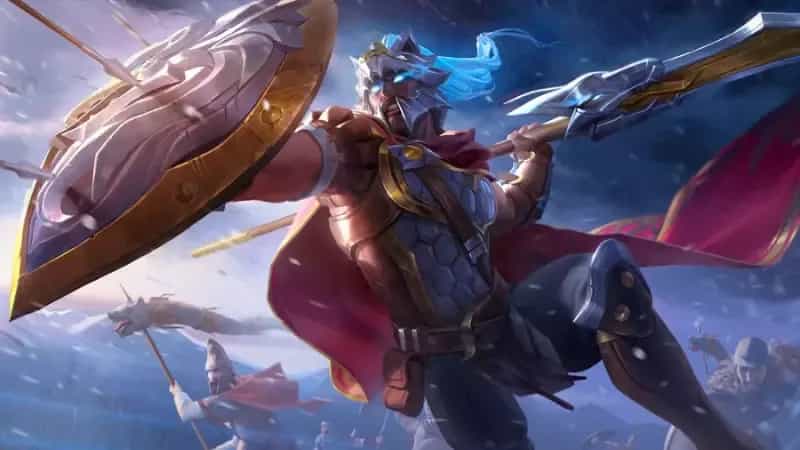
War Cry of Targon: Pantheon’s Origins and Abilities

27 Jul, 2026, 02:54
|Last updated: 27 Jul, 2026, 02:54
Pantheon in League of Legends is not a god learning humility. He’s a mortal who got used as a vessel, survived the death of the power inside him, and kept fighting anyway. His story centers on stubborn endurance: he loses, gets up, and refuses to stay down. This article covers Pantheon’s lore and his in-game abilities.
“Here is my eternity… a day the gods will remember!” — Pantheon.
Who is Pantheon
Pantheon’s current identity is Atreus of the Rakkor, born on the slopes of Mount Targon. Named for one of the stars that formed the Warrior constellation, Atreus was not naturally talented in any one aspect. He wasn't the fastest nor the strongest of his cohort, nor the most skilled with bow, spear or blade.
However, he was determined. Fueled with a single-mindedness that drove him to train before dawn every day, tracing the treacherous paths of Mount Targon, and pushed him as the last standing every night at the training ground. His endurance became legendary amongst his peers
Early life: the Ra’Horak and Pylas
Born into the ranks of the Rakkor, the warlike people who lived on the flanks of Mount Targon, Atreus was not naturally talented at combat the way his peers were. Despite that, he gained respect from his peers through his endurance and perserverance.
As Atreus grabbed more attention, a fierce rivalry blossomed between him and a fellow Rakkoran boy, Pylas. Born into a line of renowned warrios, Pylas was everything Atreus wasn't; skillfull, strong, popular and seemingly destined for greatness.
None his age could best him in the fighting circle, but Atreus was alone in refusing to back down. Even bloodied and bruised, Atreus kept getting back up. While this earned Atreus the respect of his instructors, it only fueled Pylas' ire for him, who took it as a lack of respect.
Shunned by his peers and suffering numerous beatings from Pylas and his followers, Atreus held on stoicly, knowing his ostracism would only cause his family pain.
Bonds of Battle
One day, a barbarian incursion ambushed Atreus and his unit, killing most of the patrol. Only Atreus and Pylas survived. Knowing they needed to warn the village, Atreus chose to stay back and hold back the surviving barbarians while urging Sylas to run and carry the news home.
Atreus fought hard but eventually slipped into unconsciousness from his wounds. Only to wake up on the battlefield much later. Finding Pylas with an axe embedded in his back, Atreus carried his rival back to their village for 3 days.
He would later wake up to see Pylas watching over him and his wounds stitched and bound. In the months that followed, Atreus and Pylas were now close friends as they threw themselves into training with renewed vigor.
The Climb That Changed Everything
While Atreus and Pylas grew closer, Atreus' resentment for the Solari order only grew. Seeking to protect Rakkor, he felt that the new leader of the Solari's warrior, Leona, was preaching methods that were weak and passive.
As with all young Rakkorans, Atreus and Pylas had grown up hearing stories of heroes climbing to the peak of Mount Targon and attaining great power. The two trained now in anticipation of making the ascent themselves. Atreus sought to gain power that would allow him to seek out and defeat the enemies of the Rakkor himself.
Finally, the day arrived. Joining a large group comprised of members from all the Rakkoran villages scattered around the mountain, they began the ascent. One by one as the weeks passed, the group shrunk as some turned back and other fell to the mountain or exhaustion, until only Atreus and Pylas remained.
When they finally crested the summit, they saw no fabled city, no glory. Only ice, death, and rocks. Pylas then collapsed, the last of his strength gone. Knowing his friend did not have the strength to make the descent, Atreus sat with Pylas as the latter drifted away.
And then the heavens opened.
The Aspect of War
Months later, Atreus and Pylas still had not returned. The assumption was that both had died on the mountain. The barbarians returned, almost a year to the day they had slaughtered Atreus and Pylas' group. As the barbarians closed in, a burning light of a falling star appeared, streaking towards the ground.
A warrior emerge, mantled in starlight and bearing a gleaming, golden shield and spear of legend. The warrior looked up and onlookers realized it was Atreus—and it wasn't. He had become the earthly incarnation of the celestial Aspect of War, Pantheon.
While the Rakkorans celebrated being saved, Atreus' family mourned his demise, for they knew. The Aspect of War had taken over Atreus' flesh. This was but a shell inhabited by the supernatural Pantheon.
In the years that followed, more sightings of Pantheon came. The elders of Solari still debate his presence, as his arrival is both a blessing and a curse, often heralding a time of darkness Yet to come.
Aatrox, The Killing Blow, and Return of Mortal Will
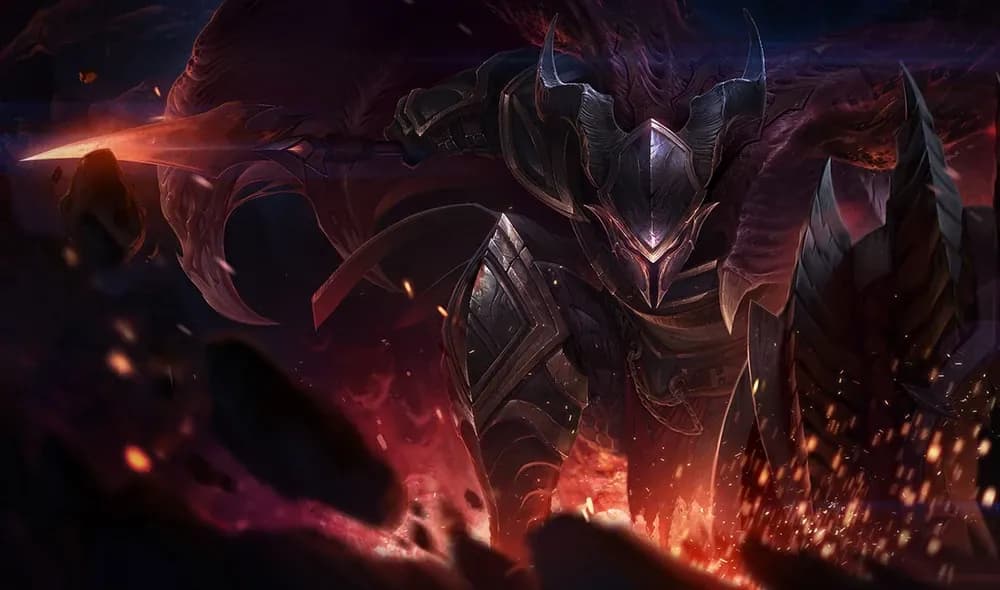
Pantheon eventually confronted Aatrox, who sought to climb Targon. Their fight ended with Aatrox driving his blade into the Aspect, killing it and erasing its constellation from the sky.
With the Aspect slain, Atreus reawoke—impaled and bleeding, left for dead. He spat in Aatrox’s face in defiance. Aatrox walked away.
Atreus stood back up anyway. He carried nothing but rage, regret, and the refusal to accept that this was where his story ended.
Iula and the Choice to Live as a Mortal
Atreus reached the home of Iula, Pylas’ widowed wife. She nursed him back to health. During recovery, Atreus found pride in being mortal rather than divine.
News arrived: another barbarian incursion threatened the area around Iula’s farm, led by Aatrox. Atreus returned to battle, choosing action instead of survival.
Reclaiming the Aspect of War
At the battle, Aatrox noticed the scar that ran down Atreus’ body and the lack of celestial power in his spear. Aatrox still had the advantage, but Atreus fought on, driven by the cries of ordinary people around him.
Just before defeat, Atreus struck Aatrox’s sword arm and detached the Darkin from its host. This act reignited Pantheon’s constellation in the sky.
Atreus then took the mantle of Pantheon—the Aspect of War—by choice, not possession. He vowed to protect mortals against forces that would destroy them. This time, Pantheon did not subsume Atreus' self but they exist side by side.
The Ruination: Viego and Re-Possession
Atreus later faced Viego at the peak of Mount Targon, where Viego searched for a fetter of Queen Isolde’s soul. Atreus battled Viego but was overwhelmed.
During these events, Atreus’ consciousness was subsumed and Pantheon was resurrected by Viego’s magic, taking control of Atreus’ body. Pantheon fought the Sentinels of Light and was defeated by Diana, while Viego secured what he came for.
After Viego’s defeat, Atreus was freed and reclaimed his body from Pantheon. The struggle between mortal agency and divine control remains a core part of his story.
Breaking Point and Reclamation
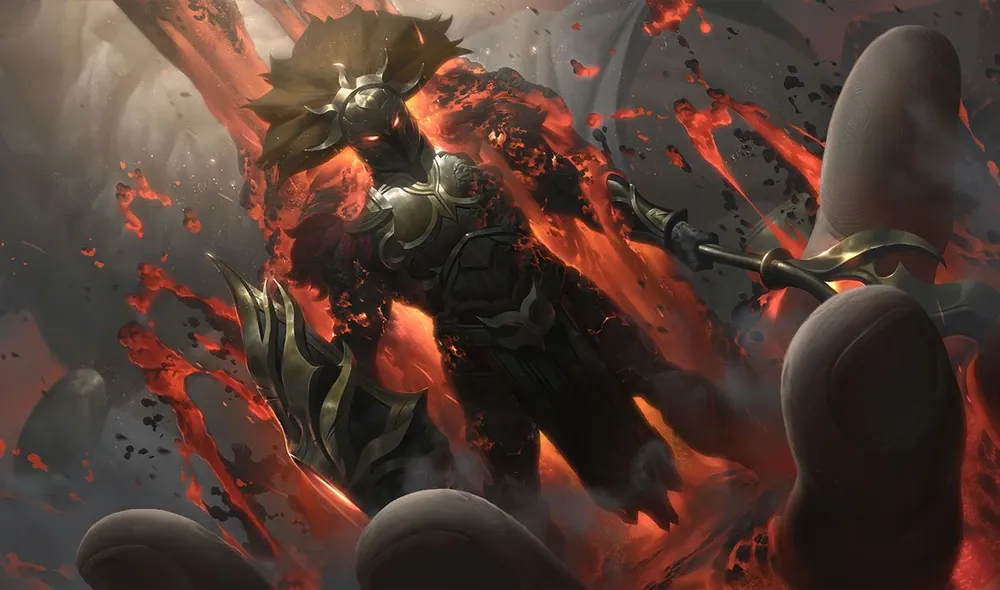
After the Aspect of War was defeated again, Atreus visited Iula and told her he had given up. He had lost celestial power and believed he couldn’t go on. He even accepted death, pulling Iula’s spear toward himself.
Iula refused to let that be the ending. Angry, she told him that Pylas died so Atreus could become the protector he had become, and that throwing it away insulted Pylas’ memory. Atreus left in shame, but her words reignited him.
Atreus then traveled into Solari territory to reach a portal leading to Mount Targon’s peak. The Solari and Leona fought him. A comet of unknown origin knocked him off a cliff. In quiet reflection among fallen weapons, he found renewed passion, and his celestial powers returned as he flew into the night sky.
Appearance and Personality
Atreus is physically imposing from a lifetime of soldier training. He carries a deep scar across his chest from Aatrox’s blade. He wears the cape of Solstice—blue and ethereal, with constellations woven into it.
In some depictions, his helmet darkens his visage, reinforcing the idea of a faceless defender. Without the helmet, he has a mohawk, a thick beard tied straight, and golden Solari-based tattoos from his Ra’Horak days.
His personality matches the visuals: stoic, stubborn, and duty-driven. He distrusts god-like beings—Aspects, Darkins, Ascendants, demons—because he knows what it means to be treated as a tool.
Pantheon: Abilities Breakdown
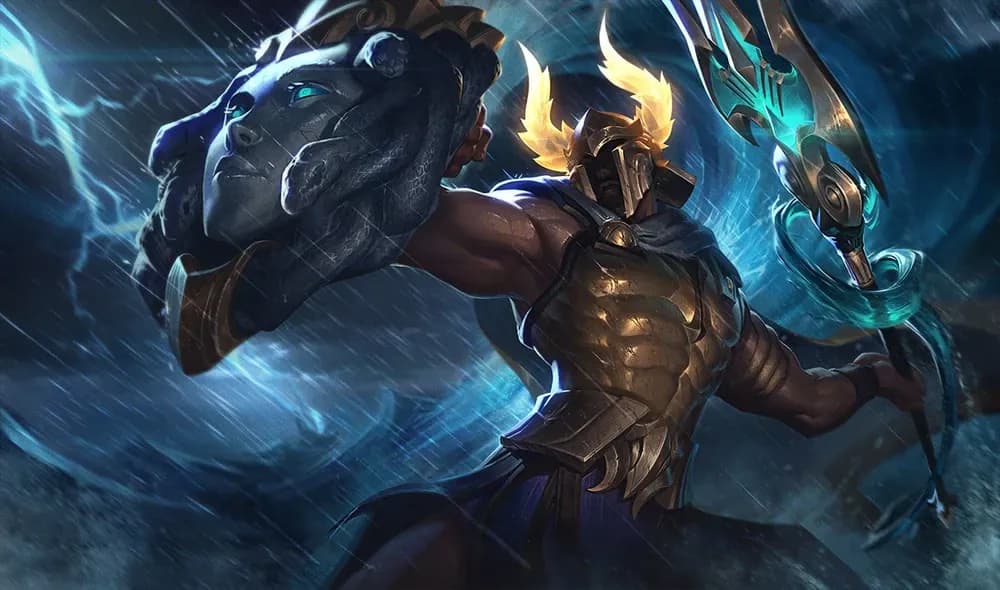
Pantheon’s kit is built around short, decisive sequences. He stacks a passive through basic attacks and ability casts, then uses an empowered basic ability at five stacks.
Mortal Will (Passive)
Pantheon gains a stack of Mortal Will whenever he lands a basic attack or casts an ability, up to five stacks. At five stacks, his next basic ability consumes the stacks and becomes empowered with an additional effect.
He also starts the game with maximum stacks, gains maximum stacks after completing a recall, and after respawning. The current stack count appears under his health bar and becomes visually distinct at full stacks.
Comet Spear
Pantheon uses Comet Spear in two ways: a quick thrust or a charged hurl. When he charges, he slows himself slightly while increasing range, then can recast within the duration to throw the spear.
The hurl deals physical damage and does increased damage to enemies below 20% maximum health, but does reduced damage to targets beyond the first. If he releases quickly, he uses a thrust version that refunds a portion of the cooldown and does not reduce damage after the first target.
With Mortal Will ready, Comet Spear gains bonus physical damage based on level, following the same reduction rules as the chosen version.
Shield Vault
Shield Vault is a targeted leap. Pantheon jumps to the target’s location and, if the target is within range on arrival, deals physical damage and stuns for 1 second. The damage scales with a percentage of the target’s maximum health, with additional scaling from ability power and Pantheon’s bonus health.
With Mortal Will, Pantheon empowers his next basic attack shortly after the vault to strike three times in rapid succession. Each hit applies on-hit effects and can interact with critical modifiers.
Aegis Assault
Aegis Assault makes Pantheon brace his shield and channel for a short duration. During the channel, he becomes invulnerable to non-turret damage from enemies in the shield’s direction. He also performs repeated strikes in a cone in front of him during the channel.
He can recast to slam with his shield in front of him. With Mortal Will, the recast grants bonus armor and bonus magic resistance for a short time, plus a strong movement speed boost shortly after.
Grand Starfall (Ultimate)
Grand Starfall has a passive and an active. Passively, it grants armor penetration by rank. Actively, Pantheon channels, leaps into the air, becomes immune to crowd control until he reappears, and then channels again while gaining vision around the target area.
Before landing, he throws his spear to the target location, dealing physical damage and slowing enemies. He then crashes down and sends out a shockwave that deals magic damage, reduced toward the edge. On landing, he gains maximum stacks of Mortal Will.
How Pantheon’s Lore is Reflected in His Kit Design
Pantheon’s passive reads like his biography. He builds momentum, takes action, then hits hardest when his will peaks. His kit doesn’t revolve around extended spell loops. It revolves around committing to a fight, absorbing pressure with Aegis Assault, and choosing the moment to strike.
His story also explains why the empowered state matters. Empowerment isn’t a random mechanic here. It reflects the same trait that carried Atreus through loss, possession, and survival: he keeps going until the next chance to turn the fight.
Final Thoughts
Pantheon’s arc doesn’t move from weakness to godhood. It moves from being used by the divine to rejecting it, then choosing to carry the weapons anyway because people still need protection. Atreus fights for mortals, and his kit rewards decisive will at the right moment.
Follow Strafe Esports for the latest League of Legends news, and our X account for the latest content and coverage. Also, stay tuned to Strafe's YouTube channel for exclusive interviews, press conferences, and more.
Featured Image Credit: Riot Games