
 en
en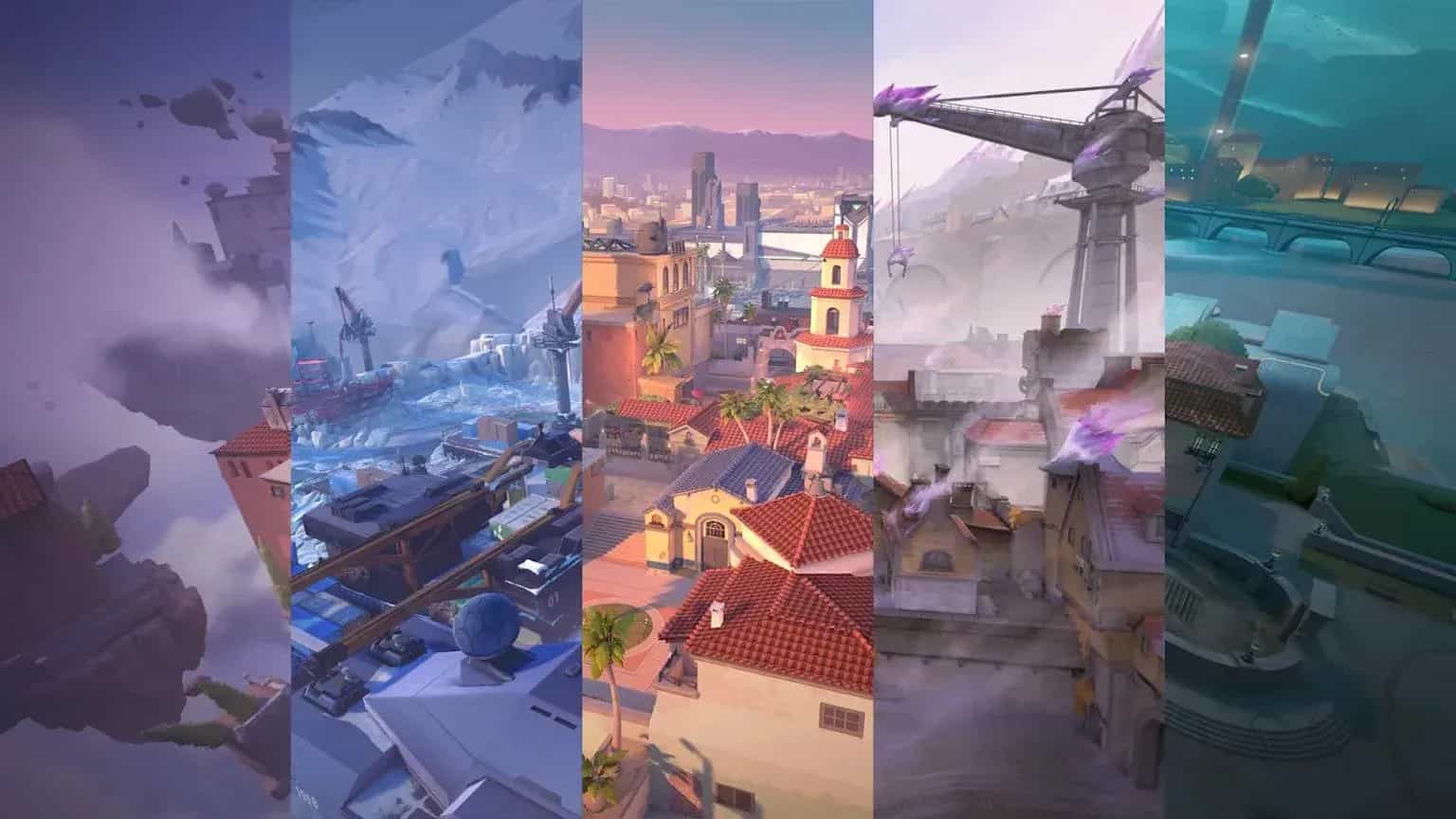
VALORANT Maps Guide (2026): All Maps, Callouts and Strategies

Complete VALORANT Maps Guide 2026: Strategies and Callouts by Map
Last updated: Act 2, Season 2026, Patch 12.05 — Current competitive pool: Fracture, Breeze, Pearl, Haven, Bind, Split, Lotus.
VALORANT features 12 standard plant‑defuse maps, but only 7 are active in the competitive pool at any given time. This guide covers the Act 2 2026 ranked rotation, core callouts, unique map mechanics, and tactical tips for attacking and defending. Mastering layouts and callouts carries as much weight as raw aim; skipping them means leaving easy rounds on the table every match.
VALORANT Competitive Pool: Which Maps Are in Ranked in 2026?
VALORANT maintains a seven‑map competitive rotation at all times. As of Patch 12.05, Act 2, April 2026, the following maps are live in Ranked and Premier:
| Map | Sites | Special Mechanic | Style | In pool since |
|---|---|---|---|---|
| Bind | 2 (A and B) | Teleporters — instant rotations between sites | Closed, CQC, favors Controllers | Since beta |
| Haven | 3 (A, B and C) | 3 sites — unique in the pool; destructible doors in mid | Large, long rotations, mid control critical | Long history |
| Split | 2 (A and B) | Verticality; ropes to climb; closed mid | Defense‑favored, closed maps | Patch 11.08 |
| Breeze | 2 (A and B) | Largest map — very long sightlines | Long range, favors Operator and recon Initiators | Returned in Patch 12.00 |
| Pearl | 2 (A and B) | No special mechanics — classic 3‑lane design | Balanced, pure mechanics | Patch 9.08 |
| Lotus | 3 (A, B and C) | Rotating doors on A and C, destructible wall on C, silent drop on B | 3 sites like Haven; complex mechanics | Returned in Patch 12.05 |
| Fracture | 2 (A and B) | Attackers start on both sides via underground zipline | Unique, defense in the middle, chaotic | Returned in Patch 12.05 |
Maps Currently Out of the Competitive Pool
| Map | Status |
|---|---|
| Abyss | Removed in Patch 12.05 |
| Corrode | Removed in Patch 12.05 |
| Sunset | Removed in Patch 12.00 |
| Ascent | Out for 138 days |
| Icebox | Out for 194 days |
Riot keeps exactly 7 maps in rotation at all times, with the pool shifting roughly every Act—about once every two months. Removed maps remain available in non‑competitive modes, including Unrated, Spike Rush, and Team Deathmatch, but they do not appear in Ranked or Premier.
Map‑by‑Map Guide: Strategies, Callouts and Tips for the Act 2 2026 Pool
Bind — Teleporters and Instant Rotations
Key callouts: Hookah, Showers, Bath, Heaven A, Elbow, Lamps A, Short, Long, Default B.
Attack tips: The rush down Hookah toward B can be devastating in lower ranks, where defenders often lack the coordinated cover rotations to react. On A, pushing Showers first gives attackers a key angle before entering the site proper, especially if a Controller can clear the path with a smoke or flash.
Defense tips: Treat the teleporters as information hubs. The moment you hear one activate, you know an enemy has rotated and you can estimate how many seconds it will take them to reach their destination. Use that gap to re‑angle, rotate, or collapse on the site.
Agents that fit well: Controllers with two or more smokes (like Astra or Omen) excel at blocking the narrow chokepoints around Hookah and Showers. Jett on Hookah can be a nightmare for defenders trying to hold static angles, while Breach and other Initiators can clear the teleporter exits with sonic flashes and blinks.
Haven — One of the Two Maps With 3 Sites in the Pool
Key callouts: C Long, C Site, Garage, B Site, Mid, Mid Courtyard, A Long, A Short, Heaven A, A Site.
Attack tips: Whoever controls mid controls the pace of Haven. Early pressure on Garage or Mid Courtyard can drag defenders out of their default positions, creating split‑peel opportunities and opening up flanks into A and C. Slow pushes down A Long or C Long with info‑agents like Sova or Killjoy can also force defenders into predictable rotations.
Defense tips: Five players protecting three sites means there will always be weak spots. The key is to rotate quickly through mid while maintaining clear communication about enemy positions. Use broadly placed smokes or Astra’s global ult to cover multiple angles at once, and avoid over‑splitting early in the round.
Agents that fit well: Jett and Neon excel at closing the large gaps between A, B, and C with blinks and dashes. Astra and Brimstone can drop smokes that cover multiple sites from high ground, while Sova and Killjoy provide long‑range intel and gadget coverage across the sprawling mid.
Split — Verticality and Defense‑Favored Map
Key callouts: B Main, B Rafters/Heaven, B Back Site, Mid, Mid Vent, A Main, A Heaven, A Lobby, Sewers.
Attack tips: Entry on Split almost always requires 3–4 abilities to clear angles without taking heavy casualties. Do not enter a site without coordinated smokes, flashes, and at least one shot caller calling out enemy positions. Breaking through B’s elevated angles or A Heaven often requires a combination of Viper walls or Chamber traps plus a pinpoint Sova arrow or flash.
Defense tips: Lock down the Heaven positions on both sites as soon as you can. If you lose the heights, you lose the ability to control the map from above and are forced into reactive, corner‑based defense. Use the ropes to rotate quietly between Crane and Heaven and keep attackers guessing which angle is actually occupied.
Agents that fit well: Breach and KAY/O can clear elevated angles with concussive blasts and flashes, while Killjoy and Chamber can lock down chokepoints with traps and orb detonations. Sage’s walls are especially useful for blocking stairs or the Crane entrance at key moments, turning a 3‑lane bend into a 1‑lane choke.
Breeze — Long Sightlines and Open Space
Key callouts: A Cave, A Shop, Bridge, Mid Wood Doors, Switch, B Main, B Arches, B Elbow, B Tunnel.
Attack tips: Smokes are non‑negotiable on Breeze. Without a Controller blocking the long corridors from Switch or mid, defenders can hold static angles with near‑impunity. Use angled smokes to cut off parts of the map rather than fully dry‑pushing, and pair them with flashes or Sova recon to create safe entry windows.
Defense tips: Mid control—especially on Bridge and Switch—gives defenders access to both sites and the ability to rotate quickly. Use long‑range positions like A Cave or B Elbow to punish slow pushes, and keep your reconists on the lower lanes to catch early flanks through Wood Doors or arched tunnels.
Agents that fit well: Sova is a staple for long‑range recon and drone coverage across the map’s open spaces. Viper’s walls can cut off whole lanes or force attackers into exposed angles. Chamber or Jett with the Operator can dominate the wide sightlines, especially from elevated positions on mid.
Pearl — Classic Design With No Special Mechanics
Key callouts: A Main, A Art, A Site, Secret, Flowers, Link, Mid Connector, Mid Doors, B Main, Screen, Hall, Tower, B Site.
Attack tips: Mid is especially important on Pearl because the Link connector lets teams rotate between A and B without passing through open mid. Controlling or at least denying mid gives attackers a crucial second option if one side is over‑locked. Slow, coordinated pushes down A Main or B Main, supported by a Cypher camera or Sova arrow, can gradually strip away static defender positions.
Defense tips: Pearl has a slight inherent lean toward the attacking side in overall stats, so consider more aggressive defensive setups to compensate. Early pushes into Mid Connector or Link can force attackers out of their preferred lanes and open up angles into both sites. Use the tight B‑side corridors and Hall to stack smokes and force defenders into predictable angles.
Agents that fit well: Omen’s smokes and flashes shine on Pearl’s wide‑open lanes, allowing for flexible rotations and fake‑plant setups. Sova’s long‑range recon fits well with the map’s 3‑lane structure, while Cypher’s cameras in Secret or Flowers can catch early A‑side rotations before they even hit Main.
Lotus — The Map of Rotating Doors and 3 Sites
Key callouts: A Tree, A Site, A Link, B Main, B Drop, C Main, C Site, Root, Mound.
Attack tips: Rotating doors are perfect for creating unexpected angles during site entries. Activating them from cover can force defenders to re‑angle or get caught in crossfire, while B’s silent drop lets you drop in behind defenders who are facing the main entrance. Use these mechanics to bait defender rotations and punish them with smokes or flashes.
Defense tips: Pay close attention to when doors rotate or destructible walls fall. An attacker can open them to create a new angle without you seeing them coming, so maintaining good info is critical. Use Sage’s walls or Chamber traps to block key doors or the silent drop, and keep your peekers disciplined to avoid over‑extending into blind spots.
Agents that fit well: Viper’s walls are ideal for locking down the long corridors on A and C, especially when the rotating doors open up extra sightlines. Killjoy’s sentry and turrets can cover multiple entries across three sites, while Sage’s walls and brackets can block or re‑shape the doors and drops at key moments.
Fracture — The Most Unique Map, Attackers on Both Sides
Key callouts: A Main, A Rope, A Site, B Main, B Arcade, B Site, Dish, Canteen, Attacker Spawn, Defender Spawn.
Attack tips: The main advantage is the ability to pressure two fronts at once. Coordinated attacks from both sides will strain any defense, especially if one side is using a controller smoke or trap to force defenders into a predictable rotation. Use the zipline to re‑enter the map late in the round and reinforce the more active side, or to fake a side‑swap and pull defenders out of position.
Defense tips: You must manage two flanks from the neutral defender spawn without over‑splitting. Early information from Cypher cameras or Killjoy gadgets is invaluable for spotting zipline rotations and tracking which side attackers are pushing. Use the central spawn as a pivot point to rotate between A and B, but avoid staying static for too long or you’ll get caught in a cross‑push.
Agents that fit well: Breach excels at clearing tight angles with flashes through walls at multiple entry points. Brimstone can drop smokes on both A Main and B Main from the central spawn, giving defenders a chance to re‑angle or re‑position. Fracture’s meta is still evolving after 306 days out of the pool, so experimenting with compositions and unconventional agents is highly rewarded.
General Tips for All VALORANT Maps
1. Mid Control: The Rule That Applies on Almost Every Map
On Haven, Pearl, and Fracture, whoever controls mid dictates the pace of the round. The team that dominates mid gains information on both sites and can rotate more freely, putting constant pressure on the defense.
The big exception is Bind, which has no traditional mid because teleporters replace that function. Even there, though, the concept of “map control” still applies—you just exercise it through the teleporters and the angles feeding into them. Apply this rule by assigning one or two players to contest mid‑equivalent areas at the start of each round, whether that’s Garage, Link, Canteen, or Bridge.
2. Callouts: The Communication That Wins Rounds
A callout is a standardized name for a specific location on the map. Saying “Hookah” on Bind conveys in less than a second what would otherwise take several seconds to describe, which can be the difference between a live pick and a clean push.
- Start by learning 3–5 critical callouts per map before trying to memorize everything.
- VALORANT callouts are in English, so using them in English keeps you aligned with the global player base and helps you read into pro broadcasts and community content.
- Example: “Spike on Hookah” vs. “Spike in the small room with the pipes on the left.” The speed and clarity of the first callout can change the outcome of a round.
For maximum impact, pair strong callouts with movement and angle discipline. Read more about how to strafe and peek angles to apply that knowledge alongside your callouts.
3. Pick Your Agent According to the Map
| Map type | Examples | Recommended agents |
|---|---|---|
| Closed, CQC map | Bind, Split | Jett, Raze, Breach — mobility and flashes for tight corners |
| Open, long‑range map | Breeze | Sova, Viper, Chamber/Jett with Operator |
| 3‑site map | Haven, Lotus | Controllers with global smokes; mobility to rotate |
| Map with no special mechanics | Pearl | Balanced composition; pure mechanics dominate here |
| Map with unique mechanics | Bind, Lotus, Fracture | Agents who know how to use or punish the map’s mechanics |
Make sure your composition fits the map’s geometry and mechanics. Check the beginner agent guide and the agent tier list to see which agents are currently trending and which ones complement your preferred map pool.
4. How to Learn a New Map Efficiently
- Step 1: Play 5–10 unrated matches focused on observation, not on stats. Pay attention to common angles, plant spots, and how rotations play out.
- Step 2: Learn the 5 most important callouts for each site so you can communicate at a pro level without needing to memorize every nook.
- Step 3: Identify the 2–3 most common Operator positions on the map and study how to counter them with smokes, flanks, or recon.
- Step 4: Practice 1–2 basic smoke lineups for Controller agents, ideally on the lanes you’ll use most often.
Do not try to memorize every inch of the map before you start playing. The fastest way to learn VALORANT maps is by playing them—reinforcing rotations, entries, and callouts through repeated practice.
All VALORANT Maps: Complete List Including Those Out of the Pool
| Map | Sites | Act 2 status | Release | Main feature |
|---|---|---|---|---|
| Bind | 2 | Competitive | Beta | Teleporters on both sites |
| Haven | 3 | Competitive | Beta | 3‑site map currently in the pool |
| Split | 2 | Competitive | Beta | Vertical — ropes and heights define the game |
| Ascent | 2 | Out of pool | Beta | Venice; metal door in mid; 3 lanes |
| Icebox | 2 | Out of pool | EP 1 Act 3 | Arctic; elevators and high verticality on A |
| Breeze | 2 | Competitive | EP 2 Act 3 | Caribbean; largest map; long sightlines |
| Fracture | 2 | Competitive | EP 3 Act 2 | New Mexico; attackers on both sides |
| Pearl | 2 | Competitive | EP 5 Act 1 | Underwater city in Lisbon; pure 3 lanes |
| Lotus | 3 | Competitive | EP 6 Act 1 | India; 3 sites; rotating doors and silent drop |
| Sunset | 2 | Out of pool | EP 7 Act 2 | Los Angeles; classic 3 lanes |
| Abyss | 2 | Out of pool | EP 9 Act 2 | No outer edges; you can fall off the map |
| Corrode | 2 | Out of pool | Patch 11.00 | Mont‑Saint‑Michel, France; 3 lanes |
To keep improving your map knowledge and in‑game mastery, visit the VALORANT hub on Strafe, where you’ll find competitive circuit news, VCT stats, and regularly updated guides for every map and agent.
Featured image credits: Riot Games