
 en
en
Benched by Bureaucracy: US Visa Denials Are Rewriting the BLAST R6 Major Before It Begins

The Toughest Boss Fight: Navigating the US Visa Maze
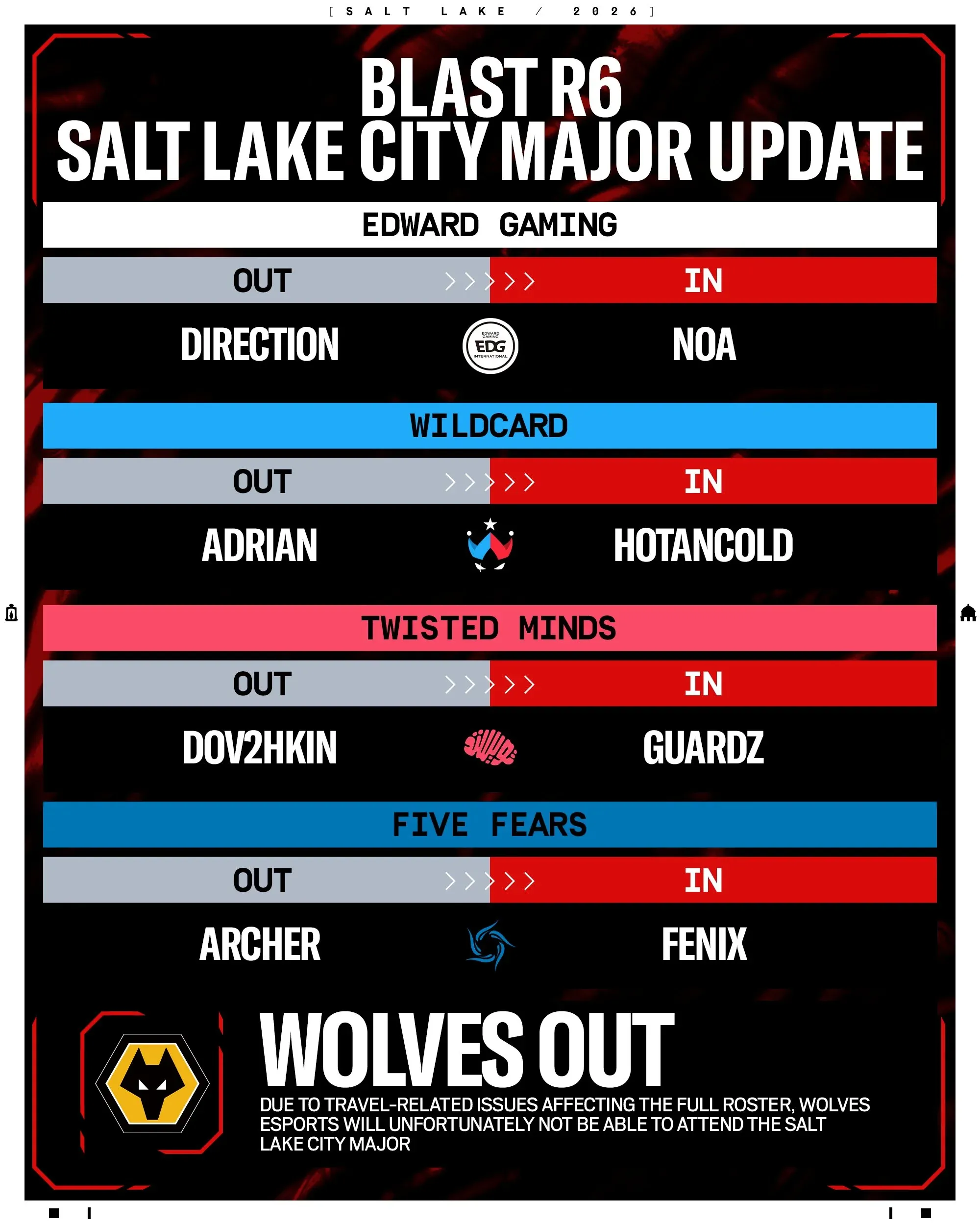
In competitive gaming, the hardest opponents are the ones you can't out-shoot, outflank, or outmaneuver with a well-timed strat. They wear suits, stamp passports, and operate out of embassy waiting rooms thousands of miles from the server. As the BLAST R6 Major Salt Lake City prepares to tip off on May 8 in Utah, five teams—Wolves Esports, EDward Gaming, Wildcard, Twisted Minds, and Five Fears—have already discovered this the brutal way. A quarter of the field, kneecapped before a single round was played.
The Worst Affected
Wolves Esports suffered the worst fate of all: every single player and staff member failed to secure a US visa in time. This netted them with a measly 20th-place finish, a $3,000 consolation prize, and 250 SI points that feel like a participation ribbon. The rest scrambled for band-aid solutions.
-
EDward Gaming brought in Noah "Noa" Urwitz on loan from Team Secret to replace Direction.
-
Wildcard turned to veteran Matthew "Hotancold" Stevens, a two-time Major champion recently benched by M80, to sub in for Adrian.
-
Twisted Minds had a stroke of fortunate irony, replacing Abdullah "Dov2hkiin" Alsaeedi with his own twin brother, Guardz.
-
Five Fears called in Sam "Fenix" Spencer for Archer.
The Bureaucratic Final Boss
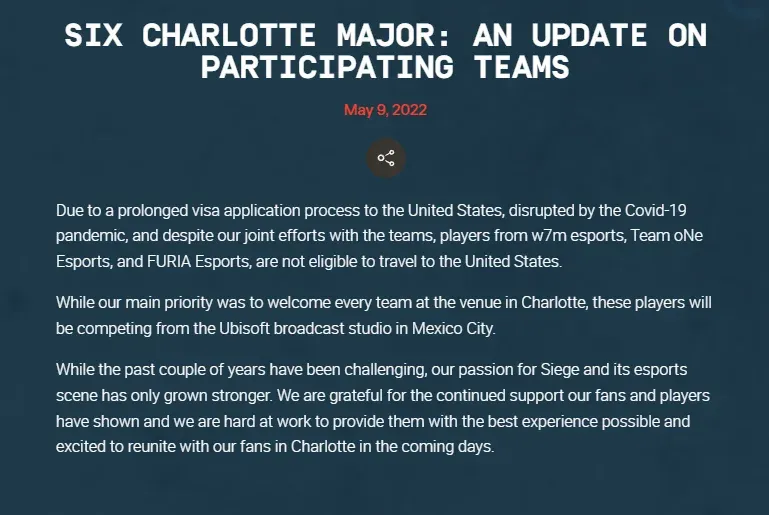
If this feels familiar, that's because it is. Visa chaos at US-hosted esports events isn't new. The Six Charlotte Major saw Team oNe, w7m esports, and Elevate hit by denials, while the BLAST R6 Major Atlanta did the same to Geekay Esports and ALPHA Team. However, the issues in Charlotte were caused during the COVID-19 disruptions of 2022, when global travel restrictions and embassy backlogs made US entry a lottery.
But one could argue the situation has only gotten harder since. Geopolitical tensions have tightened America's borders further, and the teams paying the price are almost exclusively non-Western, non-established outfits. Rainbow Six Siege's global competitive circuit spans continents, but the moment that circuit runs through the United States, the gauntlet begins.
The US P-1 visa exists for internationally recognized athletes, and on paper, esports professionals should qualify. But USCIS has never quite made up its mind about whether a controller counts the same as a racket. This ambiguity translates into endless requests for additional evidence, bureaucratic back-and-forth, and delays that can end up causing their own sets of issues.
Layer on top of that the current political climate in the US; heightened scrutiny for players from regions like China, the Middle East, and Latin America, and the perception of young players from developing nations as flight risks, and you've got a system that represents anything but smooth sailing, thus producing exactly what Salt Lake City is witnessing right now.
The Cost Nobody Talks About
The conversation always centers on the team, and rightfully so. But the full blast radius is much deeper:
-
Players have to grind through regional qualifiers and brutal bootcamp schedules to earn their spot at international events. Months of built-up team chemistry, the kind that only shared practice can forge, evaporate overnight.
-
Ranking points accumulated across an entire season become instantly irrelevant.
-
Organizational investment in coaching staff, travel logistics, accommodation, and player development gets written off with nothing to show for it.
-
Sponsors who backed the team for global visibility get shortchanged, with no stage appearance to justify their investment.
Time to Respawn the System
Esports is one of the most genuinely global sports disciplines on the planet, with players routinely competing across six continents in events watched by millions. The US remains one of its most lucrative stages, but that stage is now repeatedly coming accompanied by an asterisk.
Without meaningful structural reform, American host cities will continue to pay a hidden price: tournaments that arrive incomplete. More critically, there is a real risk that organizers begin routing their most prestigious events away from the United States altogether toward countries with more straightforward entry processes. That outcome would represent a tangible economic loss for American cities, but on a more personal basis, it would rob fans of the chance to watch the world's best compete in their hometown or a city within driving distance.
Incomplete rosters and rerouted tournaments are not inevitable, but they will be if the systemic barriers facing international esports professionals remain unaddressed.
Don't forget to follow Strafe Esports for the latest news on your favorite esports titles, and check out our X profile for the most recent content and coverage.
Also, stay tuned to the Strafe YouTube channel for exclusive interviews, press conferences, and much more.
Featured Image Credit: Adela Sznajder / Ubisoft
Read More:
Wolves Esports Out Before It Even Starts: Entire R6 Roster Denied Visas for Salt Lake City Major
BLAST R6 Major Salt Lake City 2026: Teams, Format, Predictions and More