
 en
en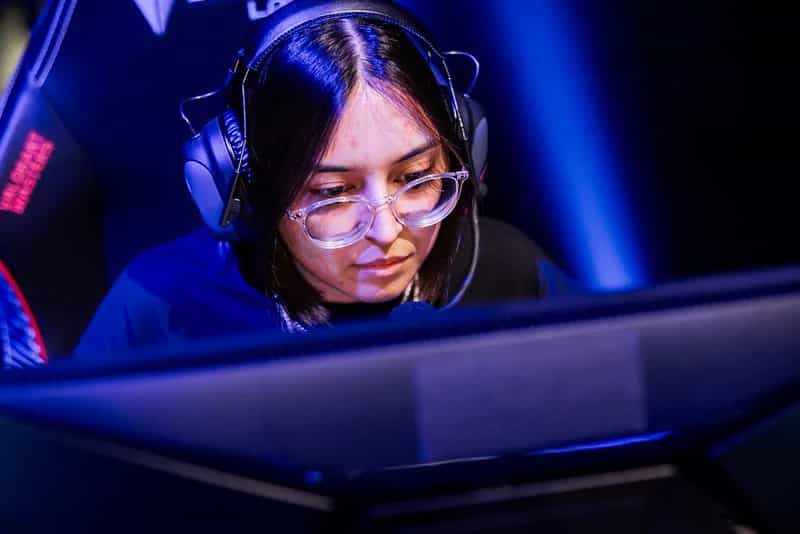
Unequal Treatment: Female Valorant Professional Players Reportedly Turned Away from Trials Due To Gender
Are women professional players just not as good as men? Or are they just not given the same opportunities? According to esports reporter Rod “Slasher” Breslau, it is decidedly the second that has been the majoring factor. Reportedly, female Valorant professional players are being turned away by Tier 1 organizations’ trials due to their gender. He states on a livestream with former CSGO professional player and Valorant caster and coach Sean “sgares” Gares that some male players on these Tier 1 organizations, are turning down these female players without affording them trials on the basis of ‘not wanting to play with women.’
Sexism Continues to Persist
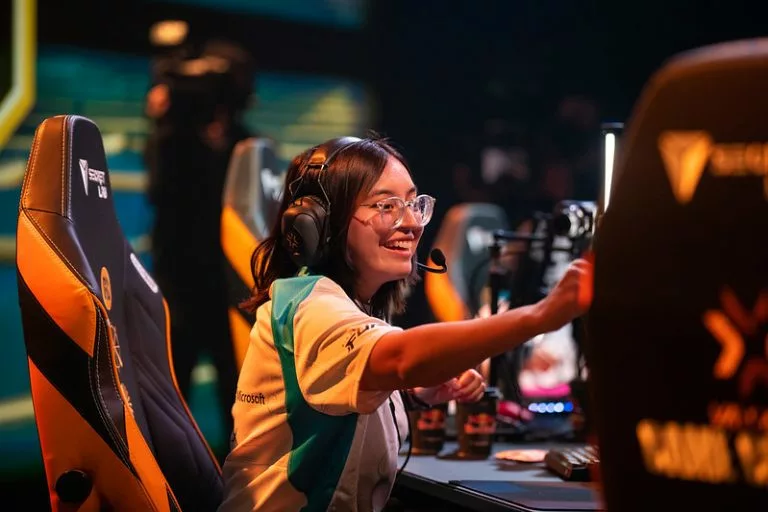
VCT Game Changers Melanie “meL” Capone is but the latest in a long line of female player who have been denied access to the same trials on Tier 1 teams. She just happens to be one of the most well-known female players and one of the highest skilled female players in her scene, making her dismissal, the most egregious and loudest example of this occurrence.
Since the news broke, multiple female professionals have also stepped forward to claim that this has been happening for a long time, with professional male players refusing to afford the chance for female players to join their team, answering a large booming question on why co-ed professional esports teams largely continue to be unicorns in the field.
According to “Slasher”, ‘Every single team that she has tried to scrim with, at a Tier 1 level, has refused to try out because there was at least one player on the team that does not want to play with a woman.’
He recounts that a similar high-profile incident had also occurred in Counter-Strike Global Offensive, where Michaela “mimi” Lintrup (former CSGO pro and VCT Game Changers Champions winner) was also denied trials with teams.
‘I heard this exact same thing in Counter-Strike,’ Slasher said. ‘[“mimi”] was the best female player…They had won every single championship in the women’s league, she was doing great, she was the best player on her team.’ He went on to say: ‘And when I was speaking with her, she was telling me she couldn’t even try-out for Tier 2 teams, or even Tier 3 teams, for the exact same reason. Is that the players on those teams did not want to practice with a woman,’ he concluded.
The Résumé is There, So What’s The Issue?
During the stream, the topic of “meL” was brought up, where “sgares” praised her In-Game Leading skills. “meL” has long been one of the most notable names within the Tier 2 and Game Changers circuits, known for her long record of championship-contending teams. Since her debut in 2020 with MAGKL, “meL” has accrued a staggering 8 VCT Game Changers Series Trophies.
MAGKL, a team with no organization backing, was hand-formed, and performed so exceedingly well, that notable North American organization, Cloud9, came knocking. Moreover, “meL” frequently demonstrated that even in her capacity as In-Game Leader (IGL), she was more than capable of top-fragging on the server. She is frequently seen inhabiting the top leaderboards of Valorant’s ranked leaderboard as well, and mechanically has been recognized by many top North American talents in the scene.
A Means for the Now, Not the End
The frequent asterisk that most use when arguing against women joining the leagues predominantly dominated by men, is that historically, women teams have not done well when participating in the highest tier of competition.’ Multiple records of experiments have been done, with all-women teams competing in these leagues, and getting completely gapped talent-wise.
However, what they fail to mention is that majority of these experiments were done for marketing and had very little effort placed in fielding an actually competitive roster. The women on these teams were chosen for their gender, rather than their skills and merits. Moreover, many would like to see women teams and players continue to be sidelined to the Game Changers circuit, where all-female and non-binary players populate. That is fine for the majority, however, the ultimate goal for all of these circuits, is to create a pipeline that allows these players to also have the chance to compete at the highest level, should their talent and merits be sufficient.
"Mixed gender esports teams should absolutely be more commonplace than they are now, and I don't want this situation to further us from that reality."
The circuit was originally created to create opportunities for women and non-binaries to compete, in a space that was not already heavily populated. It was not created as an alternative. Moreover, when you are a player like “meL”, who has won 8 championships within your own circuit and has regularly created and led teams that has dominated said fields, new challenges would be at the forefront of expectations.
In further clarification to his comments on live stream, "Slasher" has since gone on to edit his statements. 'In some scenarios that "meL" was unable to trial for teams, it was due to her buyout or other reasons that had zero to do with sexism. Mixed gender esports teams should absolutely be more commonplace than they are now, and I don't want this situation to further us from that reality.' Whilst he states that some of the trial denials have been due to her gender, this has not been the case every time.
"meL" is currently competing with her team, Version1, in the VCT Game Changers North American circuit. Read all the latest Valorant news on Strafe Esports.
Credit: Colin Young-Wolff/Riot Games