
 en
en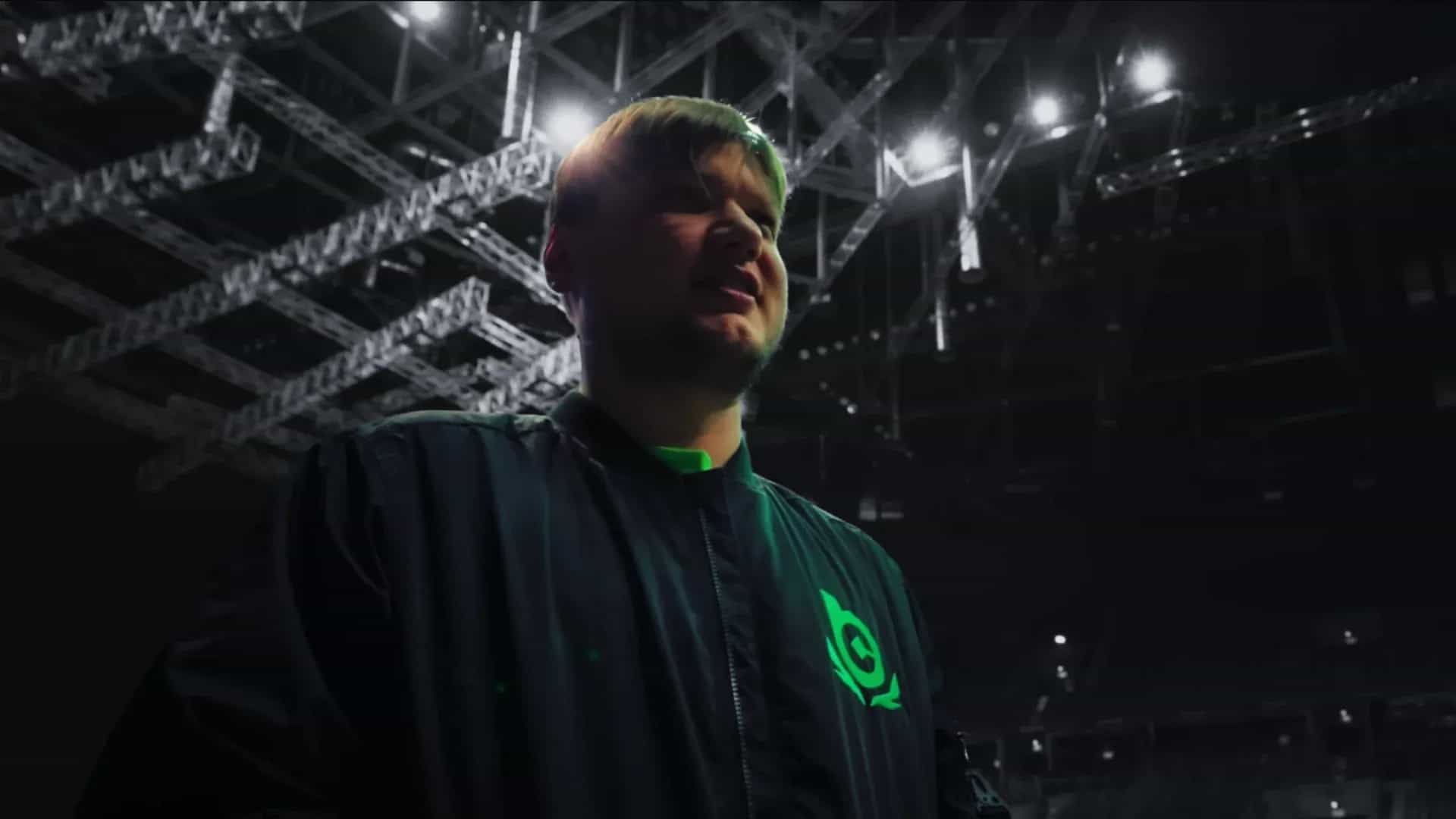
A Gamble That Failed: BC.Game Humbled at IEM Krakow 2026

When ESL initially sent out the invites to IEM Krakow 2026, the Counter-Strike world held its breath. The tournament, a successor to the legendary Katowice events, promised the return of two of the game's most iconic figures. Oleksandr "s1mple" Kostyliev and Denis "electroNic" Sharipov—the duo that brought Natus Vincere its first Major title in Stockholm—were back on the server together. But they weren't wearing the yellow and black of NaVi.
Instead, they donned the colors of BC.Game, a Central American-based crypto gambling organization that had bought its way into the conversation not through organic growth, but through aggressive acquisition.
While gambling sponsors are often viewed with skepticism by the purists of the esports community, entities like BC.Game have become the lifeblood of the tier-2 and tier-3 scenes, keeping the ecosystem alive.
However, BC.Game had ambitions far beyond the lower tiers. They wanted instant glory. The result was a roster built on nostalgia and cash, a project that crashed and burned at the hands of FaZe Clan in the lower bracket of Group B.
[embed]https://twitter.com/ESLCS/status/2018399459244171443[/embed]
Here is why the GOAT of CSGO and his team were denied entry to the TAURON Arena, and why money can’t always buy chemistry.
The Anatomy of a Roster Gamble
To understand the failure in Krakow, one must look at the timeline of this roster's construction.
BC.Game's strategy was high-risk, high-reward. It began with acquiring the undisputed Greatest of All Time, s1mple, back in July 2025. This was a statement signing, a marketing showpiece designed to attract sponsors and eyes. When the opportunity arose to add his former Major-winning partner electroNic in October 2025, they pulled the trigger again.
Suddenly, BC.Game had two stars on paper, but a gaping void in the server. They were left with two legends and three actual tier-2 teammates who struggled to keep pace. To fill this void, the organization made a big move just weeks before the invite deadline: they signed the core of the Portuguese roster SAW—MUTiRiS, krazy, and aragornN. At the time of the acquisition, SAW was ranked number 22 on the Global VRS list.
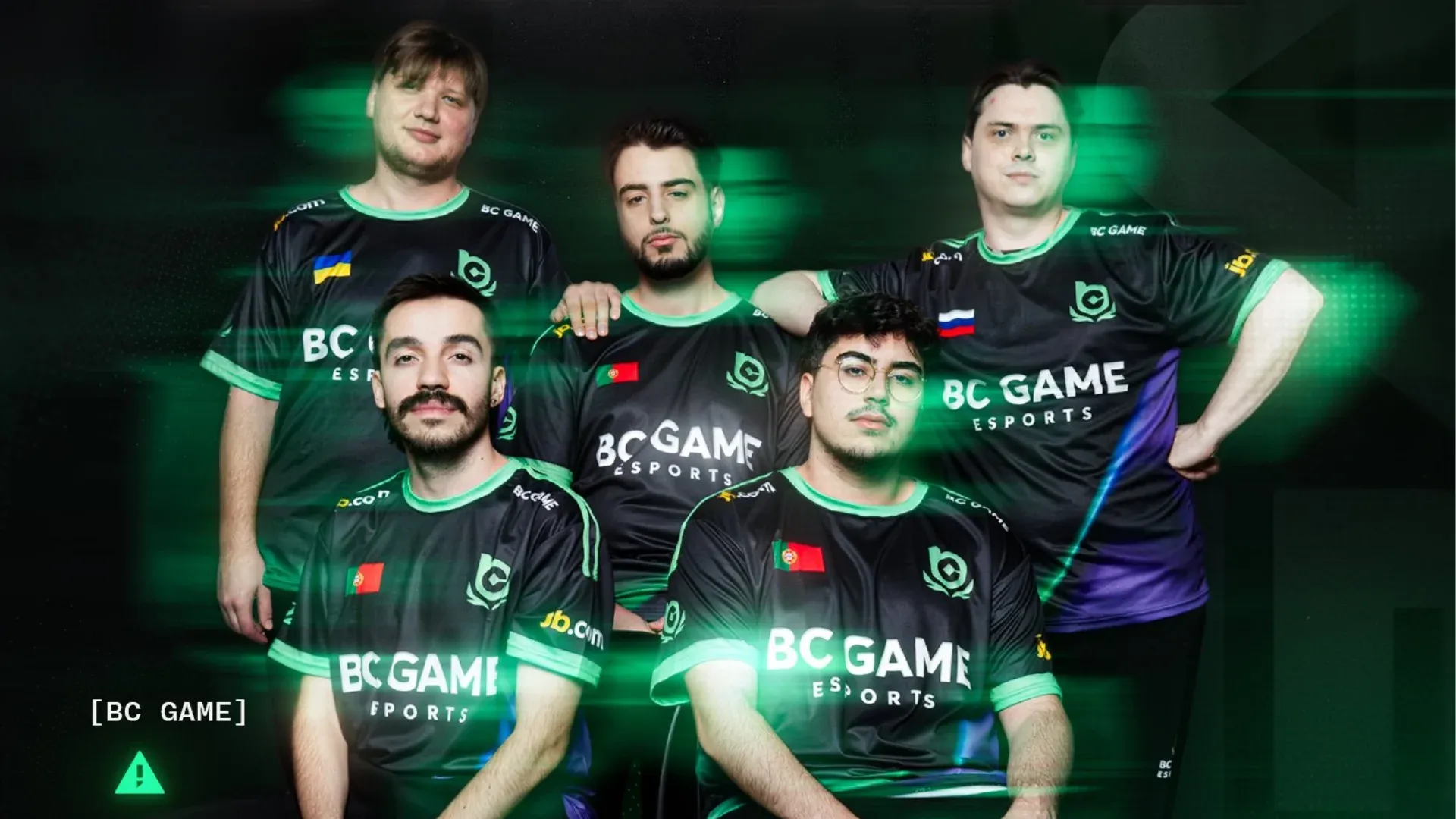
It was a classic "pay-to-win" strategy. BC.Game essentially bought a pre-existing tactical core and grafted two superstars onto it. In theory, it solved the problem of team cohesion; the Portuguese trio had years of chemistry. In practice, it created a disjointed Frankenstein's monster that was unsure of its own identity.
They had managed to buy their way into one of the season's most prestigious tournaments, but as the group stage proved, qualifications and performance are two very different metrics.
The Krakow Reality Check
Once the matches began, the cracks in the foundation were immediately visible. The team had not shed its tier-2 roots simply by adding s1mple. Although BC.Game managed to make light work of Legacy in the play-ins, their mettle was severely tested against the gatekeepers of tier-1 CS: 3DMAX. The French squad delivered a brutal reality check, absolutely dismantling BC.Game 2-0. The scorelines were humiliating—13-3 on Overpass and 13-4 on Anubis.
Despite a brief resurgence where they managed to beat NIP thanks to individual fireworks from s1mple, reality set in once again during the group stage. A predictable loss to Vitality pushed them into the lower bracket, setting up a do-or-die clash against a declining, yet dangerous, FaZe Clan.
The Reunion That Wasn't: Nostalgia vs. Reality
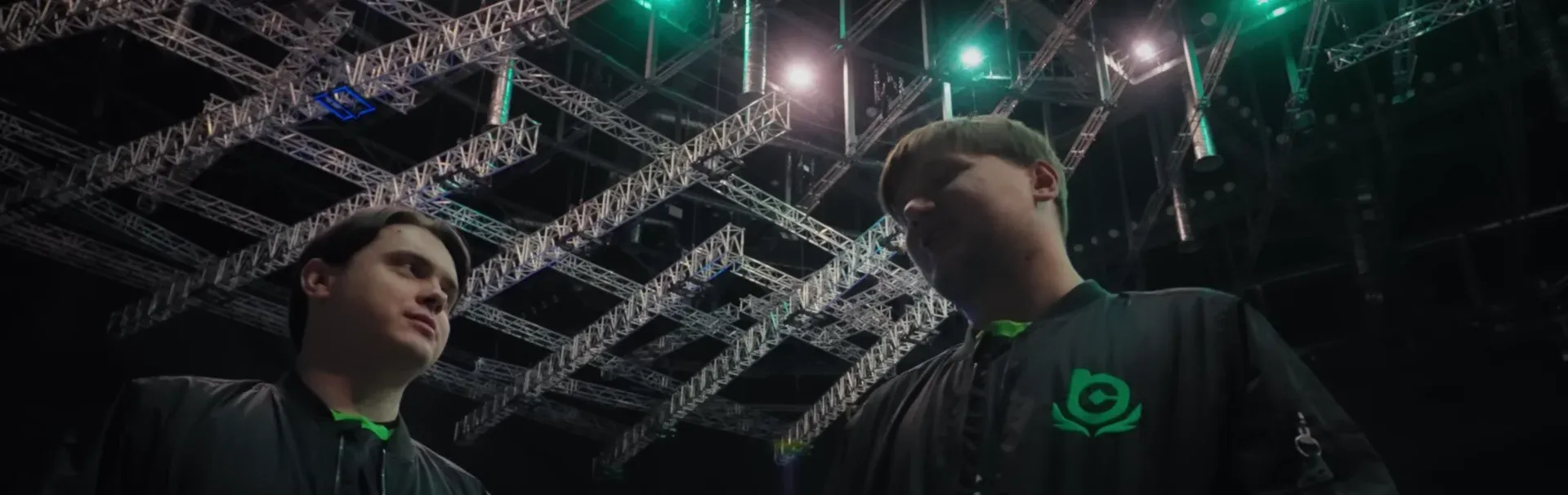
Although, on paper, the BC.Game roster doesn’t look too bad, people are also misled by the rosy-tinted glasses of nostalgia. In reality, s1mple is no longer the "human highlight machine" who could single-handedly drag a team to a trophy. While he is far from washed up, his transition from a "godly" level of performance to simply being "World Class" is significant. The Ukrainian superstar, who holds a record 21 MVP medals from his CS:GO prime, can still produce moments of magic, but he can no longer swing an entire series purely on mechanical skill.
Next in line for critique is electroNic. Once touted as a rifler capable of going toe-to-toe with NiKo, the Russian star is now a shadow of his former self. His trajectory since leaving NaVi in 2023 has been a downward spiral of failing projects. A stint at Cloud9 yielded no substantial results, and his move to Virtus.pro ended in disaster when his attempt at IGL-ing proved he was not cut out for leadership. Reuniting with s1mple was supposed to rekindle the old flame, but instead, it highlighted how much the game has moved past their individual dominance.
Chemistry and Ego
Beyond individual form, the "intangibles" of Counter-Strike—chemistry, ego, and mental resilience—were noticeably absent. Both s1mple and electroNic have historical reputations for being difficult teammates. While they have matured, remnants of that frustration can be lethal in a high-pressure environment. Against a team like 3DMAX who like trash-talking on the server, the body language on the BC.Game side was telling.
The integration of the SAW core was also clumsy. MUTiRiS, a legend of Portuguese esports who co-founded SAW and led them to consistent top-8 finishes, was suddenly asked to accommodate two massive personalities. The gamble lay in the timing.
Esports, unlike traditional sports, runs on a relentless calendar. Assembling an international roster days before a major event and expecting instant results is a recipe for disaster. A single bad day means elimination and weeks of stagnation. BC.Game had no preparation time, and when thrown to the wolves, they were devoured.
Furthermore, the coaching situation raised eyebrows. TaZ, a legend in his own right, has often been criticized during his tenure at G2 for being more of a "morale coach" than a tactical one. While his people management skills might be elite, the lack of a rigorous strategic system like the one B1ad3 implemented at NaVi left the team exposed.
The Game Against FaZe Clan
The elimination match against FaZe Clan was the final nail in the coffin. In many ways, FaZe was the perfect opposites to BC.Game. FaZe is one of the most storied organizations in CS history, led by karrigan. Even though this iteration of FaZe is considered one of their weakest, they possess the one thing BC.Game tried to buy: genuine chemistry.
FaZe's core roster has spent years playing together, even managing to reach the finals of the StarLadder Budapest Major. They understand their roles implicitly. While they may lack a singular star with the raw metrics of a player like donk or ZywOo, they operate as a cohesive unit. Twistzz the "Magician," and karrigan—two of the team’s most veteran players—don't suffer from emotional outbursts directed at teammates. This generates a healthy competitive environment that is crucial in a drawn-out series.
Additionally, the coaching matchup of Neo versus TaZ highlighted the strategic gap. Neo’s tactical acumen allowed FaZe to exploit BC.Game’s shallow map pool. Apart from Dust2—a map everyone and their grandparents know by heart—BC.Game looked lost. They managed an upset on Nuke against FaZe, but their performances on Ancient was lackluster.
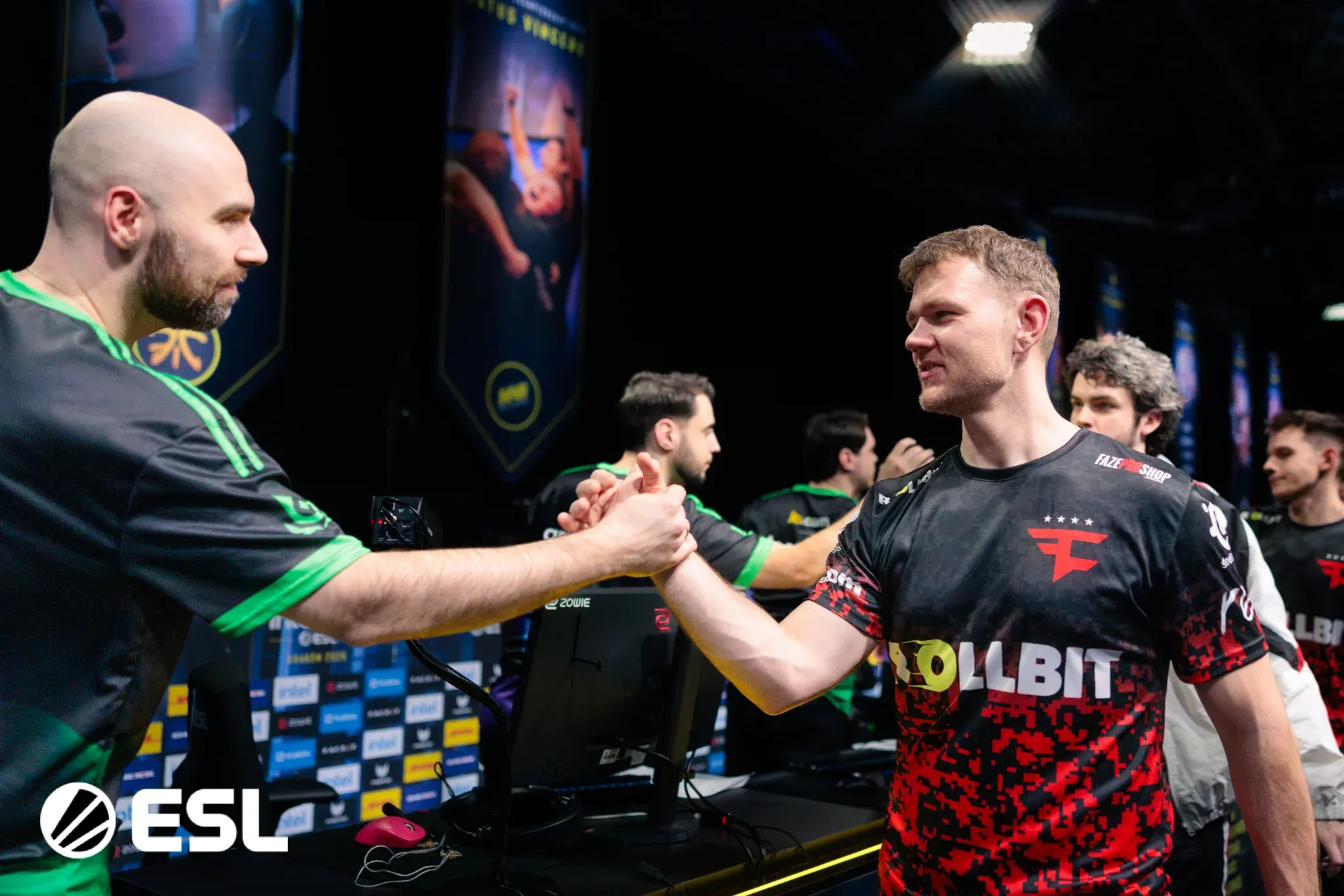
Even in their other matchups, on complex maps like Inferno and Mirage, they simply couldn't compete with teams that have drilled those rotations for years. Even Anubis, often a comfort pick for weaker teams to exploit its unpredictability, was frequently their second ban, revealing a lack of depth that is fatal in tier-1 play.
What BC.Game Must Decide Next
The purpose of this analysis is not to bash BC.Game for trying; as the saying goes, you miss 100% of the shots you don't take. However, the failure in Krakow forces a philosophical decision. The team showed flashes of potential—electroNic carried maps like Overpass when others faltered, and MUTiRiS showed incredible IGL skills against tougher competition.
The next step isn't necessarily to "blow it up," because the roster's potential is real. The question is identity: will BC.Game build a strategy-driven system where even stars operate inside strict defaults, or will they lean into a looser framework that empowers s1mple and electroNic to call freely while the Portuguese core simplifies into trade-and-utility roles?
The loss to FaZe proved that trying to live in the middle, with half system and half superstar improvisation, creates the one thing tier-one teams feast on: uncertainty.
Don't forget to follow Strafe Esports for the latest news about your favorite esports and to check out our X account for the most recent content and coverage.
Also, stay tuned to the Strafe YouTube channel for exclusive interviews, press conferences, and much more.
Featured image credit: ESL
READ MORE: