

 en
en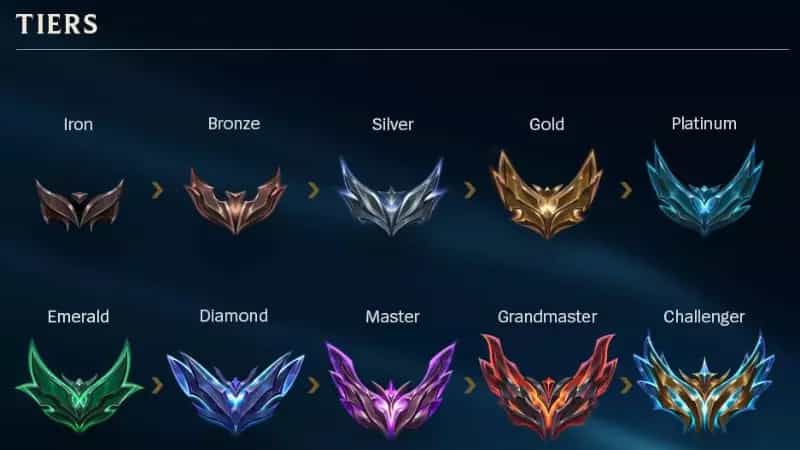
Understanding the League of Legends Ranking System
Aidan van Vuuren
13 May, 2024, 05:24
|Last updated: 9 Apr, 2025, 23:18
Understanding the League of Legends Ranking System
The ranking system in League of Legends (LoL) is crucial for players who want to measure their skill and progress. This system provides structured competition and helps players set and achieve goals. Here's an in-depth look at how the ranking system works.
What is the League of Legends Ranking System?
The ranking system in League of Legends is designed to match players of similar skill levels and create a competitive environment. It includes tiers, divisions, and League Points (LP), which determine a player's rank and progression.
Why Was the New League System Created?
The new league system was introduced to replace the single ladder ranking system. The primary reason was to provide better incentives for advancement. Climbing from a low rank like 290,000th to the top can feel daunting and endless. By introducing tiers and divisions, the system offers more manageable goals and milestones. This shift focuses on competition within smaller, relatable groups of opponents rather than a single, overwhelming number.
How the Ranking System Works
Tiers and Divisions
The ranking system is divided into several tiers, each containing multiple divisions. The tiers, from lowest to highest, are Iron, Bronze, Silver, Gold, Platinum, Diamond, Master, Grandmaster, and Challenger. Each tier (except for Master, Grandmaster, and Challenger) has four divisions, with Division IV being the lowest and Division I the highest.
League Points (LP)
Players earn League Points by winning ranked matches. Losing matches results in a loss of LP. When a player reaches 100 LP in their current division, they enter a Promotion Series to advance to the next division or tier. Conversely, if they lose too many matches, they risk demotion.
Promotion and Demotion
Promotion Series consist of a best-of-three or best-of-five set of matches, depending on whether the player is moving to a new division or tier. If successful, they advance. If they fail, they lose some LP but can try again after winning more matches.
Demotion occurs when a player's LP drops to 0 in their current division and they continue to lose matches. However, once a player reaches a new tier, they cannot be demoted to a lower tier unless they remain inactive for an extended period.
Placement Matches
Initial Placement
When a player first enters ranked play, they must complete a series of placement matches. These matches determine their initial rank. The system evaluates their performance and places them in an appropriate tier and division based on their results.
Preseason and Regular Season
Players who participate in ranked matches during the preseason are placed into a league based on their performance in these matches. Their rank is determined by a combination of their current and top Elo ratings.
Matchmaking in the League System
Hidden Matchmaking Rating (MMR)
Matchmaking in League of Legends uses a hidden Matchmaking Rating (MMR) to pair players. This rating is separate from the visible rank and is used to ensure fair matches. Players of similar MMR are matched together, regardless of their visible rank.
Playing with Friends
The system tries to place players in leagues with their friends if they are of similar skill levels. However, matchmaking isn't limited to league members. Players can compete against anyone within the entire skill bracket.
Duo Queue
Players can duo queue with friends, regardless of their tier or division. This allows friends of different skill levels to play together, although the matchmaking system adjusts expectations based on the combined skill of the duo.
Advancing in the League System
Example Scenario
Consider a player named Steve McQueen. After completing his placement matches, Steve is placed in Division III of the Silver tier. He joins a league with up to 250 other Silver tier players, spread across five divisions. Steve must earn 100 LP to enter a Division Series and potentially move up. If he wins, he advances to Division II. If he loses, he drops some LP but can try again.
Handling Losses
Losing matches in a Division or Promotion Series doesn't mean starting from scratch. Players return to the ladder with some LP retained, allowing them to quickly qualify for another series.
Special Considerations
Inactivity
Players who stop playing for an extended period can be demoted from their current tier. This encourages regular play and helps maintain active competition.
Elo Boosting
The system includes checks and balances to prevent Elo boosting, where players manipulate their rank through unfair means. Hidden MMR helps mitigate this by matching players based on actual skill rather than visible rank.
Time Penalties
Queue dodging, or leaving a match queue intentionally, incurs time penalties. These penalties start at 5 minutes and increase with each subsequent dodge, up to a maximum of 1 hour. Additionally, players lose LP for dodging ranked matches.
Comparison with Other Systems
The League of Legends ranking system shares similarities with other competitive games, such as StarCraft II. However, it emphasizes clear goals, understandable promotion criteria, and exciting series matches. This system fosters a community of players striving to improve and climb the ranks.
The Competitive Environment of the League of Legends Ranking System
The League of Legends ranking system offers a structured, competitive environment for players. With tiers, divisions, and League Points (LP), it provides clear goals and incentives for advancement. Understanding this system can help players improve their gameplay and enjoy the competitive aspect of League of Legends.
Tiers and Divisions
The ranking system is divided into several tiers: Iron, Bronze, Silver, Gold, Platinum, Diamond, Master, Grandmaster, and Challenger. Each tier, except for Master, Grandmaster, and Challenger, contains four divisions. Players start in Division IV and aim to reach Division I within their current tier. This structure gives players clear, achievable goals. For instance, a Silver IV player knows they need to progress through Silver III, Silver II, and Silver I before reaching the Gold tier.
League Points (LP) and Promotion Series
Players earn League Points by winning ranked matches. For example, if Steve McQueen, a hypothetical player, wins a match while in Silver III, he gains LP. When Steve accumulates 100 LP, he enters a Promotion Series to advance to Silver II. This series consists of a best-of-three set of matches. If Steve wins two out of three matches, he moves up to Silver II. If he loses, he drops some LP but can quickly re-qualify for another series by winning more matches.
Once a player reaches a new tier, such as moving from Silver to Gold, they cannot be demoted to a lower tier based solely on losses. This rule applies unless they remain inactive for an extended period. This stability encourages players to aim for higher tiers without the fear of immediate demotion after a bad streak of games.
Placement Matches and Initial Ranking
New players must complete a series of placement matches to determine their initial rank. For instance, if a player has not participated in ranked matches during the preseason, they need to complete ten solo/duo games. The results of these matches determine their starting tier and division. A player who performs exceptionally well might start in Gold II, while a player with average performance might begin in Silver IV. This initial ranking sets the stage for their journey through the ranks.
Matchmaking and Hidden MMR
The matchmaking system uses a hidden Matchmaking Rating (MMR) to pair players of similar skill levels. This hidden rating ensures fair matches and is separate from the visible rank. For example, if Steve's hidden MMR is high, he might be matched against higher-tier players even if his visible rank is lower. Conversely, if he consistently loses matches, his MMR will drop, and he will be paired with lower-skill players, even if his visible rank remains unchanged.
Playing with Friends and Duo Queue
The league system allows players to see how they measure up against their friends. If Steve has friends in the same skill tier, the system tries to place them in the same league. This feature fosters friendly competition and camaraderie. Steve can also duo queue with friends, regardless of their tier or division. The matchmaking system adjusts expectations based on the combined skill levels of the duo. For example, if Steve (in Silver III) queues with a friend in Gold I, the system balances their combined skill level when pairing them with opponents.
Special Considerations and Anti-Cheating Measures
The ranking system includes several checks and balances to maintain fairness and prevent abuse. For instance, Elo boosting, where players artificially inflate their rank, is mitigated by the hidden MMR system. If a player's visible rank is significantly higher than their MMR, they gain LP more slowly. This discourages players from manipulating their rank and ensures a fair competitive environment.
Queue dodging, where players leave the match queue intentionally, incurs penalties. These penalties start with a short time delay and LP loss for the first offense, increasing with each subsequent dodge. This system ensures that players commit to their matches and discourages disruptive behavior.
Achieving Long-Term Goals
The ranking system's structure helps players set both short-term and long-term goals. For example, a player in Bronze IV might set a short-term goal to reach Bronze II and a long-term goal to attain Silver or Gold. These goals provide a clear path for improvement and keep players motivated. By consistently playing and improving, players can climb the ranks and achieve their desired tier.
The League of Legends ranking system is designed to create a competitive, fair, and motivating environment for players. Understanding this system allows players to set realistic goals, track their progress, and enjoy the competitive nature of the game. Whether you're aiming to reach the next division or aspiring to climb to the top of the Challenger tier, the ranking system provides the structure and incentives needed to achieve your goals.
Conclusion
The League of Legends ranking system offers a structured, competitive environment for players. With tiers, divisions, and League Points, it provides clear goals and incentives for advancement. Understanding this system can help players improve their gameplay and enjoy the competitive aspect of League of Legends.