
 en
en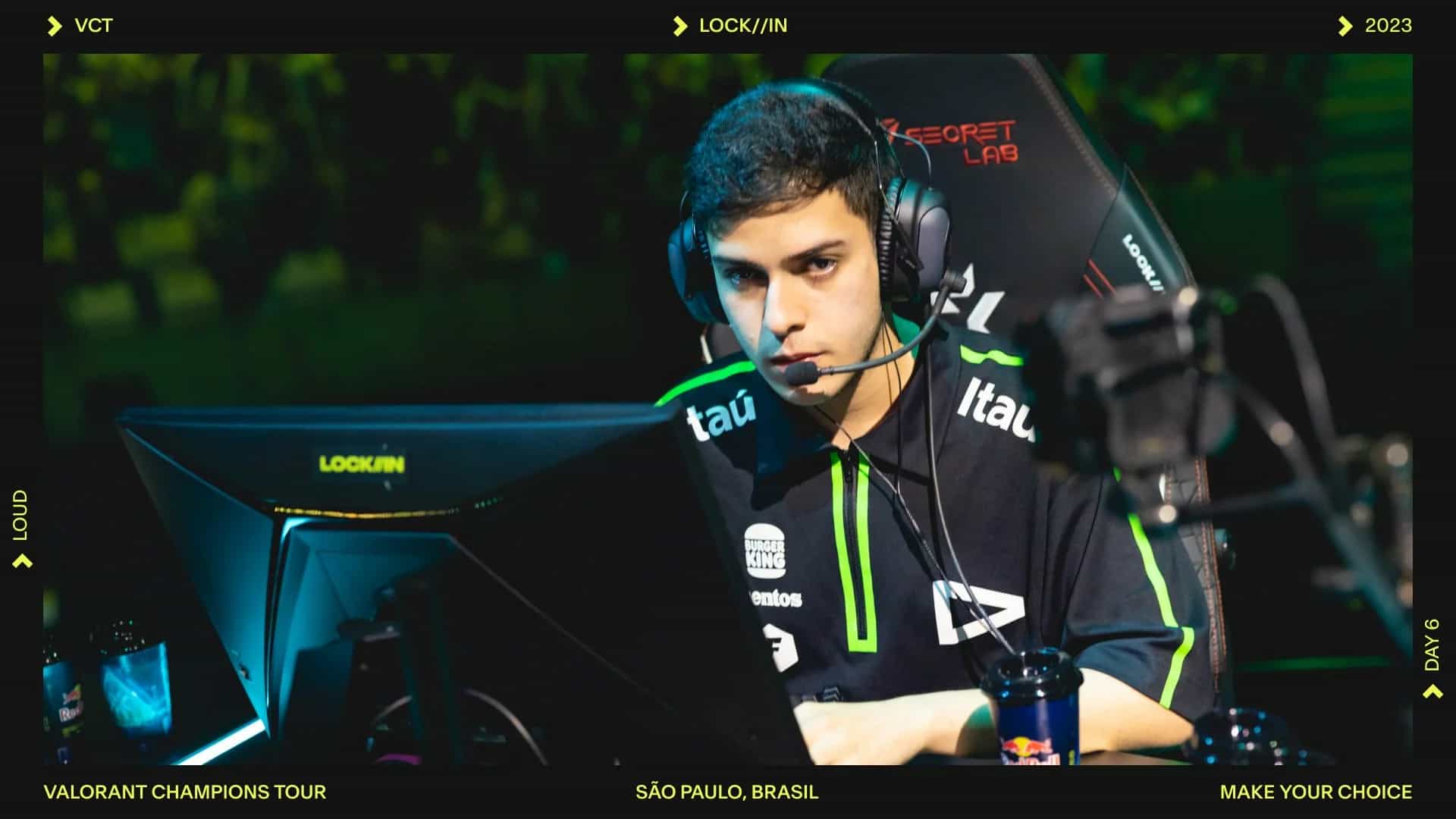
Eternal Rivals: VCT LOCK//IN São Paulo NRG vs LOUD Analysis and Breakdown
São Paulo is now here, and the second round of the VCT LOCK//IN has concluded for Alpha. Here is the Strafe Selected VCT LOCK//IN Match between NRG vs LOUD for analysis and strategic breakdown.
Map One: Split
Compositional Differences
NRG elected for a ‘Tank’ Comp, with a solo Raze enabled through a solo initiator of KAYO, double controllers of Astra and Viper, as well as Killjoy. Raze’s undeniable power level on this map is enough to persuade NRG away from their typical ‘Ox’ Comp, however, they still remain within the Balanced Composition range with a large degree of flexibility and mid-round options.
LOUD for their part, went with a ‘Nuke’ Comp, that focused on the hyper aggression spearheaded by the double duelists of Raze and Jett. The ‘Nuke’ Comp is a variant of the ‘Spear’ Comp that leans even heavier into the attacking power, as was one of the 1st popular meta comps during Valorant’s infancy.
Composition Analysis and Flaws
LOUD’s choice of comp allowed them to fully leverage their mechanical prowess over NRG during their Attack half. NRG, for their part, had a heavy reliance on their dual controllers for defense, and in theory, it works well, with the Gravity Well and Snakebites.
The evolution of Split gameplay-wise, has evolved dramatically over the course of its two year running period. The largest issues with the map was always been twofold, the defense favored layout, and the nagging necessity for a Sage in mid to use the Barrier Orb. Because of this, this has limited many teams’ compositions and many have sought alternatives to the Ice Sentinel. The closest answer many teams have found, lay in the use of Viper. The toxic queen’s specialty of vision denial and area control helps to fill the void from Sage.
Moreover, Astra is typically run alongside as the supplement to Viper on the Defense side, with her Nebulas and Gravity Wells used deny space to Attackers’ defaults at chokepoints.
Gameplan Breakdown
LOUD began their gameplan with a heavy A-lean. A consistent Viper wall along the A-main line denied information as to their crossing towards Ramp and A-Heaven. Moreover, the wall was placed in a manner as to isolate the Ropes entry as well from A-Heaven. This allowed LOUD to utilize their ‘Nuke’ Comp to lead a train from A-main, up to Heaven, through Ropes and Mid, into B-Heaven before finally planting.
This had the effect of scrambling NRG as they struggled to reset from the unpredictability and snowball effect of LOUD’s five-man rush. Once A-pressure had been established, LOUD began looking to the NRG’s mid as a viable default entry point. Mid began to be pressured consistently, and NRG struggled to maintain control, despite their composition. Furthermore, the Mid default allowed LOUD players to steal into A or B main as well, leading into a site split execute.
However, the largest crucial factor for their win over NRG, was that LOUD managed to win the large majority of their gunfights. This prevented NRG from effectively whittling down LOUD’s numbers as they snowballed onto site. Typically, NRG’s talents are considered top tier, with very few peers mechanically their equal. However, on this day, LOUD were in better form.
Map Two: Pearl
Compositional Differences
NRG once more strayed from their typical comp, with the adoption of a ‘Tank’ Comp on Pearl. With a solo Raze as the duelist and a solo Skye as the enabling initiator, double controllers were run with Harbor and Viper. Killjoy acted as the solo sentinel.
LOUD, once more, ran a near mirror comp, with the slight adjustment of Jett for Raze. The primary difference between the two comps is that LOUD’s allows the possibility of an aggressive OP, meanwhile NRG would struggle harder to bring one out.
Composition Analysis and Flaws
Over the course of LOCK//IN, as we see NRG grow in confidence, they have begun attempting to shy away from the ‘Ox’ Comp towards the ‘Tank’ Comp, allowing star player “ardiis” to shine on the duelist role.
As mentioned, LOUD’s composition better facilitated the possibility of an OP, however, it does not discount NRG’s ability to bring one out as well. Without a Sage or Astra, post-plants from NRG off-site were more problematic. It forced them instead to take deeper site control, and potentially attempt to head off rotates utilising their Attack power.
Much like Icebox, Harbor’s ability to enable strong site takes and executes, and his flexibility of his Cascade when paired with any number of Initiator utilities, allows him to facilitate attack sides very easily with great impact.
Moreover, during this event, DRX has partially pioneered the pairing of Viper and Harbor, with the latter’s innate slow from two of his abilities pairing well with the Snakebites, to kill any possibility of quick retakes. In this manner, Harbor has been shown to have the ability to negate quick retakes that are meant to punish comps with long reset timers. However, he requires a secondary agent with damage in order to facilitate this.
Gameplan Breakdown
NRG began with a strong B-site pressure, prodding for any pushback from site. When not sensing much, they began hard executing on sites as 5-men. The sheer strength of the dual controllers meant that area control and space claims were very powerful. Moreover, Killjoy’s and Harbor’s ultimates were used interchangeably to take sites, and LOUD had little answers to contest the site takes with.
Thanks to the choice of composition for both sides, and the state of the game, LOUD had little choice but to allow NRG to 5-man take the site each time and play for retake. Despite everything mentioned, the largest change for NRG which allowed them to take the win on this map, was their reawakened ability to win duels. Once they were able to trade out with LOUD, their chances drastically increased.
On Defense, NRG’s greater willingness to fight beyond the retake Harbor wall during the defuse proved to be the crux difference between the two teams, as LOUD had been far more hesitant to push past. Moreover, NRG’s strategy of cheating A through mid was also cancelled on LOUD’s turn, thanks to NRG’s recognition of the hole in both their compositions, and quick adjustments of the Alarmbot and Nanoswarms which saw that passage closed off.
Map Three: Fracture
Compositional Differences
NRG, once more, leaned on their star player “ardiis” as they ran another ‘Spear’ Comp, this time with the solo Jett enabled by double initiators of Breach and KAYO. Brim and Cypher rounded out the squad.
LOUD for their part, ran another ‘Nuke’ Comp of Jett and Raze, with the solo initiator of Breach to facilitate. Killjoy and Brim rounded out the squad.
Composition Analysis and Flaws
During this series, LOUD’s willingness to battle more and play more aggressively, has forced NRG into leaning more on their star player on aggressive roles. Gone are the ‘Ox’ Comps run so many times for NRG. Instead, “Ardiis” was tasked with the monumental feat of taming the beasts of LOUD, who focused on their mechanical dominance alongside clean team coordination, that had shattered NRG’s lines so many times.
Gameplan Breakdown
As expected, LOUD’s opening salvo was a five-man site dive that began off the barrier drop. Their confidence soared as they were able to secure quick picks on their way to the plant, discouraging NRG from attempting any kind of a retake. However, NRG began stabilizing and they offered less picks to LOUD. Sensing a change in NRG’s stance, LOUD began prodding one half of the map, before rotating to the other, usually after gaining a pick or pulling out utility from NRG.
NRG began picking up steam again in the Attack half as they won key post-plants after key post-plants. One of the biggest contributing factors, was a combination of the Breach and Brimstone utility, which worked to slow down efforts at defusing the spike tremendously. Moreover, NRG began their rounds by defaulting to identity where the OP resided, so as to avoid it.
Follow Strafe for the complete VCT LOCK//IN coverage with Live Scores, Features, and more Recaps.
Image credit: LOUD/ Valorant Esports