
 en
en
Does Counter-Strike 2 have an input lag problem?
With its teased date getting ever so close, players are still complaining about CS2’s input lag problem. Valve’s ingenious ‘sub-tick’ solution to the CS:GO’s 64-tick server complaint has not satisfied the entire community. Moreover, it has introduced a new problem to CS2, which is input lag.
Input lag is the delay between an action performed by a user and the action executed on the system. To put it simply, it is the delay between a user clicking a mouse and the mouse click reflected on the screen. Does this mean the game is worse than CS:GO? Does the input lag problem really exist? Let’s answer all the questions starting with what is the sub-tick system.
Read More: When is Counter-Strike 2 coming out?
What is the Sub-tick system?
With CS2’s announcement, Valve introduced the sub-tick system. The newly developed system was Valve’s answer to the users’ 128-tick request.
What is a tick?
Generally, a tick represents a packet of information, so a 64-tick server or system sends and receives 64 ticks or packets of information in one second. Similarly, 128-tick sends and receives 128 packets of information per second.
So, in CS:GO's case, the game sends and recieves information packages comprising of positional information, movement key presses, and mouse clicks every 15.625ms. Though, this is an ideal situation for the 64-tick CS:GO system. There are delays accounting in the network and processing lag and hence there is slight variance in the 15.625ms interval.
This interval reduces to 7.8125 ms for 128-tick, but the 8ms interval difference between the 64-tick and 128-tick systems is almost indistinguishable. Moreover, sending information more frequently increases the burden on the user's system. This is where the sub-tick system comes in.
The CS2 Sub-tick system:
As pointed out in the Mr. Maxim video, both 128-tick and 64-tick systems were nowhere closer to using the MTU, or maximum transmission unit, i.e., the maximum size of a packet. Instead these systems sent smaller chunks.
In the sub-tick system, the game sends visual updates and non-human elements (for eg. a grenade's position on the map) every 15.625ms like it would in a 64-tick system. On the other hand, it sends the key presses and positional updates with the overhead information on the exact moment they occur in the 15.625ms interval.
For eg. when a key is pressed, the normal 64-tick/128-tick systems will send just the key-press as an information. But in the sub-tick system, the key-press and the exact timestamp for the key-press is sent as an information.
This helps the game precisely estimate when the action occured and correctly replicate the action in game. CS2 is also known to backtrack relevant information. If a key piece of information is missed in the previous tick but arrives in the current one, CS2 will backtrack and update the game accordingly.
To put it simply, CS2 is still closer to 64-tick, but Valve has devised a way to sent more information about the position and human inputs of the game in order to correctly reflect them in the game. This has created a more reliable and accurate system, which is better and much more precise than the previous CS:GO system.
Read More: CS2: MR12, new maps and much more in latest update
Does CS2 have an input lag problem?
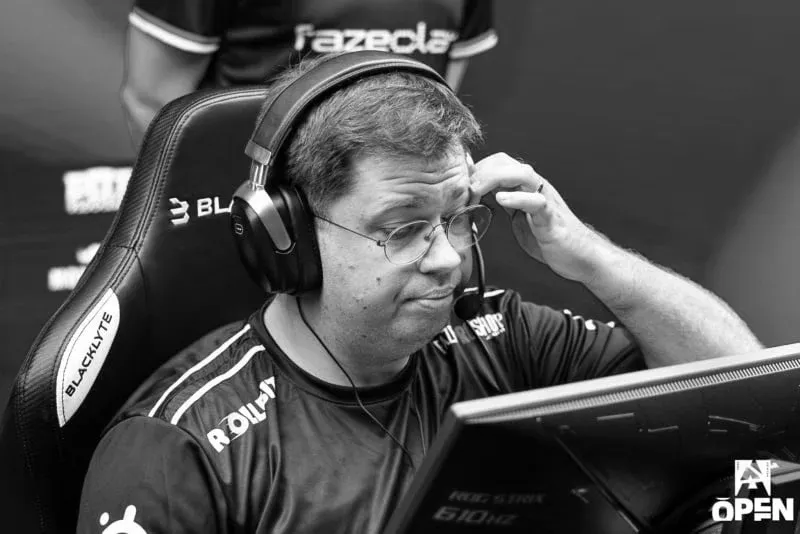
A week back, KennyS expressed his dissatisfaction with CS2, saying the game is unplayable at times. This has been used by many as an example of CS2’s input lag problem.
The tweet with Youtuber qkNorris’ video titled ‘cs2 has an input lag problem.’ has been a smoking gun for everyone claiming CS2 has input lag. 3kliksphilip, another notable CS Youtuber has since refuted a video, explaining the reason for the noticeable ‘input lag.’
As explained earlier, CS2’s sub-tick system prioritizes and even backtracks important information but only important information. This does not include visual updates which are still communicated as per the old 64-tick system.
This new system sometimes leads to video desyncs, which is likely the case with KennyS’s clip. The same with qkNorris’ video which technically does measure the input lag. But the input lag is relative to the muzzle flash and not the bullet fired.
There are still other problems with CS2 and it has to do with the processing needed by the sub-tick system but it will be optimized in the future.
Moreover, CS2 is much more precise and accurate and hence has a very slim margin for error. With multiple checks in place to ensure the exact moment you shoot reflects in the game, it also does mean, if you are late by a millisecond it will be caught by the system.
Now with CS2 employing such an accurate and precise system, the players have to be as accurate and precise. And coming from CS:GO, CS2 will definitely feel off. But it is a matter of adjustment for the players and not the game being worse.
Read More: What 3 million matches tells us about CS2 match durations?
Conclusion:
The sub-tick system is an alternate and ingenious approach adapted by Valve in order to improve their IP even further. As a game, CS:GO never necessarily needed any significant updates, but an updated engine which handles the game better.
CS2 delivers on the promise and looks like a better game than CS:GO. It is just a short adjustment period and growing pains, and eventually it’d match the beauty and perfection of CS:GO.
Follow Strafe for all updates on CS:GO.
Featured Image Credits: Valve