
 en
en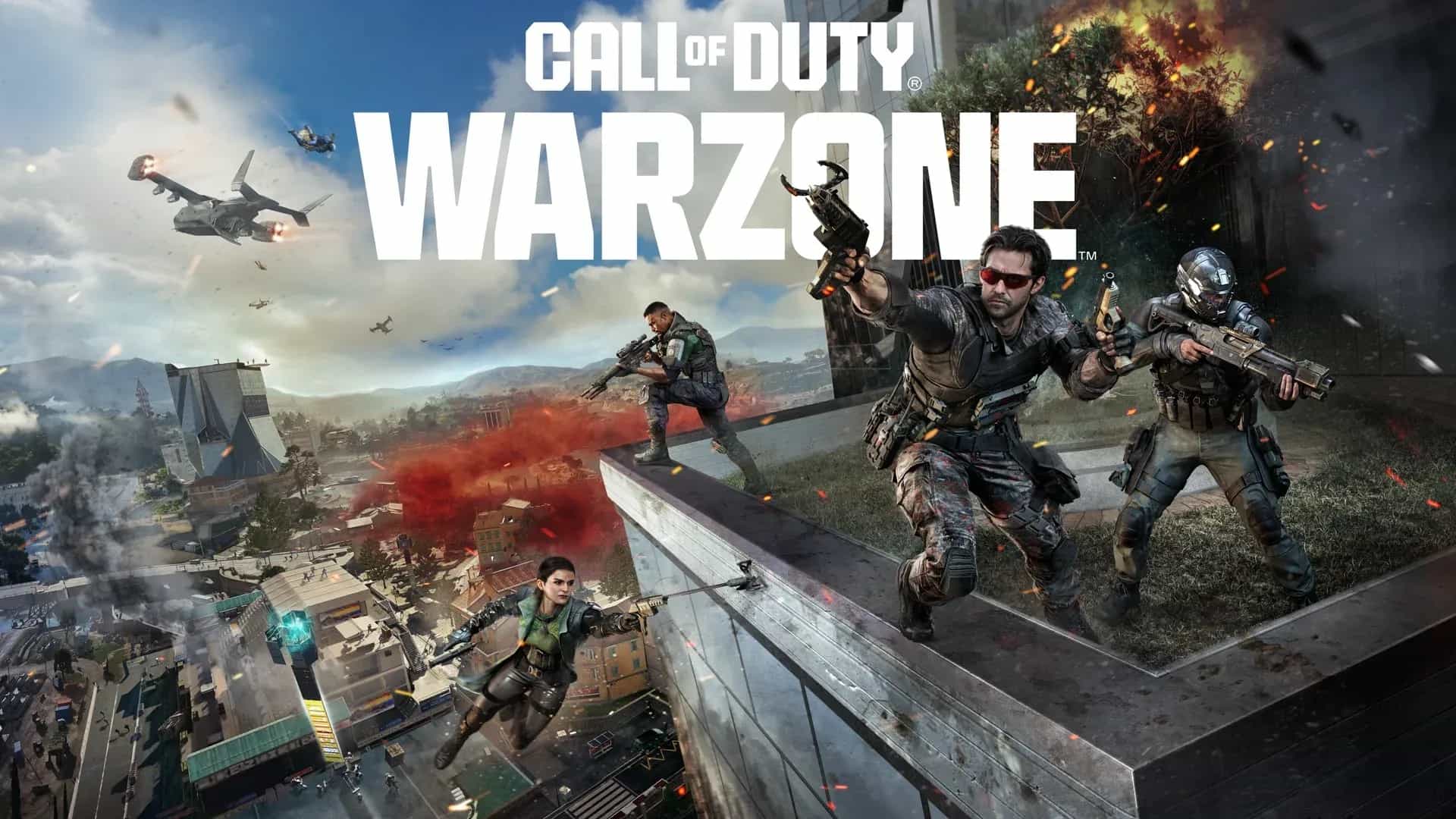
Call of Duty Black Ops Royale: All you need to know about Activision's newest Battle Royale

Black Ops Royale is Call of Duty’s most recent (and serious) attempt to bring the old Blackout feeling into the modern Warzone era, trading loadout drops and Buy Stations for pure scavenging, weapon upgrading and squad decision‑making on the new Avalon map.
If you want to jump in on day one (Thursday, March 12 at 9PM PT, or Friday, March 13 at 12AM ET on the East Coast) without reading a huge wall of announcement text, this is your compact “all you need to know” guide to how the mode actually works.
What Call of Duty Black Ops Royale Is
Black Ops Royale is a new large‑scale Battle Royale playlist that sits inside Warzone but is built around Black Ops 7’s systems and the Blackout‑inspired Endgame sandbox. Up to 100 players drop into Avalon in squads of four, with one classic objective: be the last team standing as an electrified collapse circle closes in. There are no custom loadouts, no Gulag, no cash economy and no Buy Stations; everyone starts on equal footing and has to live off what they find.
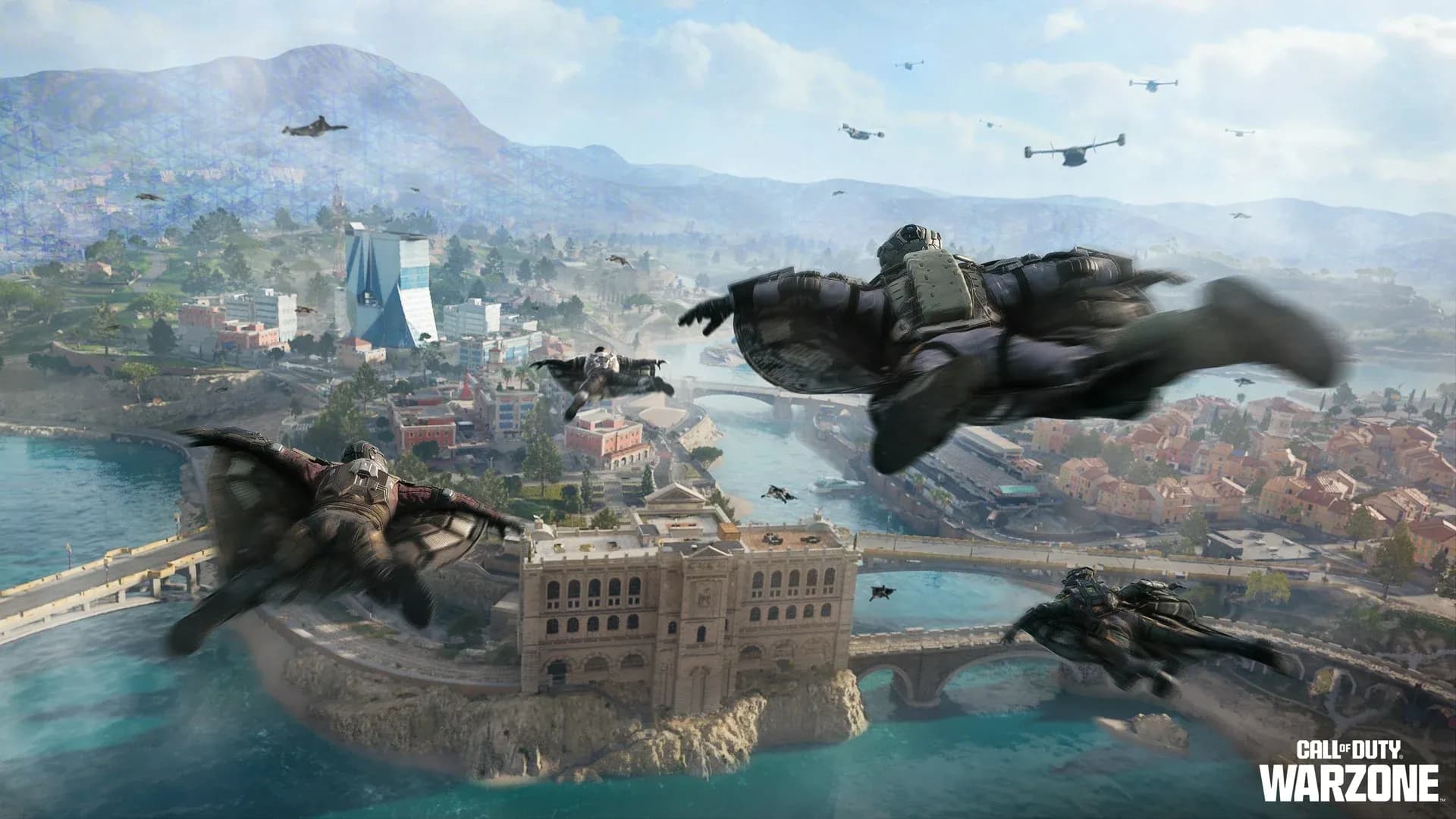
Matches kick off with VTOLs (Vertical Take-Off and Landing) flying over Avalon during “Operation: Eclipse,” giving squads a moment to study the flight path and the first safe zone before wingsuiting into their chosen landing zones. From that point on, every advantage (better weapons, stronger armor, Perks, redeploy tools) has to be earned through looting, killing or taking on high‑risk side objectives.
How a Typical Match Plays
You hit the ground with almost nothing: just a wingsuit, a knife, a Jäger 45 pistol and two armor plates. Because there are no mid‑game loadout drops, those first 60–90 seconds of looting define the shape of your match much more than in traditional Warzone: you are building a kit from scratch, meaning there are no pre‑saved classes.
The collapse behaves like a familiar circle, but it doesn’t always end in the same handful of “meta” zones. The safe area can pull toward very different regions of Avalon from match to match, forcing you to actually learn the entire map instead of recycling three favorite POIs. With no Gulag to bail you out, bad rotations or slow reactions to the circle can simply end your run, especially once your squad has burned through its limited redeploy options.
Avalon: The New Playground
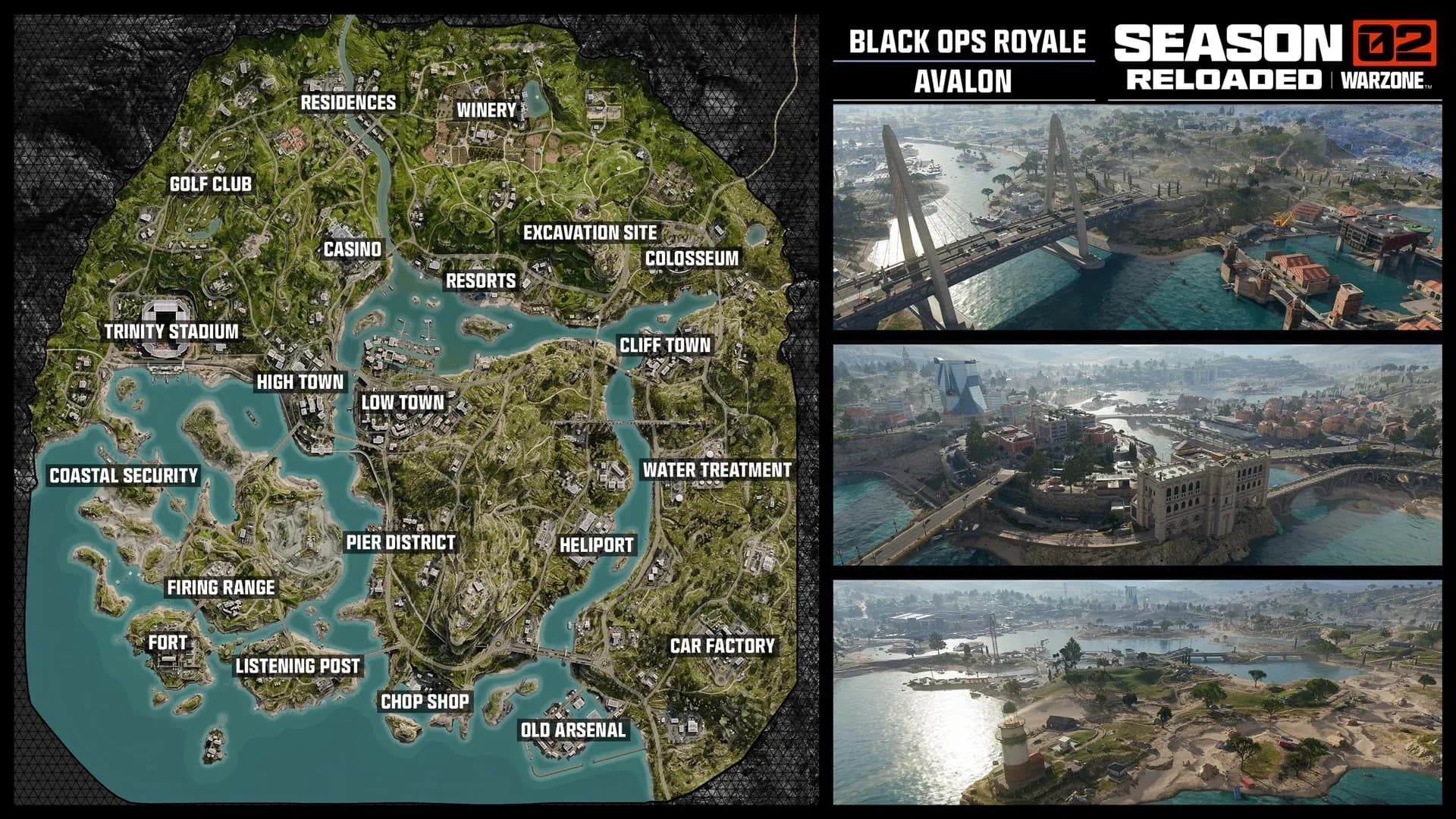
Avalon started life as the Endgame map in Black Ops 7 and has been reshaped into a full Battle Royale arena alongside Verdansk, Rebirth Island and Haven’s Hollow. It mixes tight urban sectors, layered interiors, exposed streets and long‑range sightlines, with its lighting and color tuned for readability rather than moody fog.
Water plays a smaller, more controlled role here than on some past Warzone maps: channels have been drained or bridged with sandbars and tidal flats so that rotations feel like conscious choices. Ziplines, land bridges and clearly defined routes make third‑parties more predictable, rewarding teams that put in the time to memorize flanks, rooftops and vehicle paths.
Weapons, Rarity and Archetypes
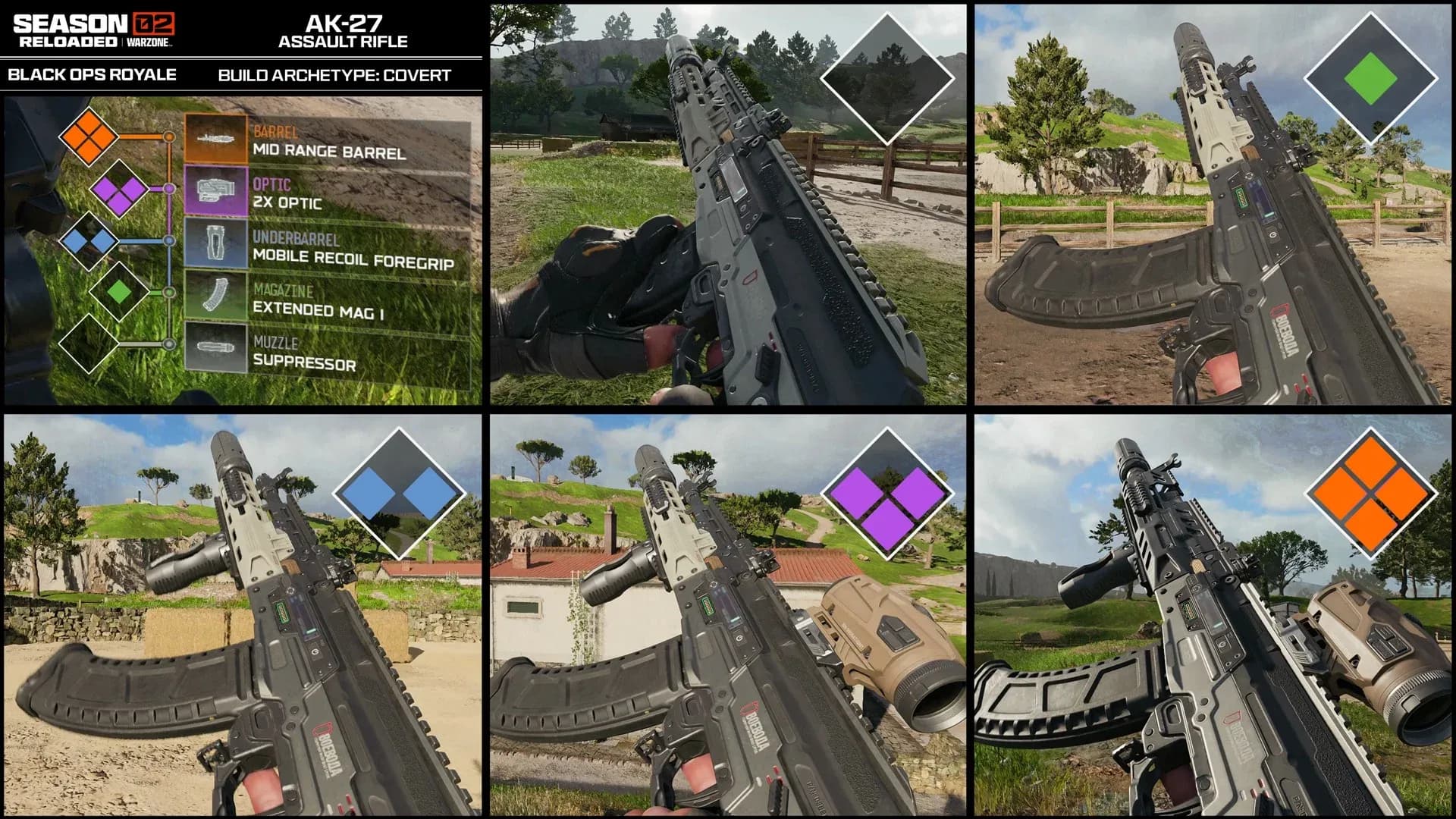
The heart of Black Ops Royale is its weapon system. Every gun you pick up belongs to a Build Archetype: labels like CQB, Recon, Covert, Burner, Viper, Heavy Metal and others, each with a clear identity and a five‑step attachment path. As that gun climbs from Common to Uncommon, Rare, Epic and Legendary, it automatically gains attachments and global bonuses that dramatically change how it feels, from recoil control and reload speed to bullet velocity and damage range.
Attachment Kits are the fuel for this progression. These purple items instantly bump the rarity of the weapon in your hands and unlock the next attachment on its Archetype tree, turning a shaky grey rifle into a laser‑precise orange monster if you can feed it enough Kits. Fully automatic weapons are intentionally rough at Common so that investing Kits into “your” gun feels like a real power spike, not a marginal upgrade.
Above Legendary sits the Ultra tier: Exotic weapons that come fully stacked with eight or more attachments and extreme stat packages, sometimes with only a single copy available in the entire lobby. A showcase example is the “Backdrive” Dravec 45 SMG, tuned for range, movement, ADS speed, fire rate and an 80‑round magazine... the kind of gun that can swing an endgame if you manage to secure it.
HUD, Inventory and Micromanagement
To support all this item juggling, Black Ops Royale introduces the Cerebral Link HUD, which keeps a Warzone‑style layout but surfaces more information: exact health values, weapon rarity, Archetype labels and the full upgrade path of your current guns. The inventory itself is more generous, letting you carry two different Tacticals, two Lethals, two Field Upgrades and two Killstreaks at once, plus your weapons, armor plates and up to five Perks.
A revamped Quick Menu and clearer Tac‑Map icons are there to stop the mode from collapsing under its own complexity. With hover‑to‑swap controls and Activity markers, you can check upgrade routes, side objectives and team resources without getting lost in sub‑menus during a firefight.
Perks, Gadgets and Killstreaks
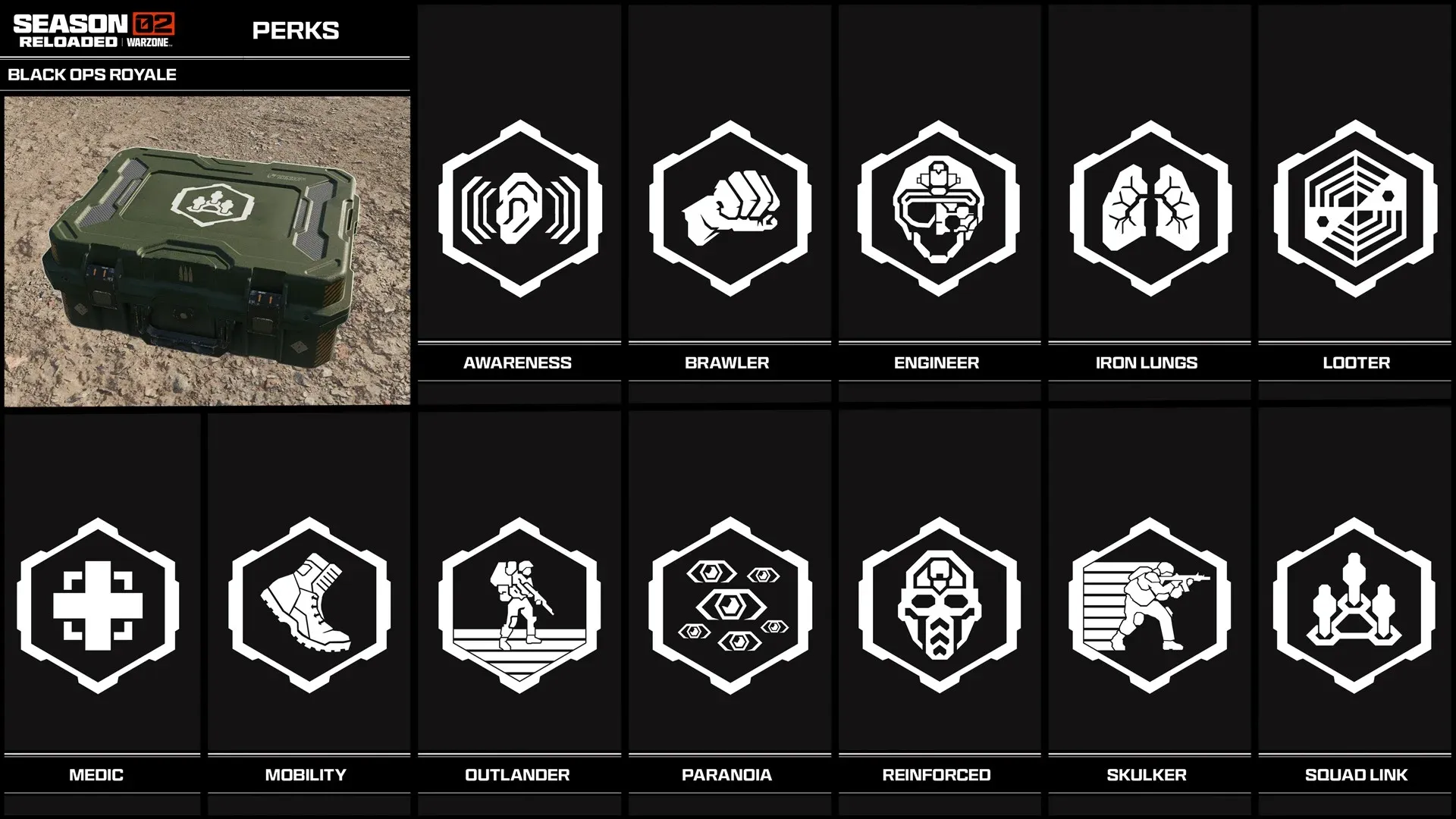
Perks in Black Ops Royale behave more like temporary power‑ups than permanent build choices. You loot them as consumable items, can hold a limited number, trade them with teammates and trigger them for a set duration when you need a spike in information, movement, survivability or healing. This naturally leads to “Perk rotations,” where squads plan which buffs to save for early‑game brawls, mid‑game rotations or desperate final circles.
The equipment sandbox leans heavily into Black Ops identity. Grappling Hooks, Sensor Darts, Psych Grenades, RC‑XDs and Trauma Kits join more traditional grenades and smokes, giving you a mix of mobility, information and disruption tools. Field Upgrades and killstreaks skew toward survival and zone control: Bubble Shields, Trophy Systems, deployable cover and automated turrets pair with hand‑held weapons of mass destruction like the Death Machine, War Machine and Hand Cannon.
Movement, Vehicles and Rotations
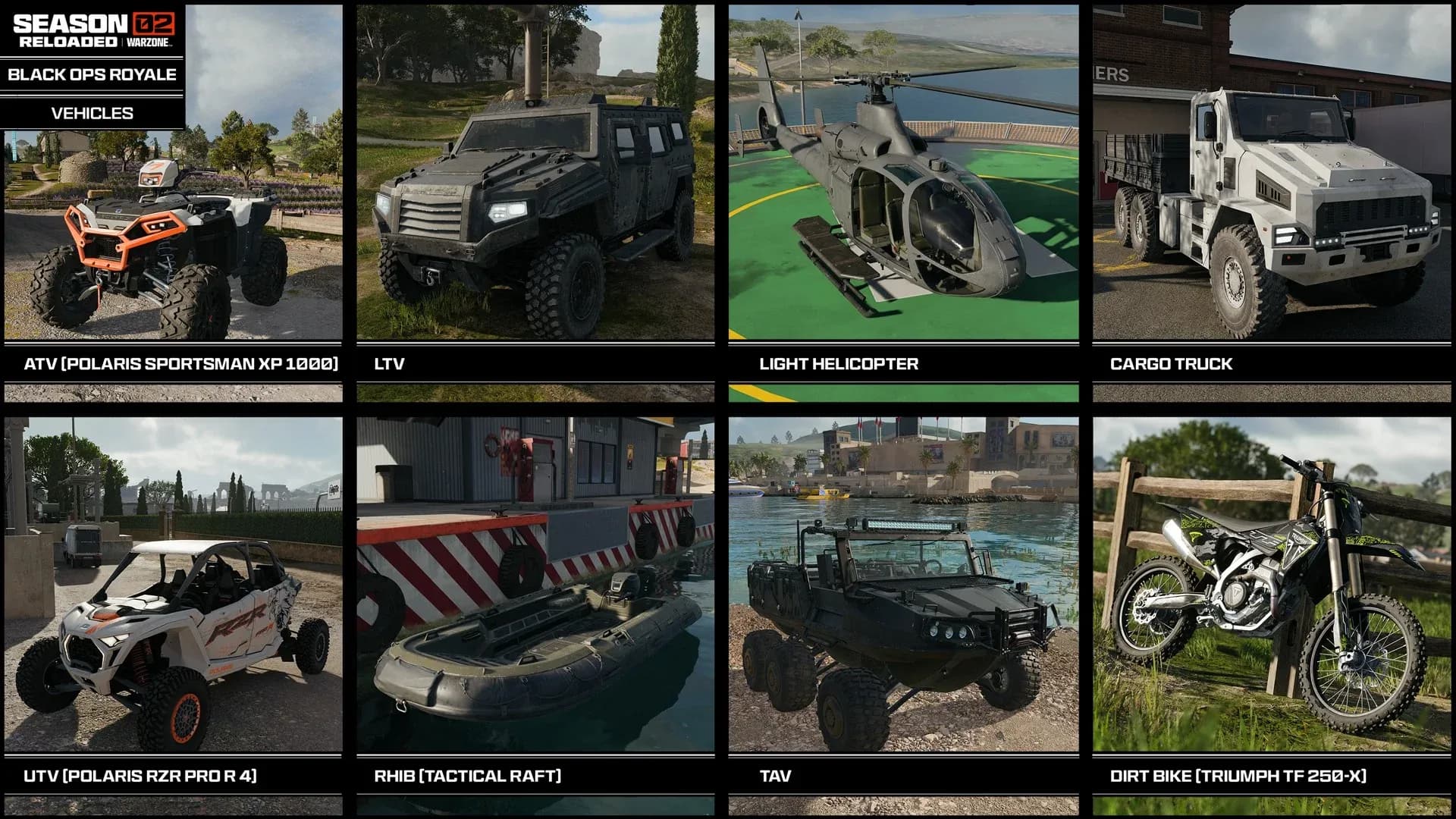
Avalon supports a full spread of vehicles across land, sea and air, from ATVs and UTVs to cargo trucks, tactical rafts, amphibious transports and a new Light Helicopter. You do not have to worry about fuel management, but vehicles can be shredded quickly if you misplay, turning loud rotations into genuine gambles in the mid‑ and late‑game.
Layer Omnimovement and wingsuit infil on top of that, and Black Ops Royale becomes a constant rotation puzzle: do you stay on foot and hug cover, risk a fast but noisy truck, or take to the river and expose yourself to every rooftop sniper on the route to safety? Avalon’s reworked waterways and bridges are clearly built to make those decisions matter.
No Gulag, Limited Second Chances
Without the Gulag, coming back to life is not something you can take for granted. Redeploy Tokens work as personal “get back in once” passes that automatically fire when you die, while Redeploy Towers are contested world objectives that, when activated, pull your whole squad back into the fight from the sky. Both are limited and never guaranteed, which makes every knock and every wipe much more final than in standard Warzone matches.
This design puts a premium on survival discipline: playing your life, avoiding pointless early griefing and knowing when to commit your last redeploy resource to a teammate who might be able to clutch. It also raises the ceiling for coordinated teams, who can chain Activities, Towers and careful rotations to stay in the game even after disastrous fights.
Side Missions, Activities and Zombies
Standard Warzone contracts are replaced by Activities, optional objectives scattered around the map that you can opt into for extra rewards. Some send you after a marked enemy squad via Target Uplink; others have you cracking alarmed safes during Strongbox, escorting cargo during Surprise Shipment or capturing Relay Antennas that grant UAV sweeps and temporary Redeploy Drones. In practice, they create natural hotspots where squads willing to take on risk can farm armor upgrades, redeploy tools and high‑tier loot.
The most chaotic twist is the Cradle Breach system. These red‑gas anomalies transform chunks of Avalon into trippy zombie arenas, hiding premium loot behind waves of undead and a Mangler boss fight. Survive, and you walk away with top‑tier weapons, armor and access to the iconic Mystery Box; fail, and you may have just thrown your entire run away in front of half the lobby.
Progression and Why Black Ops Royale Came to Stay
Black Ops Royale plugs directly into the shared progression system of Black Ops 7 and Warzone, turning every match into forward motion for your account, weapons and cosmetic grind. Players earn XP, weapon levels and mode‑specific unlocks by doing what they would do anyway: dropping in, completing Activities, surviving circles and chasing high‑tier loot. All this makes the mode feel like a core pillar instead of a side experiment. On top of that, it carries its own Challenges and Missions, rewarding actions like finishing Cradle Breaches, opening Mystery Boxes or securing top placements with exclusive camos, blueprints, calling cards and charms, including tracks tied to headline weapons such as the Swordfish A1 and Echo 12.
This deep integration is reinforced by seasonal events like the Counter Skies Event Pass, which runs across multiplayer, Zombies, Endgame and Warzone but counts Black Ops Royale plays toward both free and premium rewards, ensuring that time invested in the mode never feels “wasted” for grinders. Combined with the long‑term mastery curve of Build Archetypes, Exotic weapons and Avalon‑specific strategies, the message is clear: Black Ops Royale is designed as a long‑term ecosystem within Call of Duty’s live service, not a limited‑time nostalgia playlist, and it has all the structural support it needs to become a permanent home for competitive‑minded BR players.
Ready to Drop Into the Action
Call of Duty decided to bet on a slower, more thoughtful Battle Royale built on scavenging, Archetypes and map knowledge, trying to prove it can coexist with the chaos of traditional Warzone. It aims to bring back the tension of Blackout, but with modern systems, a deeper loot game and Avalon as a fresh competitive stage. Every decision matters more here — where you land, which weapon you commit Attachment Kits to, when you risk an Activity or a Cradle Breach, and how you manage your finite redeploys and consumable Perks.
For players, that means a mode with room to grow your understanding over dozens of hours instead of mastering one meta loadout and checking out. For the ecosystem, it means a Battle Royale designed from day one to feed progression, seasonal events and future balance passes, rather than a nostalgic limited‑time throwback. Black Ops Royale is definitely the kind of experiment that only works if lobbies stay healthy, so the best way to judge it is to squad up, drop into Avalon and see if this new era of Call of Duty BR really deserves to stay.
Stay tuned to Strafe Esports for more Call of Duty news and information. Don't forget to follow us on Social Media for real time updates of your favorite game.
Feature image credit: Call of Duty
Read also:
Paper Rex Defeats NRG 2-1 to Secure VALORANT Masters Santiago Playoffs
League of Legends Dev Update: Shyvana Rework, ARAM Mayhem, and Ranked Adjustments
DreamLeague Season 28 Recap: Shadow Fiend Rules The Meta