
Esports Betting
/
Esports Betting News
/
Overwatch Collegiate returns with new varsity division and scholarships
Overwatch Collegiate returns with new varsity division and scholarships
Publish Date: 04/09/2025
Fact checked by:
Mike McKean
Key Points
- Overwatch Collegiate now splits into Open and Varsity divisions, with Varsity featuring both Premier and Plus tracks for NACE-member schools.
- The 2025–26 season includes a $42k Fall prize pool and $100k for the Spring LAN finals, split across divisions and playoff placements.
- The Spring Championship returns as an in-person event, putting top college squads on stage for serious prize money and recognition.
Overwatch Collegiate 2025–26: Varsity & Open Divisions, Scholarships, and Key Dates
After a quiet year, Overwatch is back on campus. And it’s not just for the casuals this time. Blizzard’s rebooted Overwatch Collegiate officially kicks off this August with a brand-new two-tier format, in partnership with NACE (that’s the National Association of Collegiate Esports, if you’re new).
Between the split Varsity and Open tracks, weekly matches, and $140,000 up for grabs, this isn’t just some filler comp. It’s a serious shot at rep, prize money, and a path to LAN glory in 2026.
From pause to play
Before the rebrand, Overwatch Collegiate lived under Tespa and was a bit of a mixed bag. Some stacked squads, some meme teams, no real system to separate them. Then came the 2024 sunset.
Now it’s 2025. Blizzard’s brought it back, plugged it into LeagueSpot, and put NACE in the passenger seat. You can expect to see Collegiate matches popping up on Overwatch betting sites in no time.
The new two-tier ecosystem
The big shake-up this year is how the whole program splits into two lanes. It’s not just one bracket anymore, it’s tailored for both grassroots clubs and high-support varsity squads.
➡️
Open Division
Open Division is exactly what it sounds like. Open to any accredited university or college across the US or Canada. Schools can enter multiple teams, and there’s no strict requirement around esports facilities or staffing. If you’re a student club with a few friends and decent comms, you’re good to go.
➡️
Varsity Division
Varsity, on the other hand, is locked to NACE-member schools only. These teams need verified rosters, formal program oversight (coaches, esports coordinators, even training schedules), and meet Blizzard’s baseline for on-campus infrastructure. Each school gets one Varsity team, and they play under tighter structure and rules.
It’s the difference between a laid-back rec league and a full intercollegiate sport. The goal, according to Blizzard, is to meet “diverse player, team and school goals” while giving schools a real pathway to long-term program growth.
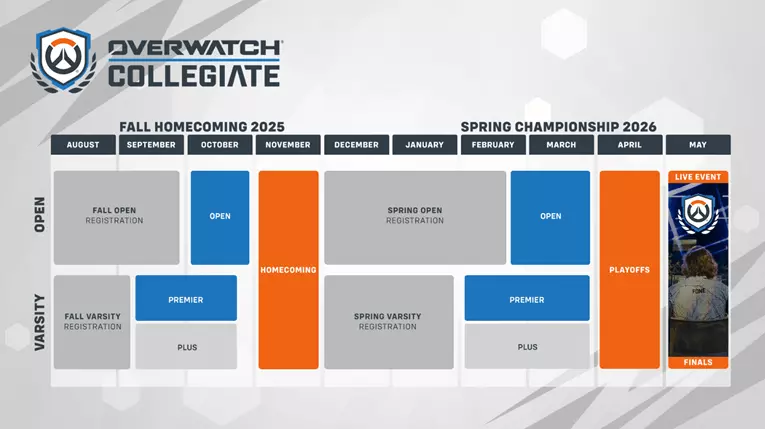
Varsity Premier & Plus
Within the Varsity division, there are two separate tracks. One for the heavy-hitters, and one for teams still levelling up.
➕
Varsity Premier
This is the flagship tier. Each NACE school submits one team only, and those rosters play under tight structure. Monday night matches, regional brackets, and a 32-team playoff in November. The $14,000 Fall prize pool goes here, and this is where coaches, recruiters, and casters will be keeping a close eye.
➕
Varsity Plus
This track is built for depth. It gives schools a chance to field developmental teams in a more flexible format. Matches are sorted by skill-based conferences, so squads aren’t thrown against Top 5 contenders out the gate. It’s ideal for second-line players or brand-new programs that want to build reps without being steamrolled.
It’s a proper league ladder. And if you’re anywhere near Premier level, get ready. Scrims will get sweaty fast.
National Open: Swiss to showdown
If your school isn’t in NACE, or if you’re running a club team with friends, the National Open is where you’ll queue.
Matches run every Thursday, using a Swiss-style bracket that pairs teams with similar records. The format’s designed to prevent early blowouts and keep the field competitive right to the end.
The top 16 squads hit Playoffs in mid-November and chase a share of the $28,000 Fall prize pool. Plus, Open schools can register multiple teams, so you’re not stuck choosing just one line-up. If you’ve got the numbers, field two or three teams and see who makes it out.
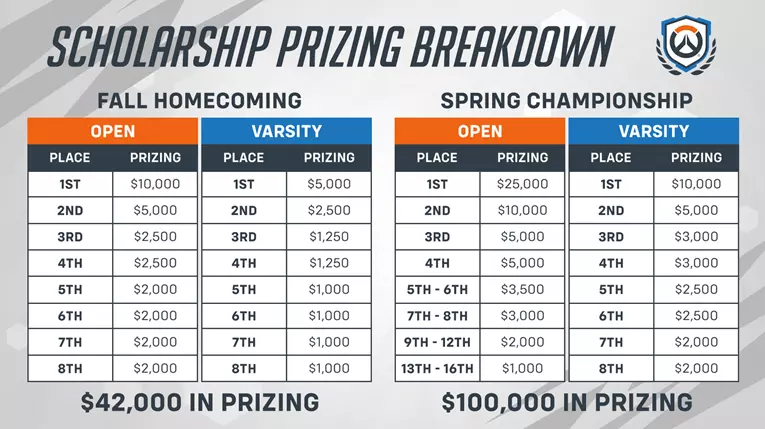
The Overwatch Collegiate scholarship breakdown
Blizzard and NACE are throwing a whopping $140,000 USD behind the 2025–26 Overwatch Collegiate season, and it’s real scholarship money.
If you're on a top-tier Varsity Premier roster or repping your campus club in the Open, there’s a chance at turning your plays into tuition support. And it’s not just a one-and-done prize. The season splits the pot across fall and spring, with the big LAN finals in 2026 dishing out most of the cash. Here’s how it looks:
| 🗓️ Season | 💡 Division | 🏆 Prize Pool (USD) |
|---|---|---|
| Fall 2025 | Varsity Premier | $14,000 |
| Fall 2025 | National Open | $28,000 |
| Spring 2026 | Varsity Premier | $50,000 |
| Spring 2026 | National Open | $50,000 |
| Total | - | $142,000 |
All scholarships go through your school’s financial aid or student services, so don’t expect a PayPal ping after winning finals. If you’re trying to make this your college job, get your roster verified through your program coordinator early. This stuff moves fast.
Key calendar dates & how to register
Here’s the cheat sheet for what’s coming up.
- Reg opens: 5 August 2025
- Varsity Premier reg closes: 2 September
- Stage 1 matches: 8 Sept – 20 Oct (Mondays)
- National Open reg closes: 22 September
- Swiss stage: 2 – 30 Oct (Thursdays)
- Playoffs: 3 – 16 November (both)
All sign-ups go through LeagueSpot, which will also handle verification (including school email checks). If you’re new, the setup takes 10–15 minutes, less if your team captain has done this before.
LAN finals & what it means for College Esports
After both divisions finish their Fall run, everything resets in Spring for the LAN finals.
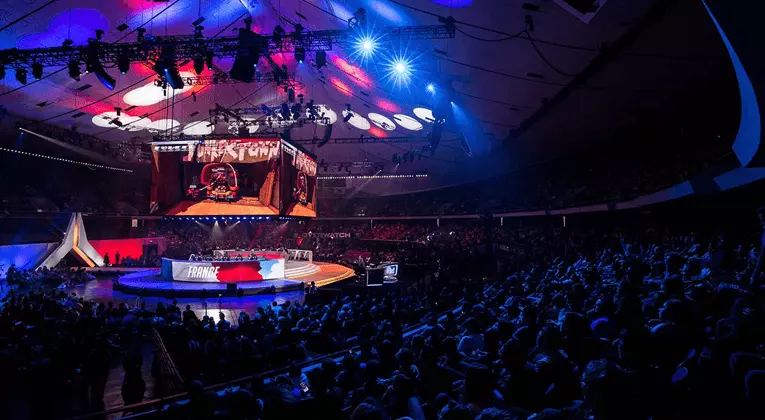
We don’t know the exact venue yet, but if it’s anything like past Blizzard college events, expect a proper production. Think LED stage, on-site commentary, jersey swaps, post-match interviews.
A live final does more than just raise the stakes. It makes Overwatch Collegiate feel real. For the players, it’s a resume builder. For the schools, it’s a recruitment goldmine. And for everyone watching, it’s proof that campus esports can go toe-to-toe with traditional sport.
School’s in session
Overwatch Collegiate is back. Not just as a club scrim night or weekend event, but as a full-scale, NACE-partnered, scholarship-backed pathway to LAN.
Varsity teams get structure. Open teams get accessibility. Everyone gets a shot. So if you’re even remotely interested, now’s the time. Lock in your team, verify your email, and get your role queue sorted.
Best Bonus-Boosted Sites Selected Just for You



3.

4.7/5
Copy
T&Cs / 18+

4.
4.5/5
Visit PlayBracco
T&Cs / 18+

5.
4.5/5
Visit Prophet X
T&Cs / 18+
Latest News
Every free Fortnite cosmetic you can unlock right now: Your guide to exclusiv...
Fortnite has a variety of free skins, emotes, ...
Master the Overpowered Weapons in Fortnite: They’re Back to Haunt Us in 2026
Overpowered weapons can be real game changers in ...
Dota 2 Salaries Impact: Are High Pro Wages Harming the Esports Scene in 2026?
Several esports organizations are pulling out of the ...
Projecting Mobile Legends player count for 2026: Trends and forecasts
Mobile Legends: Bang Bang (MLBB) has long been ...
VALORANT Patch Notes 12.11 2026: Detailed Overview and Expert Guide on Creati...
Hello Valorant fans. A new update is here, ...
Latest News:
- $750 million video game cheating ring shutdown by police in China
- 10 best Fortnite seasons ever, ranked
- 10 worst Fortnite skins ever released
- 5 changes Valve needs to make to fix Largo in Dota 2: Essential improvements for a better experience this 2026
- 5 heroes we expect to dominate the Dota 2 meta in 2026: Expert predictions and analysis
- 5 strategies for PUBG's relevance in 2026: Insights on future updates and community engagement
- 5 things we want from Apex Legends in 2026: Features and improvements we hope to see
- 500 makes a comeback against Furia and moves to the Quarter-Finals!
- A rundown on the IEM Sydney 2023 Europe Open Qualifier 1. What went down?
- Aftermath of ESL Pro League 18's Opening Rounds – Group C
MORE ON ESPORTS
🥇 COMPETITIVE ESPORTS
🔥 NEWS & HOT TOPICS
Our News Sitemap:
Our Team