
Esports Betting
/
Esports Betting News
/
Fortnite records lowest player count in two years
Fortnite records lowest player count in two years
Publish Date: 14/08/2025
Fact checked by:
Alyx Tzamantanis
Key Points
- Fortnite hit its lowest average player count in two years during May 2025.
- Bot-filled lobbies and slower update pacing may be driving player fatigue.
- Despite the dip, Fortnite still pulls over a million daily players and remains a top battle royale.
Fortnite’s Player Count Is Dropping – But It’s Not Game Over
I dropped into Fortnite, opened my locker, saw the same Star Wars stuff still cycling… and got hit with déjà vu. Apparently, I’m not the only one. According to multiple tracker-based reports, Fortnite just hit its lowest average daily concurrent player count in two years.
Depending on which outlet you check, The Fortnite player count daily average sat somewhere between 994,711 and 1,039,379 players in May. That’s still massive by most standards, but for Fortnite, not so much. Especially since we were hovering around 2.1M just five months ago. In this piece, we’re digging into where that dip came from.

Where these Fortnite player count numbers come from
Before we get too deep, let’s talk data. Fortnite.GG is the third-party tracker behind all these player count estimates. Every major outlet like Fortnite betting sites rely on it because Epic doesn’t publish exact concurrency stats publicly. That means these are snapshot-based, not server-confirmed.
We’re also talking concurrent players, not monthly active or registered accounts. For example, in February 2025, Beebom reported 250M+ total monthly active users, with 1–3.5M players online depending on time of day. So yes, average concurrent player numbers dipped, but that doesn’t mean Fortnite’s player base vanished. It’s a pacing issue, not a population one.
Table of Contents
From peak to plateau: What the data shows
To get the full picture, we’ve got to rewind a bit. In December 2024, Fortnite’s daily average was around 2.1M concurrent players. That was a post-Chapter 5 high, boosted by the hype around Chapter 6 launching early 2025. And when Chapter 6 did drop, VideoGamer logged a spike up to 4.8M concurrent players at launch.
Since then, it’s been a steady slide. The drop looked like this:
| 🗓️ Month | 👥 Average Concurrent Players |
|---|---|
| December 2024 | ~2.1M |
| February 2025 | 1–3.5M (depending on mode and time) |
| March 2025 | 1–1.9M (weekend peaks: 2.5M) |
| May 2025 | 994K – 1.04M |
Why May was the “oh no” month
This isn’t just statistical trivia. May 2025 marked a symbolic low. Two years without dropping this far. And it happened during an active season, with the Star Wars crossover in full swing. Epic pulled out a mega-collab with lightsabers, Mythics, and a whole new set of quests… and it still wasn’t enough to spike numbers. This suggests the crossover didn’t feel fresh or was maybe just too much, too often.
1️⃣
Seasonal fatigue and content pacing
Fortnite’s seasonal rhythm can be hit or miss. Even after big live events, player numbers often sag because the follow-up content just doesn’t keep momentum. That doesn’t mean people aren’t logging in at all. But it does explain why average concurrents are thinning out. If you don’t love the season’s vibe, you’ll bounce until the next one lands, and the loop continues.
2️⃣
The bot problem is real
Another thing skewing the perception is bots. Like, a lot of them.
It has been reported that in some OG mode lobbies, players were getting matched with up to 92 bots, leaving just 8 actual humans per match. This makes the game feel artificially populated and undermines the "every match is unique" energy that made Fortnite exciting in the first place. Pair that with the ever-expanding mode list, Creative, LEGO Fortnite, Festival, Rocket Racing, etc. and you’ve got a player base spread thin across dozens of playlists. It’s less “dead game” and more “where is everyone?”
3️⃣
Still not dying, though
Here’s where we zoom out. Even in this “low” month, Fortnite was still regularly pulling 1.5M+ peak weekend concurrents in March. And earlier in the year, the monthly active Fortnite player count passed 250M+.
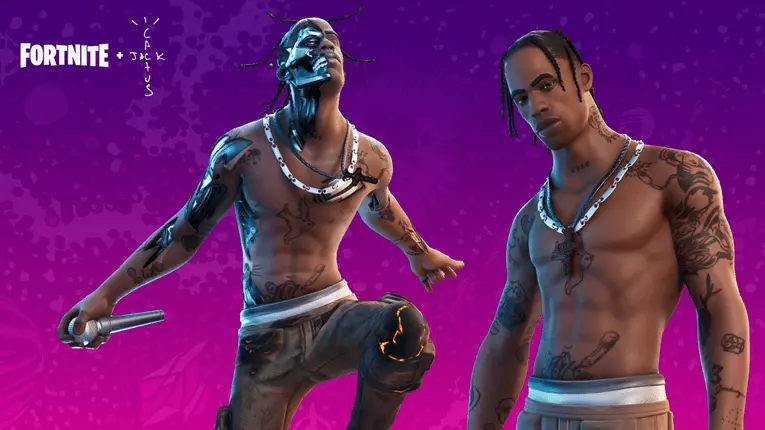
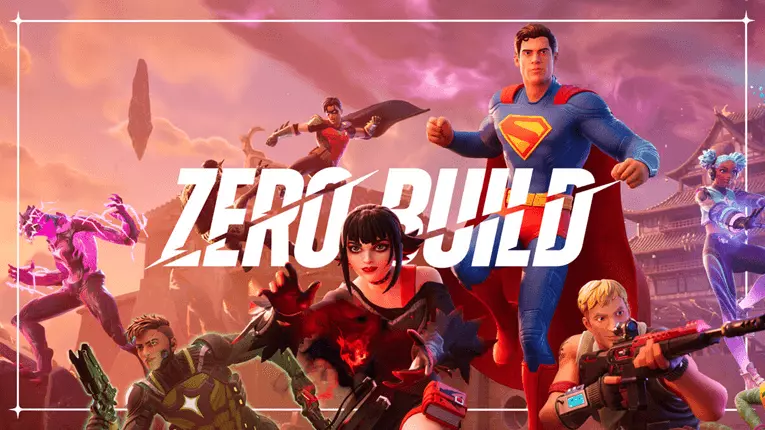
So Fortnite isn’t dominating every conversation the way it did during Travis Scott or Zero Build’s debut, but it’s far from irrelevant. Fortnite’s decline looks more like a genre stabilisation than a collapse. Battle royales are no longer the only game in town.
Pros and cons of having fewer active Fortnite players
For regular players like you and me, having fewer people around is not all bad. Here are some of the pros and cons of this drop in active users:
Pro and Con
- Fewer players can lead to a more close-knit community
- Having less veterans around can lead to easier matches
- The dip puts pressure on Epic to release more fun content
- Risk of longer wait times. Particularly for niche game modes.
Don’t mix metrics: concurrency vs. actives
A quick PSA for anyone making “Fortnite is dead” TikToks. Average concurrent Fortnite player counts don’t tell the whole story.
You could log on for an hour, play two matches, and bounce and you’d still count as an active user, but wouldn’t move the concurrency needle much. It’s why the February 250M+ actives and the May 994K concurrency can both be true. Just different lenses. Same goes for registered accounts. Those will always climb. But that doesn’t reflect engagement, which is what concurrency gives us a peek at.
What needs to happen next
If Epic wants to reverse the slide, there are a few levers it could pull, and most of them don’t require reinventing the wheel.
☑️
Fresh seasonal collabs
Players clearly want more than reskinned collabs. New mechanics or limited-time sandbox modes could re-hook casuals who’ve seen it all before.
☑️
Bot tuning
Dial down the bot density in social lobbies. Or at least be more transparent about how and when they’re used. No one wants to win a crown against 92 AIs.
☑️
UGC support
Player-made maps and custom experiences (especially in Creative 2.0) could re-inject variety without stretching the core BR loop too thin.
☑️
Collab smarter, not harder
Instead of sheer volume, go for cultural moments with real gameplay hooks. Like how Zero Build changed everything, not just another licensed skin pack.
Whether that happens, we’ll see. But Epic’s definitely done it before.
Fortnite’s not dead, just napping
Fortnite’s just cooling off. The May 2025 dip is worth talking about, for sure. It’s Fortnite’s lowest average concurrent player count in two years, and the trend points to some real friction around content pacing, event fatigue, and playlist fragmentation. But it’s not a death sentence. The platform’s still massive. Fortnite is still evolving, maybe just at a slower pace than we’re used to. What happens in the next season or two will say more than any data point.
So maybe it’s not about chasing peaks anymore. Maybe it’s about proving Fortnite still has new tricks up its sleeve.
Get the Edge: Top 5 Esports Sites with the Highest Bonus Deals




3.

4.7/5
Copy
T&Cs / 18+

4.
4.5/5
Visit PlayBracco
T&Cs / 18+

5.
4.5/5
Visit Prophet X
T&Cs / 18+
Latest News
Every free Fortnite cosmetic you can unlock right now: Your guide to exclusiv...
Fortnite has a variety of free skins, emotes, ...
Master the Overpowered Weapons in Fortnite: They’re Back to Haunt Us in 2026
Overpowered weapons can be real game changers in ...
Dota 2 Salaries Impact: Are High Pro Wages Harming the Esports Scene in 2026?
Several esports organizations are pulling out of the ...
Projecting Mobile Legends player count for 2026: Trends and forecasts
Mobile Legends: Bang Bang (MLBB) has long been ...
VALORANT Patch Notes 12.11 2026: Detailed Overview and Expert Guide on Creati...
Hello Valorant fans. A new update is here, ...
Latest News:
- $750 million video game cheating ring shutdown by police in China
- 10 best Fortnite seasons ever, ranked
- 10 worst Fortnite skins ever released
- 5 changes Valve needs to make to fix Largo in Dota 2: Essential improvements for a better experience this 2026
- 5 heroes we expect to dominate the Dota 2 meta in 2026: Expert predictions and analysis
- 5 strategies for PUBG's relevance in 2026: Insights on future updates and community engagement
- 5 things we want from Apex Legends in 2026: Features and improvements we hope to see
- 500 makes a comeback against Furia and moves to the Quarter-Finals!
- A rundown on the IEM Sydney 2023 Europe Open Qualifier 1. What went down?
- Aftermath of ESL Pro League 18's Opening Rounds – Group C
MORE ON ESPORTS
🥇 COMPETITIVE ESPORTS
🔥 NEWS & HOT TOPICS
Our News Sitemap:
Our Team