
Esports Betting
/
Esports Betting News
/
Dota 2 ranks explained: Complete MMR & tier breakdown
Dota 2 ranks explained: Complete MMR & tier breakdown
Publish Date: 27/08/2026
Key Points
- Dota 2 has 36 ranks, spanning from Herald to Immortal, each tied to estimated MMR bands and updated using community datasets.
- Calibration now uses Rank Confidence, meaning no fixed placement matches. Your rank appears when the system trusts it’s accurate.
- Most players sit around Crusader–Archon, while only a small percentage reach Divine or Immortal, where leaderboards and captain-based drafts kick in.
Dota 2 Ranks Explained – MMR, Medals & Rank Confidence Post 7.33
Dota 2 ranks can feel like a mystery wrapped in a grind. One week you're cruising through Legend, the next you're stuck in Ancient with zero clue what changed. And don’t even get me started on trying to explain “Rank Confidence” to a new player.
This guide clears it up. I’ve pulled together the latest community-sourced MMR thresholds, explained how calibration works post 7.33, and broken down every medal tier from Herald to Immortal. So if you're trying to hit Divine or just figure out what your Archon badge actually means, this’ll sort it.
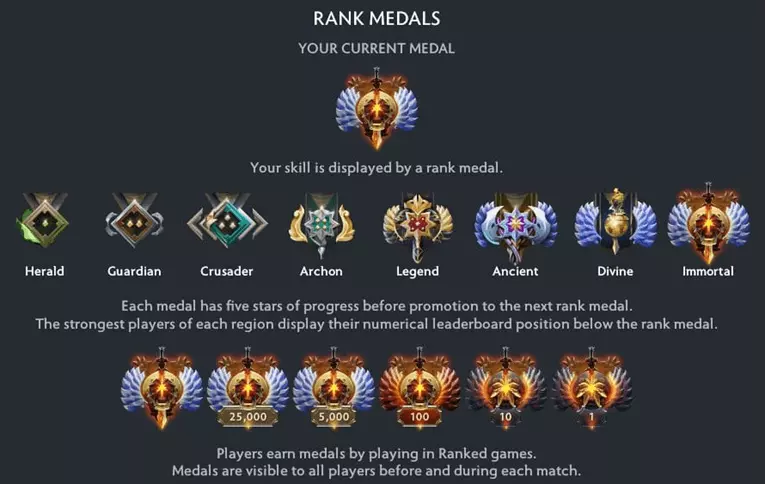
Climb the Dota 2 rankings now
How Dota 2’s ranks work
There are eight total ranks in Dota 2, and each one (except Immortal) has five stars. That gives you 36 total steps to climb from the depths of Herald to the leaderboard at Immortal. Every rank is tied to your MMR, but not in a way Valve publicly confirms. Instead, the community and Dota 2 betting sites keep track of rough ranges using huge datasets. It’s accurate enough to work from, and those ranges do shift slightly after recalibrations.
Dota 2 now uses Rank Confidence, a value tied to the Glicko system (introduced back in patch 7.33). It’s not about playing 10 placement matches anymore. Your rank appears when the system’s confident enough in where you belong, and the more varied your matches or the longer your breaks, the wider your swings will be.
And if you're new, you'll need around 100 hours of match time and a linked phone number before Ranked even unlocks.
The Best eSports Betting Sites at a Glance
Medal tiers in order
Each Dota 2 rank reflects a level of macro and micro gameplay awareness. Here’s the full ladder, in order, with a rough feel for what each means.
From Herald to Immortal
| Medal Tier | Description | Skill Level |
|---|---|---|
 Herald Herald | Bottom of the ladder. Usually newer players or folks figuring out basic mechanics. | Beginner / Entry Level |
 Guardian Guardian | Starting to grasp core mechanics: last hits, basic item builds, and simple warding. | Novice / Below Average |
 Crusader Crusader | More teamfighting, improved map awareness, and starting to play specific roles properly. | Intermediate / Lower-Mid Bracket |
 Archon Archon | The average bracket. Macro decisions and lane control start to matter more than raw mechanics. | Average (~50th Percentile) |
 Legend Legend | Players here often understand item timings, power spikes, and how to punish positioning mistakes. | Above Average / Competitive |
 Ancient Ancient | The step before the real competitive grind. High coordination, map control, and tempo become key. | Advanced / High Skill |
 Divine Divine | High-level macro play, tight micro execution, and a punish-or-be-punished game pace. | Very High Skill / Elite Tier |
 Immortal Immortal | Top of the food chain. Region-specific leaderboard tracking with distinct sub-ranks (Standard, Top 1000, Top 100). | Professional & Semi-Pro (< 1% of Players) |

An Overview of the Dota 2 Rankings
Complete MMR breakdown
These aren’t Valve’s official numbers, but they’re the community baseline and get refreshed after seasonal shifts. Use your in-client MMR and medal as the source of truth, but this table’ll help make sense of what bracket you’re really in.
| Medal | Approx. MMR Range |
|---|---|
| Herald | 0 – 769 |
| Guardian | 770 – 1,539 |
| Crusader | 1,540 – 2,309 |
| Archon | 2,310 – 3,079 |
| Legend | 3,080 – 3,849 |
| Ancient | 3,850 – 4,619 |
| Divine | 4,620 – 5,419 |
| Immortal | 5,420+ MMR (Regional Leaderboard) |
Calibration & resets from 7.33
Back in the old system, everyone had to grind through 10 fixed placement games before seeing a rank. That’s long gone.
Now, calibration uses Rank Confidence, and you’ll only get placed once the system has enough data to make it stick. That could be five games, or it could take more. It depends on who you’re matched with and how volatile your past performances were.
The upside is it gets rid of the “clumped” MMR mess around 1k–2k and adjusts faster if you’re climbing quickly or returning after a break. The tradeoff is that you might see massive swings in early matches until your Confidence stabilises.
Immortal explained
Once you hit Divine 5 and keep winning, you’ll eventually cross into Immortal. This is where things change a bit. There are no stars in Immortal. Instead, you get a leaderboard badge, based on your regional standing:
- Placed – the starting point once you break into Immortal.
- Top 1000
- Top 100
- Top 10
- Top 1
Valve tracks this via their leaderboard site, and your region is assigned based on server selection and match history.
One extra quirk in Immortal matchmaking is that lobbies aren’t randomised. Ten players queue, and then two of them are assigned as captains who draft the teams. That means synergy matters more than just raw MMR, especially at the top.
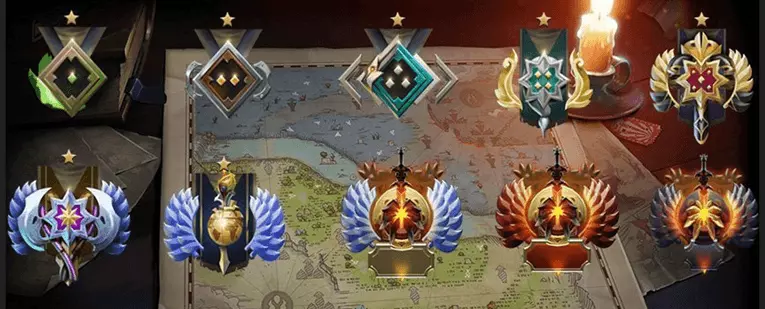
Immortal is the highest tier in the Dota 2 ranking system
Rank distribution, and where most players sit
Currently, the average Dota 2 player sits somewhere between Crusader 5 and Archon 1. That’s the middle of the bell curve.
Roughly 4–5% of players are in Divine, and only a tiny fraction crack into Immortal. That means once you’re pushing Ancient, your queue quality can get weird. Longer waits, big MMR spreads, and the occasional Immortal in your pub.
A few closing notes on MMR
Let’s clear up some quick misconceptions.
1️⃣
MMR doesn’t decay, but Rank Confidence does
Your MMR won’t drop just because you took a break. But your Rank Confidence will. When that happens, your next few matches might feel all over the place. Big wins, big losses, weird lobbies. It’s the system recalibrating until it figures out where you belong again.
2️⃣
You can track Confidence directly
If something feels off, check your profile. Dota 2 now shows both your Rank and your Rank Confidence. Low Confidence usually means your games will swing harder until you’ve played enough for the system to lock things back in.
3️⃣
Solo vs party MMR. That’s old news
There’s no more split MMR. If you’re queueing solo or with friends, it all feeds into one unified rank. The matchmaker still considers your party and roles, but you’re not juggling two different numbers anymore.
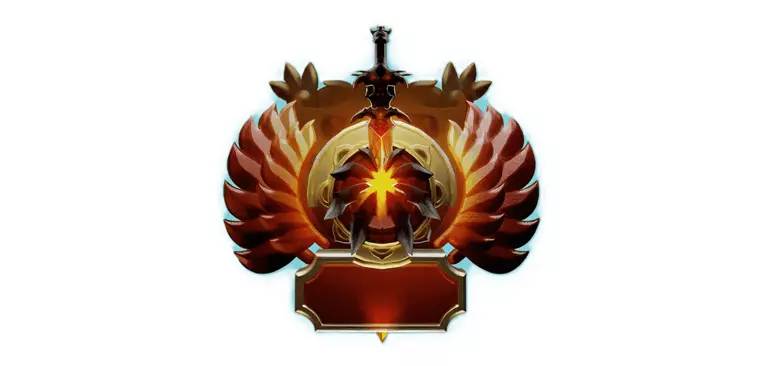
Innmortal: The highest tier in the Dota 2 rankings
Still climbing with slightly mouldy boots
If you’ve ever stared at your profile wondering how the hell you dropped a full rank after winning five of your last seven, now you’ve got the answer. It’s Confidence, lobby spread, and how the system rates your past consistency.
That’s what makes Dota 2’s ladder tricky, but also why it works. You’re not just grinding numbers. You’re adapting to shifting odds, figuring out drafts, and improving faster than the algorithm can keep up. And if you’re stuck in Guardian, you’re still better than 30% of the playerbase.
Where to Claim the Largest Sportsbook Bonuses

1.

4.8/5

Visit Sportzino
T&Cs / 18+


3.
4.7/5
Copy
T&Cs / 18+

4.
4.5/5
Visit PlayBracco
T&Cs / 18+

5.
4.5/5
Visit Prophet X
T&Cs / 18+
Latest News
Dota 2 ranks explained: Complete MMR & tier breakdown
Dota 2 ranks can feel like a mystery ...
TI 2026 Betting Guide: Odds Breakdown and What They Reveal About Each Team's ...
The Dota 2 International 2026 is the 15th ...
The Dota 2 International Prize Pool: An In-Depth Look at how the Prize Money ...
We have arrived in the 15th edition of ...
Why Shanghai? Inside The International 2026's Return to China
The Dota 2 International enters its 15th edition ...
A Breakdown of the Dota 2 TI 15 Favorites
We are in the midst of the biggest ...
Latest News:
- $750 million video game cheating ring shutdown by police in China
- 10 best Fortnite seasons ever, ranked
- 10 worst Fortnite skins ever released
- 5 changes Valve needs to make to fix Largo in Dota 2: Essential improvements for a better experience this 2026
- 5 heroes we expect to dominate the Dota 2 meta in 2026: Expert predictions and analysis
- 5 strategies for PUBG's relevance in 2026: Insights on future updates and community engagement
- 5 things we want from Apex Legends in 2026: Features and improvements we hope to see
- 500 makes a comeback against Furia and moves to the Quarter-Finals!
- A Breakdown of the Dota 2 TI 15 Favorites
- A rundown on the IEM Sydney 2023 Europe Open Qualifier 1. What went down?
MORE ON ESPORTS
🥇 COMPETITIVE ESPORTS
🔥 NEWS & HOT TOPICS
Our News Sitemap:
Our Team