
Esports Betting
/
Best Hockey Card Sets
Best Hockey Card Sets
Last Updated on 10/11/2026
Some of the best hockey card sets are easy to complete, while others take years. Which sets are actually worth spending your money on? Our top pick is Upper Deck Series 1 and 2. It has so many options.
With these boxes, you can keep collecting throughout the season without stressing over rare cards. That's what we like about these releases: having several options. We also picked another card set for those who love rookie cards. When you're ready to buy one, look at the full checklist, not just the card on the packaging.
Discover the Best Sites for Hockey Card Rips


Favorite

4.9/5
- Card rips for sports and more.
- Instantly sell your card back.
- Pack tiers cost between $0.50 and $1,000.
Visit Party Rips
Banking Options






Withdrawal
2 – 10 Days
Show less

Hot Offer
4.8/5
- Extensive range of Pokémon card packs
- Customizable volatility for every pack
- Keep, sell, trade, or ship pulls
Copy
Banking Options



Withdrawal
1 – 10 Days
Show less

Hot Offer
4.8/5
- Transparent odds and card values displayed
- Chance to pull iconic grail sports cards
- Full fair market value buyback offers
Play $5, Get 5 Free Rips Packs Worth Up to $750

USA Players Eligible
T&Cs / 18+
Copy
Banking Options




Withdrawal
1 – 10 Days
Apps
Show less

4.
4.7/5
- Rip professionally graded Pokémon and sports cards
- Explore packs with published pull odds
- Ship physical cards or sell back
Copy
Banking Options
Apps
Show More

5.
4.7/5
- Pokemon packs from $1 to $1,000.
- Plenty of Pokemon grail cards including retro 1999 and 2001 base sets.
- 100% Fair Market Value buyback offer for all cards.
Copy
Banking Options
Withdrawal
1 – 10 Days
Apps
Show More

6.
4.6/5
- Sell-back option that allows users to sell their cards back to the platform for the market value
- All cards can be redeemed as a real-world collectible
- Very easy to use website, both on mobile and on desktop
Visit Clutchpacks
Banking Options
Show More

7.
4.6/5
- Rip multiple packs at once with Freak Mode
- Sell cards back for 85% of market value
- Automatically sell back common card pulls
Visit Slabz
Banking Options


Withdrawal
1 – 10 Days
Full T&Cs apply, 18+, play responsibly
Show More

8.
4.6/5
- Pokémon-themed mystery boxes featuring collectible trading cards
- Chances to pull rare Pokémon cards, including Charizard.
- Published prize odds and provably fair box openings
Visit Mr Loot
Banking Options
Show More

9.
4.6/5
- Get 20% back on your first pack rip
- 10 Pokémon rip tiers from $5 to $2,500
- Instant sellback at 90% FMV or ship to your home address
Copy
Banking Options


Show More

10.
4.5/5
- Eight tiers of packs
- Every pack = 1 graded card
- TCG and sports cards
Visit The Collectibles
Banking Options

Apps
Show More

11.
4.5/5
- Watch animations rip your digital packs
- Reveal individual cards one by one
- Sell unwanted pulls at market value
Visit OpenThatPack
Banking Options

Show More

12.
4.5/5
- Wide selection of Pokémon and One Piece trading card boxes
- Opportunities to pull rare cards and graded collectibles
- Dedicated categories for sports cards, vintage TCG, and more
3 free mystery boxes upon registration and a 5% bonus offer on first deposit
USA Players Eligible
T&Cs / 18+
Copy
Banking Options

Show More

13.
- Pokémon and MTG mystery packs.
- Welcome bonus (three free cards).
- Transparent inventory and odds.
Best Alternative
 Visit Party Rips
Banking Options
Show More

14.
- 80+ Pokemon packs with vintage and modern cards
- Transparent odds that you can verify
- One free card for all new players
Best Alternative
Visit Party Rips
Banking Options
Show More

15.
- Sports, Pokémon, and others.
- Free Pack for new customers.
- 100% buyback, secure vaulting, and shipping.
New Users Receive A Free $1 Pack After Signup and Email Verification
USA Players Eligible
T&Cs / 18+
Best Alternative
Visit Party Rips
Banking Options



Apps
Show More

16.
Fanatics Instant Rips Highlights
- Card collection can be stored in a vault
- Shipping is available
- Features sports and non-sports cards
Fanatics Instant Rips Promo Code
–
USA Players Eligible
T&Cs / 18+
Best Alternative
Visit Party Rips
Banking Options
Apps
Show More

17.
RipIt Highlights
- Card shipping is available
- Store cards in the site’s vault
- Features sports and non-sports cards
RipIt Promo Code
–
USA Players Eligible
T&Cs / 18+
Best Alternative
Visit Party Rips
Banking Options
Withdrawal
5 – 10 Days
Show More

18.
Arena Club Highlights
- Features sports, Pokémon, Lorcana, and superhero cards.
- Four card tiers with item pull odds.
- 90% buyback of estimated value within 24 hours.
Arena Club Promo Code
–
USA Players Eligible
T&Cs / 18+
Best Alternative
Visit Party Rips
Banking Options


Apps
Show More

19.
GameStop Power Packs Highlights
- Chase Pokémon cards such as Charizard and Mew.
- Sports cards featuring legends like Shohei Ohtani and MJ.
- Mainly PSA Grade 6 and above cards.
GameStop Power Packs Promo Code
–
USA Players Eligible
T&Cs / 18+
Best Alternative
Visit Party Rips
Banking Options
Withdrawal
1 – 5 Days
Apps
Show More

20.
- Wide Range of Trading Cards
- Free Mystery Box for New Collectors
- Transparent Odds and Provably Fair Results
Best Alternative
Visit Party Rips
Banking Options
Show More

21.
- Users can select boxes based on the risk levels.
- Users can win gift cards from Xbox, Playstation, and more.
- Users can win vouchers and site credits.
Best Alternative
Visit Party Rips
Banking Options

Show More

22.
- On-demand digital pack ripping
- Instant buyback offers on pulls
- Authentic, professionally graded cards
Best Alternative
Visit Party Rips
Banking Options

Show More

23.
- Cards can be resold to other users right after rip
- Shipping virtual cards is possible after profile verification
- No platform charges for shipment
Best Alternative
Visit Party Rips
Banking Options


Apps
Show More

24.
- Individual pack openings, plus a Pack Parties option
- Boosted buy back percentages for selected packs
- Vault-stored graded cards for Pokemon, One Piece, Yu-Gi-Oh and more
Visit Phygitals
Banking Options
Withdrawal
1 Day
Show More

25.
- Rip Pokemon and One Piece cards
- Store digital representations of these physical cards in your personal “Vault”
- The upcoming “Sports” section will feature NBA, NFL and MLB cards
Best Alternative
Visit Party Rips
Banking Options
Show More

26.
- NBA, NFL, and MLB dedicated sports packs.
- There’s some epic superstar cards like Kobe, Drake Maye, and Lewis Hamilton.
- 90% buyback offer on all cards from the packs.
100% Buyback value on your First Purchase
USA Players Eligible
T&Cs / 18+
Best Alternative
Visit Party Rips
Banking Options
Withdrawal
2 – 10 Days
Apps
Show More

27.
Cardinal Highlights
- Bold brand, bold rips
- Simple, direct experience
- Clean, modern design
Cardinal Promo Code
Open packs. Pull real slabs.
USA Players Eligible
T&Cs / 18+
Best Alternative
Visit Party Rips
Banking Options

Show More
Table of Contents
- Quick facts about top hockey card sets
- Top hockey card sets to collect – Upper Deck Series 1 and 2, O-Pee-Chee Platinum, and MVP
- Tips for collecting hockey card sets without wasting money
- Hockey card sets offer plenty of variety, but rare cards can be costly
- Conclusion – Start with Upper Deck Series 1 and 2 for the best rookie cards
- Hockey card sets FAQs
Quick facts about top hockey card sets
- Completed sales give a better idea of a card’s worth than asking prices
- The signatures on MVP Silver Script are printed, not handwritten.
- Lower-grade vintage cards can still be collectible.
- A grading certification number alone doesn't prove authenticity.
Top hockey card sets to collect – Upper Deck Series 1 and 2, O-Pee-Chee Platinum, and MVP
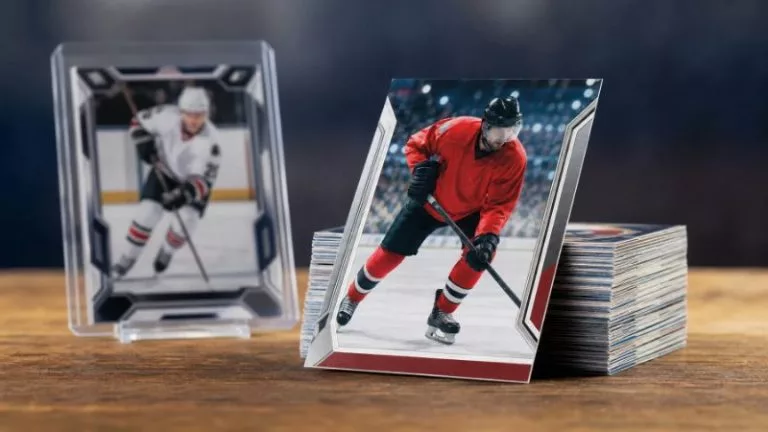
Here are some of our favorite hockey card sets. Each has something different to offer. Some focus on rookie cards. Others have large checklists or rare parallels.
| Hockey card set | Best for | Notable card inserts |
|---|---|---|
| Upper Deck Series 1 and 2 | Collecting NHL rookie cards | Young Guns, Exclusives, High Gloss and Clear Cut parallels |
| O-Pee-Chee Platinum | Parallel and autograph collectors | 300-card base set, numbered parallels and rookie autographs |
| Upper Deck MVP | Beginners and set builders | 250-card base set, Silver Script, Super Script and themed inserts |
Upper Deck Series 1 & 2 – Young Guns make these sets worth collecting
There's hardly a list of hockey card sets that doesn't include Upper Deck Series 1 & 2. They are the most collected base set in hockey, and it's not hard to see why. A lot of it has to do with the Young Guns cards. Over the years, these sets have produced some excellent rookies. The 2025-26 Series 1 checklist has 49 Young Guns cards.
On average, you'll pull about one Young Guns card for every two hobby packs. That’s not too bad, but your shot at getting the rookie you want is slim. Check the checklist for each series to find out which players are included.
O-Pee-Chee Platinum – Plenty of parallels and rookie autographs to chase
If you enjoy collecting cards in different colors, O-Pee-Chee Platinum may have just what you’re looking for. The 2025-26 lineup contains 300 base cards with 100 Marquee Rookies. You'll find parallels like Rainbow, Sunset, Pink Magma, Arctic Freeze /99, and Seismic Gold /50. There is also a Golden Treasures 1/1. You can expect an autograph on average from hobby boxes, but it is not a sure thing.
We feel there are too many parallels to collect O-Pee-Chee Platinum. Completing all the parallels of every player would probably take us forever. We would rather collect a couple of colors of our favorite players.
Upper Deck MVP – A good starting point for new hockey card collectors
If you don’t plan on spending hundreds of dollars on a box of hockey cards, Upper Deck MVP would be worth your time. Even though it’s more affordable, you'll still end up with plenty of cards to sort through.
There are 250 cards in the 2025-26 Upper Deck MVP set. Among these cards, 200 are base singles, and the other 50 are short print and rookie cards. As you’d expect from a budget base set like this, it has no high-end autographs. The Silver Scripts don’t have real autographs either, just printed ones.
Tips for collecting hockey card sets without wasting money
These quick tips will help you avoid buying too many cards or paying too much for the ones you really want:
🔍 Review the complete set checklist first
It's best to always know what is in a full set before you purchase. Your favorite player might not be in a set even if it includes other NHL players you like. Use the checklists that come with the set to track your favorite players. Make sure you know the card number in the set and what kinds of cards are available for that player. Your player might only show up in the base set, or they could have a rookie insert, autograph, or parallel.
The same rule applies if you're collecting baseball card sets. For Upper Deck hockey, though, you want to know if your rookie is going to be in series 1 or 2 or the extended. If you buy into the wrong release, you may waste money on packs that won't contain the card you're trying to collect.
💰 Browse completed sales, not asking prices
Just because someone lists a card at $500 doesn't mean it's actually worth that much. People can list their card for whatever price they feel like. If you want to find out the true worth of the card you want, scroll through sold listings and see what other people have paid for it.
As you look for a great price, consider the condition of the cards too. Higher grade cards will always sell for more than a card that has been in bad condition. Also, don't use one sale as your final source to know what that card is worth. Find several that sold close to that price to know its value. We use this strategy when collecting football card sets.
🚫 Don't go after every parallel of your favorite player
Hockey card sets often include plenty of parallels for a single card. You'll find some with rainbow finishes, gold designs, serial numbering, or even autographs. Sure, chasing every single one might feel like fun at first, but sooner or later, you will burn out. When you pull a card numbered to 5 or start chasing a 1 of 1, you'll realize that you simply can't keep up.
We recommend going after a few parallels you love the most and letting the others go. For example, you could just focus on cards numbered to 99. That way, you can build a nice collection and not worry about completing it with rare cards.
🔧 Know how to identify condition issues before you buy
There’s nothing quite as disappointing as getting a card set that turns out to be in bad shape. Nobody wants cards with defective corners or scratches. So, check both sides of the card for these defects, even if you’re collecting Pokémon sets.
You have to pay even closer attention when dealing with older cards. These cards may have more flaws because of how long they've been around. However, we wouldn't turn away from every low-grade card. If the price is right, they can still be great additions to your collection.
📊 Keep an inventory of your cards and track what you still need
At some point, you will have too many cards that you can't remember everything you own. That’s when you'll see the need to keep track of the cards you have. Spreadsheets offer an easy way to do this. But you can also use a collector or inventory app. List the number in the set and who the player is.
If you collect trading card games like Magic: The Gathering sets, keep them on a separate sheet. For hockey cards, you can organize by season, series, player, or number. An inventory makes it easier to remember what you have and what you’re still looking for.
Hockey card sets offer plenty of variety, but rare cards can be costly
Each of our chosen hockey card sets has its strengths, but there are a few drawbacks:
Pros and cons
- Hockey cards have many sets that have autographs and parallels
- If you have extras, you can swap them to complete your set
- There are many price ranges of sets to collect from
- May be costly to complete certain sets
Conclusion – Start with Upper Deck Series 1 and 2 for the best rookie cards
You don't need to have hundreds of cards to put together a good collection. Just know why you like certain cards and want them in your collection.
We recommend that after you find a set worth collecting, you plan for the kind of collection you'd like to have in the next few years. It's not a must to pick up every release, and even a common card can still mean something to your collection.
Start with Upper Deck Series 1 and 2, collect the players you like, and buy singles if packs are too pricey. This way, your collection ends up with more of the cards you actually care about.
Our favorite card rips sites
3.
4.8/5
T&Cs / 18+
Hockey card sets FAQs
🔰 What are the best hockey card sets for beginners?
Upper Deck MVP is a great set to start with. The base checklist isn't too long, and you get rookies plus some inserts. For those who are into Young Guns rookies, Upper Deck Series 1 and 2 are also worth picking up.
🏒 Are Young Guns cards worth anything?
Yes. There are many Young Guns cards that can sell for good money. If it's a current star like Connor McDavid or Sid Crosby, then yes, their price can be quite high. But not all Young Guns cards will sell for a lot.
🔍 How do I authenticate a rare hockey card before purchasing?
Check whether the card has been authenticated by PSA, BGS, or CGC. You can do this by typing in the card’s certification number on the website. Make sure the card looks right and hasn't been tampered with. It will also save you a lot of headache if you just buy from trusted sellers. Remember, a matching certification number alone doesn’t prove that your card is authentic.
⭐ How are hockey cards graded?
When grading a hockey card, experts consider many factors. This includes centering, corners, edges, and surface. With PSA grading, your card gets a score between 1 and 10, with 10 being Gem Mint. After grading, they place your card in a holder and attach a label showing its grade.
Top Providers




Wanna Parlay
4.4/5
ESPORTS BETTING PAYMENT METHODS:
- All Esports Betting Deposit Methods
- Best PayPal Betting Sites
- Best Bank Transfer Betting Sites
- Best Neteller Betting Sites
- Best Klarna Betting Sites
- Best Trustly Betting Sites
- Best Ecopayz Betting Sites
- Best Paysafe Betting Sites
- Best Interac Betting Sites
- Best Apple Pay Betting Sites
- Best American Express Betting Sites
- Best Google Pay Betting Sites
- Best PayNearMe Betting Sites
- Best ACH Betting Sites
- Best Revolut Betting Sites
- Best Credit Card Betting Sites
- Best VISA Betting Sites
- Best Mastercard Betting Sites
- Best Bitcoin Betting Sites
- Crypto Betting Sites
Latest News
Gen.G vs Bilibili Gaming Predictions & Odds: Finals LoL Worlds 2026
Our Gen.G vs Bilibili Gaming prediction backs Gen.G ...
Invictus Gaming vs Gen.G Predictions & Odds: Semifinals LoL Worlds 2026
The Invictus Gaming vs Gen.G Worlds 2026 prediction ...
T1 vs Karmine Corp Predictions & Odds: Quarterfinals LoL Worlds 2026
Our T1 vs Karmine Corp Worlds prediction backs ...
Gen.G vs LYON Predictions & Odds: Quarterfinals LoL Worlds 2026
Our Gen.G vs LYON Worlds prediction is simple ...
Dplus KIA vs Bilibili Gaming Predictions & Odds: Quarterfinals LoL Worlds...
Our DPlus KIA vs Bilibili Gaming Worlds prediction ...
ESPORTS ODDS PAGES:
- Best Esports Betting Odds
- Best Fortnite Betting Odds
- Best CS:GO Betting Odds
- Best LoL Betting Odds
- Best DOTA 2 Betting Odds
- Best Overwatch Betting Odds
- Best SC2 Betting Odds
- Best Political Betting Odds
- Best Football Betting Odds
- Best Boxing Betting Odds
- Best Basketball Betting Odds
- Best UFC Betting Odds
Top Bonuses
Wanna Parlay Bonus
100% deposit match up to $250
T&Cs apply
4.4/5
Stake.com Special
- Stake Monthly Bonus Calculator
- Stake.com Bonus Drop Code
- Stake Free Money
- Stake.com Hacks
- Stake Slots (Top Games)
- Stake.com Free Spins
- Stake Review (Sports & Casino)
- Stake.com Promo Code
- Stake Weekly Giveaway
- Best Games on Stake
- Stake VIP Levels
- Stake Gift Card
- Stake.com Payment Methods
- Stake Referral Code
- Stake.com Withdrawal Limit
- Best Stake Strategies
- Stake Crypto
- Stake.com App Review
- Stake Company Info
- Stake Alternatives
- Is Stake Legal In India?
- Stake India No Deposit Bonus
- Stake India Free Spins
- How to Deposit on Stake India?
- Stake.com Canada Review
- Is Stake Legal In Ontario?
- Is Stake Legal In Australia?
- Is Stake Legal In South Africa?
- Is Stake.com Legal In The USA?
- Stake UK Review
Top Betting Sites
ESPORTS BETTING GUIDES:
MORE ON ESPORTS
🥇 COMPETITIVE ESPORTS
🔥 NEWS & HOT TOPICS
Our Team